EasyManua.ls Logo

Central Pneumatic 67708 - User Manual

Central Pneumatic 67708
20 pages
Print Icon
To Next Page IconTo Next Page
Loading...
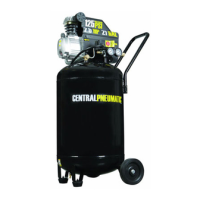
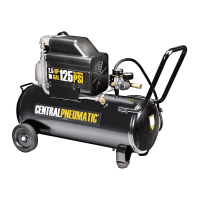
2-1/2 HP 10 GALLON
125 PSI AIR COMPRESSOR
Model
67708
SET UP AND OPERATING INSTRUCTIONS
Visit our website at: http://www.harborfreight.com
Read this material before using this product.
Failure to do so can result in serious injury.
SAVE THIS MANUAL.
Copyright
©
2010 by Harbor Freight Tools
®
. All rights reserved. No portion of this manual or any artwork
contained herein may be reproduced in any shape or form without the express written consent of
Harbor Freight Tools. Diagrams within this manual may not be drawn proportionally. Due to continuing
improvements, actual product may differ slightly from the product described herein. Tools required for
assembly and service may not be included.
For technical questions or replacement parts, please call 1-800-444-3353.
Manual Revised 10e

Questions and Answers

  • M
    Megan MosleySep 5, 2025
    Why is my Central Pneumatic 67708 so loud?
    • T
      Timothy MccarthySep 5, 2025
      If your Central Pneumatic Air Compressor is excessively noisy, first check the crankcase oil level, adding oil if it's low and checking for leaks. If the oil is overfilled, of incorrect thickness, or the wrong type, drain and refill to the proper level with the recommended oil. Inspect the belt guard for looseness or damage and replace it if necessary. Reduce air pressure, then check all fittings with a soap solution for air leaks, tightening as needed. Lastly, ensure the unit is on a level surface, repositioning it if needed.
  • C
    Carl FlemingSep 3, 2025
    How to fix air leaks from the pump or fittings on my Central Pneumatic Air Compressor?
    • S
      Shelby GreenSep 3, 2025
      If your Central Pneumatic Air Compressor has air leaks from the pump or fittings, reduce the air pressure, then check all fittings with a soap solution for air leaks and tighten as needed. Be careful not to overtighten.
  • J
    Jeff BrockSep 2, 2025
    Why does my Central Pneumatic Air Compressor build pressure so slowly?
    • B
      brownchelseaSep 2, 2025
      If your Central Pneumatic Air Compressor is building pressure too slowly, there are several potential causes. Check that the circuit matches the compressor's requirements. If the crankcase is overfilled with oil, or the oil is too thick, drain the oil and refill it to the proper level with the recommended oil. If the working environment is too cold, move the unit to a warmer location and ensure the correct oil is in the crankcase. Listen for air leaking from the safety valve; if it's leaking, replace it with an identical valve with the same rating. Finally, check all fittings with a soap solution for air leaks and tighten as needed.
  • J
    Jordan MitchellAug 31, 2025
    How to reduce high oil consumption in my Central Pneumatic Air Compressor?
    • Z
      zthorntonAug 31, 2025
      If you're experiencing high oil consumption with your Central Pneumatic Air Compressor, start by draining the oil and refilling to the proper level with the recommended oil if the current oil is too thin. Also, make sure the unit is positioned on a level surface. Clean the crankcase vent as well.
  • W
    wilsonamyAug 29, 2025
    What causes a Central Pneumatic 67708 to not build enough pressure?
    • A
      Alexandra RobertsAug 29, 2025
      If your Central Pneumatic Air Compressor isn't building enough air pressure, check the inlet and outlet filters and clean or replace them as needed. If the crankcase oil is too thick, drain it and refill to the proper level with the recommended oil. A technician may need to clean or replace the check valve, as needed. Verify that the compressor is large enough for the job; if it cannot supply enough airflow (SCFM), a larger compressor is needed. Reduce air pressure, then check all fittings with a soap solution for air leaks and tighten as needed. Replace inadequate hoses or hose connections with larger ones. If you are in a high altitude location, you may need a larger compressor.
  • M
    Mark RodriguezAug 27, 2025
    Why does my Central Pneumatic 67708 Air Compressor start and stop so often?
    • M
      matthewrodriguezAug 28, 2025
      If your Central Pneumatic Air Compressor starts and stops excessively, verify that the compressor is large enough for the job. Check if the accessory SCFM is met by the compressor; if it doesn't reach the accessory SCFM, you need a larger compressor. Also, reduce air pressure, then check all fittings with a soap solution for air leaks and tighten as needed.
  • J
    Joy WalkerAug 26, 2025
    Why is my Central Pneumatic 67708 Air Compressor building pressure slowly?
    • R
      riveramichaelAug 26, 2025
      If your Central Pneumatic Air Compressor is building pressure too slowly, begin by checking that the circuit matches the compressor's requirements. If the crankcase is overfilled with oil or the oil is too thick, drain the oil and refill to the proper level with the recommended oil. If the working environment is too cold, move the unit to a warmer location. Listen for air leaking from the safety valve; if it is leaking, replace it with an identical valve with the same rating. Finally, reduce air pressure, then check all fittings with a soap solution for air leaks and tighten as needed.
  • D
    Dwayne BoyleAug 25, 2025
    What to do if my Central Pneumatic 67708 is overheating?
    • R
      Ruth HarmonAug 25, 2025
      If your Central Pneumatic Air Compressor is overheating, begin by checking the inlet and outlet filters, cleaning or replacing them as needed. Ensure the crankcase oil is the correct type and at the proper level, adding oil if it's low and checking for leaks. If the oil is too thin or the wrong type, drain and refill with the recommended oil. If you're in an unusually dusty environment, clean or replace the filters more often, or move the unit to a cleaner location. Also, make sure the cord is of adequate gauge and length, increasing the cord size or using a shorter extension cord if necessary. Finally, ensure the unit is on a level surface, repositioning it if needed.

Summary

IMPORTANT SAFETY INFORMATION

General Safety Warnings and Precautions

Comprehensive safety guidelines including work area, electrical, and personal safety.

Air Compressor Specific Safety

Compressor Use and Care Guidelines

Instructions for safe operation, maintenance, and service of the compressor.

Air Compressor Hazard Warnings

Warnings related to fire, explosion, bursting, and air stream hazards.

Safe Operation Practices

Extension Cord Usage Guidance

Recommendations for using extension cords, including wire gauge selection.

Maintenance Reminders

Tips on ventilation, draining, oil, and care of components.

GROUNDING

Electrical Grounding Safety

Critical safety warnings and procedures for proper electrical grounding connection.

Three-Prong Plug and Outlet Requirements

Specific instructions for grounded compressors with three-prong plugs and outlets.

Symbology and Outlet Standards

Grounding Conductor Safety

Risks of improper grounding conductor connection and professional consultation.

Symbol Definitions

Definitions of common symbols and requirements for 125V 3-prong outlets.

SPECIFICATIONS

Product Specifications Overview

Details on electrical requirements, pressure, capacity, and oil specifications.

UNPACKING AND INITIAL SETUP

Instructions for unpacking, checking the item, and initial safety read.

Assembly and Mounting Procedures

Wheel and Handle Assembly

Step-by-step instructions for attaching wheels and mounting the handle.

Air Filter Installation and Break-in Procedure

Instructions for installing the air filter and performing the initial break-in.

Air Line Connection Setup

Instructions for connecting regulators, shut-off valves, and air hoses.

Checking the Oil

Oil Level Check and Addition

Procedure for checking, filling, and adding oil to the crankcase.

Critical Oil Level Warnings

Warnings about incorrect oil levels and potential damage or warranty voidance.

Cold Weather Oil Recommendations

Recommendations for oil types and operation in cold temperatures.

GENERAL OPERATING INSTRUCTIONS

Compressor Area Setup

Guidelines for preparing a clean, well-lit, and safe operating area.

General Operation Steps

Step-by-step guide for operating the compressor, including checks and startup.

Automatic Operation Explained

Explanation of automatic pressure switch operation and non-adjustable settings.

Pressure Regulator Adjustment

How to adjust the output pressure for the connected tool using the regulator.

Emergency Depressurization

Post-Operation Procedures

Steps for shutting down, unplugging, and disconnecting tools after use.

Tank Draining and Storage

Procedure for draining moisture from the tank and storing the compressor.

Quick Pressure Release Method

Method for rapid depressurization using the safety valve.

Automatic Shut off System

Troubleshooting Automatic Shutoff

Steps to take when the compressor shuts off unexpectedly and common causes.

MAINTENANCE AND SERVICING

Safety Precautions for Maintenance

Safety warnings to disconnect power and avoid using damaged equipment for maintenance.

Cleaning, Maintenance, and Lubrication

Pre-operation inspection checklist and post-operation cleaning instructions.

Damaged Cord Warning

Safety warning about damaged cords requiring professional replacement.

Maintenance Schedule

List of maintenance tasks to perform on a daily, weekly, and monthly basis.

Oil Maintenance Procedures

6-Month; 100-Hour Maintenance

Maintenance task to replace pump oil.

Oil Clarity Check and Draining

Guidelines for checking oil condition, replacement frequency, and draining old oil.

Personal Injury Warning for Oil Changes

Safety warning regarding personal injury during oil changes.

Draining Moisture from the Tank

Tank Moisture Drainage Procedure

Procedure for draining air and moisture from the tank using the drain valve.

Air Filter Maintenance

Air Filter Check and Replacement

Procedure for checking and replacing the air filter.

Troubleshooting Common Issues

Compressor Start;Restart Problems

Lists possible causes and likely solutions for startup issues.

Slow Pressure Build-up and Low Pressure

Causes and solutions for slow pressure build-up and insufficient air pressure.

High Oil Consumption Causes

Possible causes and solutions for excessive oil consumption.

Operational Problems and Solutions

Overheating and Excessive Cycling

Causes and solutions for compressor overheating and frequent starting/stopping.

Noise, Air Quality, and Valve Issues

Causes and solutions for excessive noise, moisture/oil in air, and safety valve pops.

Air Leak Diagnosis and Repair

Identifying and fixing air leaks from pump, fittings, or tank.

IMPORTANT MANUAL SECTIONS

Parts List and Diagram Disclaimer

Disclaimer regarding the purpose and limitations of parts lists/diagrams.

Serial Number Recording

Instruction to record the product's serial number for reference.

PARTS LIST

Component Identification

List of all individual parts with their descriptions and quantities.

ASSEMBLY DIAGRAM

Visual Component Layout

Visual representation of the compressor components and their assembly.

LIMITED 1 YEAR; 90 DAY WARRANTY

Warranty Coverage and Claims

Details of the warranty coverage, limitations, and claims process.

Warranty Service Instructions

Instructions on how to claim warranty service or replacement.

Central Pneumatic 67708 Specifications

General IconGeneral
BrandCentral Pneumatic
Model67708
CategoryAir Compressor
LanguageEnglish

Related product manuals