NSD-1000
Autopilot course information is derived from course needle position
(direction) and left/right radio information (deviation from desired radio
track) to provide precise intercept and track capability.
NOTE
The Century 2000 is capable of using radio information provided by a
loran or GPS. There are several important factors to consider when using
those units with the autopilot and HSI.
Because the HSI incorporates an integrated course/left-right display and
an OBS resolver, a switching device will be required in order for the HSI
to display the selected information.
Most manufacturers of loran and GPS have the capability to adjust the
course width (CDI sensitivity) of their units. Course width is measured in
nautical miles from full scale left to full scale right deflection of the CDI. If
the course width is too wide, the autopilot will be insensitive to the
movement of the CDI. If the course width is too narrow, the autopilot will
be overly responsive to the CDI movement.
For proper autopilot operation with a loran or GPS, the autopilot needs
both direction and deviation. Directional information is provided by the
heading bug, if a DG is being used, or by the course needle, when an HSI
is being used. When a waypoint is called up, the loran or GPS will
display a “desired track”. The heading bug or course arrow must match
this “desired track”. If you use multiple legs in a flight, you must match
the heading bug or course arrow with the new “desired track”.
25 26
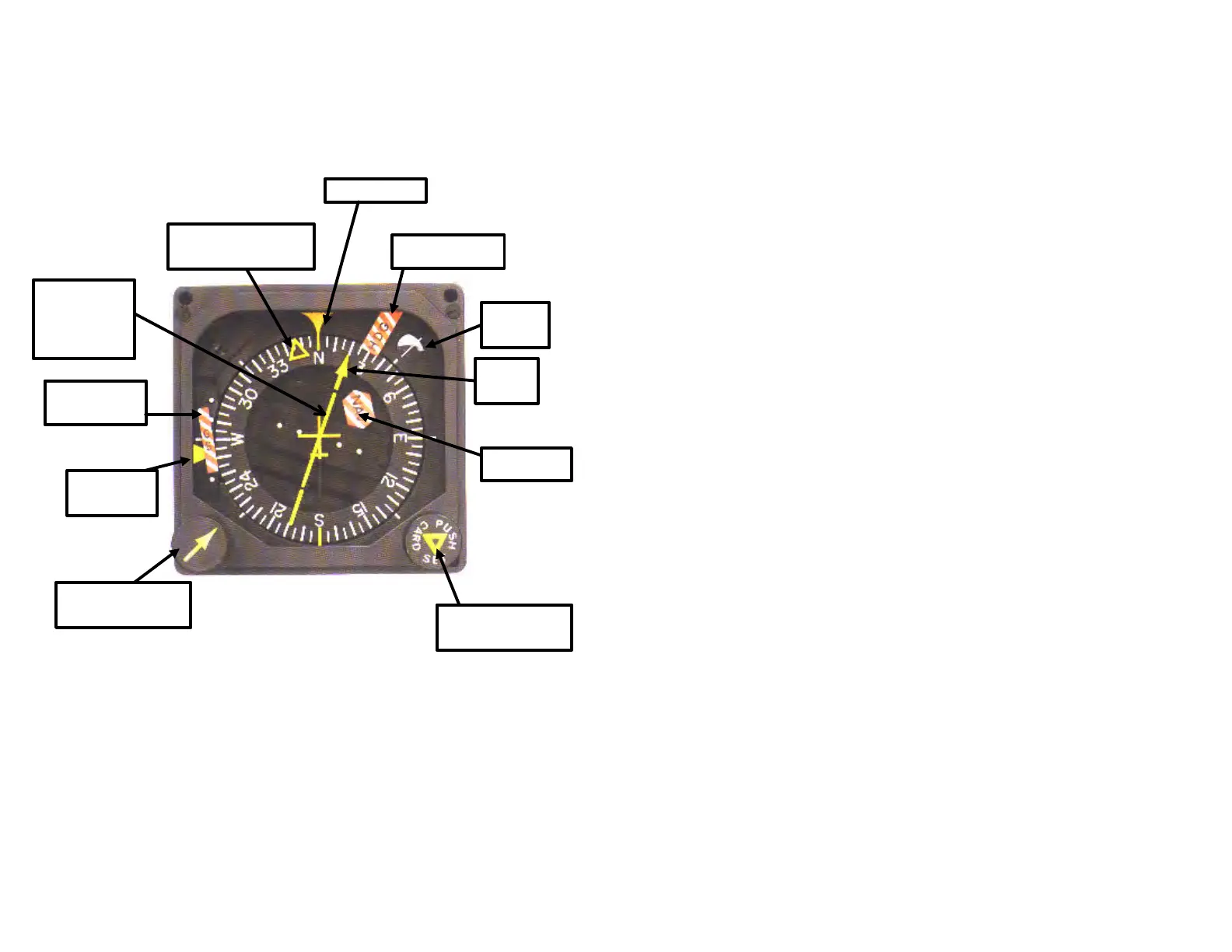
Left/Right
Radio
Deviation
Meter
Course Selector
Knob
Glideslope
Flag
Heading Flag
Course
Needle
Heading Selector
Knob/Card Set
Slaving
Meter
Autopilot Heading
Bug
Glideslope
Pointer
NAV Flag


 To Next Page