EasyManua.ls Logo

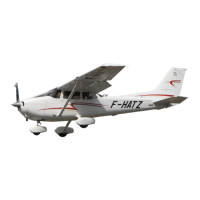
Cessna 172P - Takeoff

Cessna 172P
358 pages
Print Icon
To Next Page IconTo Next Page
To Previous Page IconTo Previous Page
Loading...
SECÎION
õ
PERFOR,MANCE
CRUISE
CONDITIONS
Total
distance
Pressure
altitude
Temporature
Expected
wind enroute
LANDING
CONDITIONS
Field
pressure
altitude
Tempeiature
Field length
CESSNA
MODEL 172P
820 Nautical
Miles
5500
Feet
20oC
(16oC
above standard)
10 Knot
Headwind
2000 Feet
26"C
3000 Feet
1200
156
1044
Feet
2220
289
1931
Feet
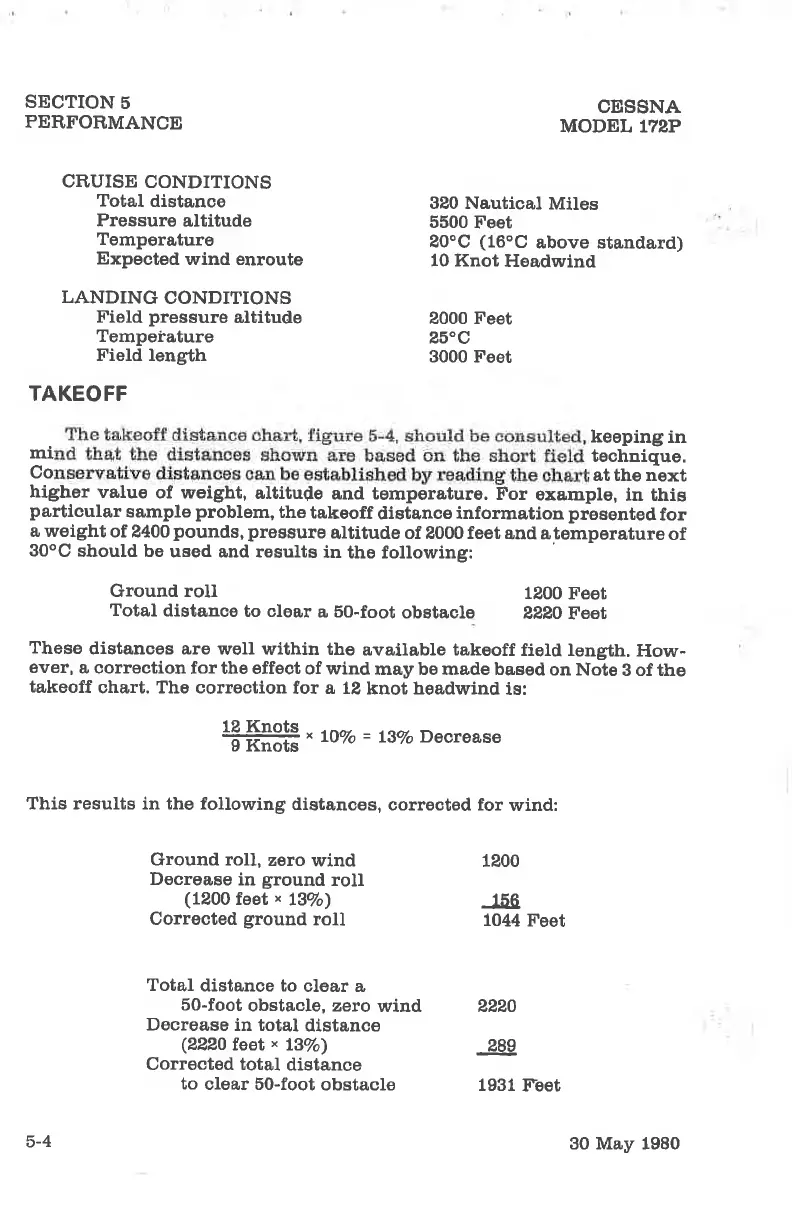
TAKEOFF
keeping
in
mi
technique.
Co
atthe nixt
higher
value
of weight,
altitude
and temperature.
For
example,
in this
particular
sample
problem,
the
takeoff
dietance
information
preeontedfor
g,
w9¡ght
of 2400
pounds,
pressure
altitude of 2000 feet
and atempereture
of
30oC
sbould be
used and results
in
the following:
Ground roll
1200
Feet
Total
distance
to cloar
a õO-foot
obstacle
pp20
Feet
These
distances are
well within the
available takeoff
field length.
How-
ever,
a, correction
for the effect
of wind
may be made based
on Note
B of the
takeoff
ohart. The correction
for a 12
knot headwind
is:
12
Knots
I Knots
x
LOVo
=
LSVo Deqoase
This results in the following
dietances,
corrected for
wind:
Ground roll,
zero
wind
Decrease
in
ground
roll
(1200
feet
,
lSVo)
Corrected
ground
roll
Total
distance to
clear a
5O-foot
obstacle, zero
wind
Decrease
in total
distance
(2?,20
teet, lSVo)
Corrected total
distance
to
clear õ0-foot
obstacle
5-4
30 May 1980

Table of Contents

Other manuals for Cessna 172P

Related product manuals