One knob, labeled "INST-RADIO
LTS--PULL-FLOOD",
controls
both
flood and
post
lights.
The
other
knob,
labeled
"SWITCH PANEL LTS",
operates
the switch and control
panel
lighting. Clockwise
rotation
of
the knobs
increases
light
intensity.
ELECTROLUMINESCENT
LIGHTING.
Switches and
controls
on the
lower
part
of
the
instrument
panel
are
lighted by
electroluminescent
panels
which do not
require
light bulbs
for
illumination.
This
lighting
is
controlled
by
the
rheostat
knob
labeled
"SWITCH PANEL
LTS".
INSTRUMENT
FLOOD
LIGHTS.
Illumination of the
instrument
panel
is
provided
by
four
red
flood
lights
on
the
under
side
of
the
anti-glare
shield
and
three
standard
post
lights, two lighting the
radio
selector
switch
panel, and one lighting
the
control
pedestal.
To
operate
these
lights,
pullout
on
the
rheostat
knob
labeled
"INST-RADIO
LTS".
POST
LIGHTS
(OPT).
The
instrument
panel
may
be equipped with optional
post
lights
which
are
mounted
at
the edge of
each
instrument
or
control
to be lighted. The
post
lights
provide
direct
light to
the
instruments
and
controls,
and
are
operated
by pushing
in
on the
rheostat
knob
labeled
"INST-RADIO
LTS".
Switching to
post
lights
will
automatically
turn
off the flood lighting.
MAP
LIGHTS.
A map light mounted above the
storm
window on the
pilot's
side
is
standard
equipment and contains two light bulbs, one
red
and one white.
The light can be
used
to
supplement
instrument
panel
lighting by
selecting
the
red
bulb,
or
as
a map
light
by
utilizing the white bulb. A
three
posi-
tion switch mounted
vertically
just
below
the
light
is
used
to
select
the
d.stred
type of light,
or
turn
off
the
light.
The
switch
positions
are
"RED",
"OFF",
and "WHITE". A
second
map
light
of the
same
type
is
mounted
on the
forward
door
post
and
is
optional. The
switch
for
this
light
is
muwlled
horizontally
on
a ledge between
the
instrument
panel and
door
po.l.
The switch pOSitions
are
"RED",
"OFF",
and "WHITE".
'·10
An optional
map
light
mounted
on
the bottom of the
pilot's
control
wheel
illuminates
the
lower
portion
of the
cabin
in
front
of the
pilot
and
is
used
when checking
maps
and
other
flight
data
during night
operation.
To
operate
the light,
turn
on the "NAV"
light
switch
and
adjust
the
light
intenSity with the
knurled
disk
type
rheostat
control
located
at
the bottom
of the
control
wheel.
DOME
LIGHTS.
The cabin
interior
is
lighted by two dome lights, one above
each
cen-
ter
side
window. The lights, which may
be
used
in
conjunction with the
exterior
courtesy
light,
are
operated
by a
three
position
switch
on the
aft
side
of the
rear
door
post.
The
three
positions
are
marked:
"COURTESY-
DOME",
"OFF",
and "DOME".
EXTERIOR
LIGHTING.
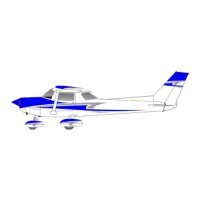
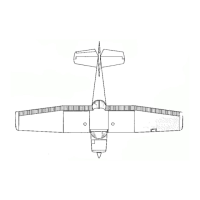
Standard
exterior
lighting
consists
of navigation
lights
on
the
wing
tips
and
lower
tips
of the
vertical
fins, a flashing
beacon
on top of
the
right
vertical
fin, and dual
beam
landing and
taxi
lights
in
the leading edge of
the
left
wing. Optional lighting includes dual
beam
landing and
taxi
lights
in
the
leading
edge of the
right
wing, a
strobe
light
on
each
wing tip, and
a
courtesy
light
under
the
right
wing outboard of the cabin
door.
The
courtesy
light
is
operated
by a switch
located
on the
aft
side
of the
rear
door
post.
To
turn
on the light,
place
the switch
in
the top ("COURTESY-
DOME") position. All
exterior
lights,
except
the
courtesy
light,
are
con-
trolled
by
rocker
type
switches
on the
left
switch
and
control
panel.
The
switches
are
"ON"
in
the up position and
"OFF"
in
the
down pOSition.
The flashing
beacon
Should not be
used
when flying through clouds
or
overcast;
the flashing
light
reflected
from
water
droplets
or
particles
in
the
atmosphere,
particularly
at
night,
can
produce
vertigo
and
loss
of
orientation.
The two high intenSity
strobe
lights
will enhance
anti-collision
pro-
tection.
However,
the
lights
should
be
turned
off when taxiing
in
the
vicinity of
other
aircraft,
or
during
flight through clouds, fog
or
haze.
2-11
-~



 To Next Page