Need help?
Do you have a question about the Chase ngenico Desk 5000 and is the answer not in the manual?
Explains navigation, cancel, scroll, and enter key functions on the Ingenico terminal.
Step-by-step guide for completing a sales transaction on the Ingenico terminal.
Instructions for processing a customer return transaction on the Ingenico terminal.
Procedure for canceling a previously completed sale transaction on the Ingenico terminal.
Guide on how customers can add or change tip amounts for transactions.
Details automatic and manual procedures for settling transactions and closing batches.
How to adjust a tip amount after a transaction has been processed.
Instructions for opening and closing customer tabs on the Ingenico terminal.
Managing server IDs and settings within the Ingenico terminal's server menu.
Information on managing and preventing customer disputes and chargebacks.
Troubleshooting common transaction errors like declines and network failures.
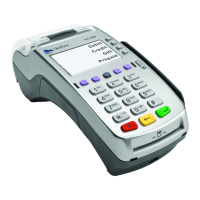
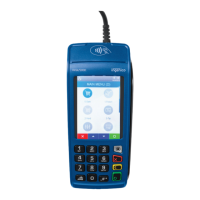
The Ingenico Desk/5000 and Move/5000 are payment card readers designed to facilitate various transaction types, including sales, returns, and voids, with features tailored for both general retail and restaurant environments. These devices are equipped with a touch screen interface and physical keys, offering flexible navigation and operation.
The primary function of these devices is to process credit and debit card transactions securely. They support multiple card input methods: tap (NFC/contactless), insert (chip/EMV), and swipe (magnetic stripe). The devices are capable of handling sales, returns, and voids, with specific workflows for each. For sales, the process involves entering the amount, confirming with the customer, and then allowing the customer to present their card. Returns follow a similar flow but require a supervisor password and involve entering a return amount. Voids also require a supervisor password and offer a search menu to locate specific transactions by various criteria such as reference number, clerk ID, invoice/PO number, account number, customer number, RRN, or approval code.
Beyond basic transactions, the devices offer specialized features for restaurant settings, including tip adjustment, open/close tab functionality, and a server menu for managing server IDs. Tip adjustment allows for modifying the tip amount after a transaction, while the open/close tab feature enables starting and closing tabs, which can be linked to server IDs. The server menu provides administrative functions for adding, deleting, and printing server IDs, as well as configuring server-related prompts and display parameters.
The devices also include account settlement capabilities, which can be configured for either automatic or manual settlement. Automatic settlement occurs at a predetermined time (typically 0500 within a 24-hour period), with a settlement report printing automatically. Manual settlement allows the user to initiate the batch closure process via the main menu.
While specific technical specifications like processor speed, memory, and display resolution are not detailed in the provided manual, the document highlights key operational aspects. The devices feature a touch screen for intuitive navigation, complemented by physical keys for specific actions like "Enter," "Cancel," and "Correction." The display shows a "MAIN MENU (D)" with options like "Sale," "Return," "Void," and "Tip," indicating a graphical user interface. The devices are capable of printing receipts automatically, with an option to print a customer's copy. Network connectivity is crucial for transaction processing, as indicated by error messages related to "FAILURE ON ALL COMM MODES" and "TRANSACTION FAILED," which point to network connection issues. The devices support EMV chip card processing, requiring the card to remain inserted until instructed to remove it.
The manual implicitly suggests certain maintenance aspects through its troubleshooting section. For instance, "Verify reader's network connections" for "FAILURE ON ALL COMM MODES" implies that maintaining a stable network connection is a user responsibility. Similarly, "Check your card reader's connection" for "MUST SETTLE BATCH" suggests that physical connection integrity is important. For "SYSTEM PROBLEM CALL HELP DESK," the instruction to call support for "important maintenance or security enhancements" indicates that some maintenance tasks are handled by the service provider and may require user intervention to contact them. The advice to "Keep this reference guide handy for quick tips on popular features and answers to common questions" also promotes user self-maintenance through knowledge and troubleshooting. The ability to configure the card reader for tip processing by calling a specialist also points to a form of configuration maintenance that requires external support.
 General
| Brand | Chase |
|---|---|
| Model | ngenico Desk 5000 |
| Category | Touch terminals |
| Language | English |

 To Next Page