EasyManua.ls Logo

Chicago Electric 61205 - User Manual

Chicago Electric 61205
16 pages
Print Icon
To Next Page IconTo Next Page
Loading...
Read this material before using this product.
Failure to do so can result in serious injury.
SAVE THIS MANUAL.
Copyright
©
2013 by Harbor Freight Tools
®
. All rights reserved. No portion of
this manual or any artwork contained herein may be reproduced in any shape
or form without the express written consent of Harbor Freight Tools. Diagrams
within this manual may not be drawn proportionally. Due to continuing
improvements, actual product may differ slightly from the product described
herein. Tools required for assembly and service may not be included.
When unpacking, make sure that
the product is intact and undamaged.
If any parts are missing or broken, please call
1-888-866-5797 as soon as possible.
Save This Manual Keep this manual for the safety warnings and precautions, assembly, operating,
inspection, maintenance and cleaning procedures. Write the product’s serial number in the back of the manual
near the assembly diagram (or month and year of purchase if product has no number). Keep this manual and
the receipt in a safe and dry place for future reference.
Owners Manual & Safety Instructions
Visit our website at: http://www.harborfreight.com
Email our technical support at: productsupport@harborfreight.com
61205
Owners Manual & Safety Instructions
Save This Manual Keep this manual for the safety warnings and precautions, assembly,
operating, inspection, maintenance and cleaning procedures. Write the product’s serial number in the
back of the manual near the assembly diagram (or month and year of purchase if product has no number).
Keep this manual and the receipt in a safe and dry place for future reference. 22h
When unpacking, make sure that the product is intact
and undamaged. If any parts are missing or broken,
please call 1-888-866-5797 as soon as possible.
Copyright
©
2013 by Harbor Freight Tools
®
. All rights reserved.
No portion of this manual or any artwork contained herein may be reproduced in
any shape or form without the express written consent of Harbor Freight Tools.
Diagrams within this manual may not be drawn proportionally. Due to continuing
improvements, actual product may differ slightly from the product described herein.
Tools required for assembly and service may not be included.
Read this material before using this product.
Failure to do so can result in serious injury.
SAVE THIS MANUAL.
Question and Answer IconNeed help?

Do you have a question about the Chicago Electric 61205 and is the answer not in the manual?

Overview

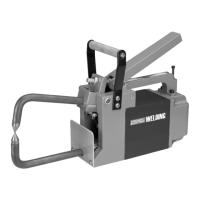
The Chicago Electric 120 Volt Spot Welder is a robust and versatile tool designed for efficient and reliable spot welding of various metal types. This manual provides comprehensive information on its function, technical specifications, usage, and maintenance, ensuring safe and effective operation.

Function Description

The spot welder is engineered to create strong, localized welds by applying pressure and an electrical current to two or more metal sheets. Its primary function is to join metals quickly and securely, making it suitable for a wide range of applications from automotive repair to fabrication. The device operates by clamping the workpieces between two electrodes, through which a high current is passed for a short duration, melting the metal at the contact point and forming a weld nugget. The design emphasizes ease of use and consistent weld quality, allowing both experienced users and those new to spot welding to achieve professional results. The operating lever facilitates the clamping action, while the power switch controls the electrical current. The spatter guard helps contain sparks and molten metal, enhancing safety during operation.

Important Technical Specifications

  • Electrical Rating: 120V~ / 13.5A, indicating its power requirements and current draw.
  • Rated Output: 1.5 kVA @ 50% Duty Cycle. The kilovolt-ampere (kVA) rating signifies the apparent power, while the 50% duty cycle means the welder can operate for 5 seconds out of each 10-second interval without overheating. This specification is crucial for understanding the welder's capacity for continuous operation.
  • Output Amps ± 10%: 5500, representing the welding current delivered to the electrodes. A higher amperage allows for welding thicker materials.
  • Weldable Materials: Uncoated mild, galvanized, or stainless sheet steel. It is explicitly stated that the welder is not for welding aluminum, copper, or copper alloys, which require different welding techniques and equipment.
  • Capacity:
    • Mild Steel: Up to a combined thickness of 1/8" sheet steel.
    • Galvanized Steel: Two pieces of 20 gauge (0.030") sheet steel. These capacities define the maximum thickness of materials that can be effectively welded, highlighting its suitability for lighter gauge metals.
  • Duty Cycle: 50% @ 1.5 kVA, based on a 10-second time period – unit can weld for 5 seconds out of each 10-second time interval. This reiterates the importance of allowing the unit to cool down to prevent overheating and prolong its lifespan.
  • OCV (Open Circuit Voltage): The voltage present at the electrodes when no welding is being performed.
  • Volts (V): The unit of electrical potential.
  • KVA (Kilovolt Amperes): (Volts / 1000 * Amperes), a measure of apparent power.
  • AWG (American Wire Gauge): A standard for wire conductor sizes.
  • Housing Ground Point: Indicates the location for proper grounding, essential for electrical safety.

Usage Features

The spot welder is designed for straightforward operation with several features enhancing user experience and safety:

  • Adjustable Tong and Operating Lever Pressure: The manual emphasizes the importance of adjusting the tong and operating lever pressure to achieve optimal weld quality. Incorrect pressure can lead to weak welds or damage to the electrode tips. Adjustments are made via the rear jam nut and front jam nut, allowing fine-tuning for different material thicknesses and types.
  • Electrode Tips: The device uses replaceable electrode tips (24) that are crucial for concentrating the welding current. The manual provides detailed instructions on dressing (resurfacing) and replacing these tips to maintain proper contact surface and weld quality. Different tip conditions (new, needing dressing, restore to same as new) are illustrated, guiding users on when and how to maintain them.
  • Tong and Electrode Tip Alignment: Proper alignment of the upper and lower tongs (19) and electrode tips (24) is critical for consistent weld quality. The manual outlines steps to correct alignment, ensuring the tips meet squarely on the workpiece.
  • Power Switch: A clearly marked power switch allows for easy control of the welding process. Pushing the power switch sideways turns the unit on, and releasing it shuts off the current, stopping the welding process.
  • Workpiece Handling: The design allows for easy positioning of workpieces between the upper and lower tongs. The operating lever facilitates quick clamping and unclamping, improving workflow efficiency.
  • Duty Cycle Management: Users are instructed to adhere to the 50% duty cycle to prevent overheating. This involves welding for 5 seconds and then allowing 5 seconds of rest, which is crucial for the longevity of the device.
  • Safety Warnings: Extensive safety warnings are provided throughout the manual, covering electrical safety, fire hazards, eye and skin protection, and general operational precautions. These include wearing ANSI-approved welding eye protection, leather leggings, fire-resistant shoes, and appropriate clothing. The importance of working in a well-ventilated area and avoiding welding near flammable substances is also highlighted.

Maintenance Features

Regular maintenance is key to ensuring the longevity and optimal performance of the Chicago Electric Spot Welder. The manual provides clear guidelines for routine checks and troubleshooting:

  • Electrode Tip Maintenance: This is a critical aspect of maintenance. Users are instructed to inspect electrode tips (24) before each use for looseness, misalignment, bending, cracks, damage, or any condition that may affect safe operation. Tips should be dressed (resurfaced) or replaced as needed to maintain a proper contact surface. The manual details how to dress tips using a tip dresser tool and how to replace worn or damaged tips.
  • Cleaning: After each use, external surfaces of the welder should be wiped clean with a cloth. This prevents the buildup of dust and debris that could potentially interfere with the device's operation or cooling.
  • Periodic Inspection: Periodically inspect electrode tips and clean, dress (resurface), or replace as needed to maintain a proper contact surface. This includes checking for misalignment or binding of moving parts, cracked or broken parts, and damaged electrical wiring.
  • Power Cord Inspection: The power cord should be inspected for damage before each use. A damaged cord must be replaced by a qualified service technician to prevent electrical hazards.
  • Troubleshooting Guide: A comprehensive troubleshooting section is included, addressing common problems such as no weld output, poor welding occurs, longer than normal weld time required, burn through at weld point, electrode tips overheating, electrode tips arcing on workpieces, molten material forced out around the weld point, and hole in weld. For each problem, possible causes and likely solutions are provided, guiding users through self-diagnosis and repair.
  • Parts List and Diagrams: Detailed parts lists and assembly diagrams are provided, which are invaluable for identifying components and facilitating repairs or replacements. This ensures that users can order specific parts if needed, extending the life of the welder.
  • Qualified Service: For serious issues or repairs beyond the scope of user maintenance, the manual advises that procedures not specifically explained in the manual must be performed only by a qualified technician. This ensures safety and proper repair.
  • Record Product's Serial Number: Users are encouraged to record the product's serial number, record month and year of purchase instead, and note that some parts are listed and shown for illustration purposes only, and are not available individually as replacement parts. This information is crucial for warranty claims and ordering specific components if available.

By following these guidelines, users can ensure the Chicago Electric 120 Volt Spot Welder remains in excellent working condition, providing reliable performance for various welding tasks.

Chicago Electric 61205 Specifications

General IconGeneral
BrandChicago Electric
Model61205
CategoryWelding System
LanguageEnglish

Related product manuals