Cisco Systems, Inc.
All contents are Copyright © 1992–2002 Cisco Systems, Inc. All rights reserved. Important Notices and Privacy Statement.
Page 7 of 10
Cisco CSS 11500 Specifications
Table 3 lists the specifications for the Cisco CSS 11500 Series.
Table 3 Cisco CSS 11500 Specification
Cisco CSS 11500 Specifications
Key System Parameters* (*For WebNS Version 7.20)
Maximum supported keepalives: 2048
Maximum concurrent connections per I/O module: 200,000 with
256-MB RDRAM
Cisco CSS 11506 • Requires WebNS 5.10 or later versions
• One slot for SCM
• Rack Units: 5
• Five slots for additional modules
• Two slots for switch modules
• Aggregate switch throughput: 40 Gbps
• Dimensions (Height x Width x Depth):
8.75 x 17.0 x 12.5 in. (22.2 x 43.2 x 31.8 cm)
Cisco CSS 11503 • Requires WebNS 5.10 or later versions
• One SCM slot
• Rack Units: 2
• Two slots for additional modules
• Integrated switch fabric module
• Aggregate switch throughput: 20 Gbps
• Dimensions (Height x Width x Depth):
3.5 x 17.0 x 12.5 in. (8.9 x 43.2 x 31.8 cm)
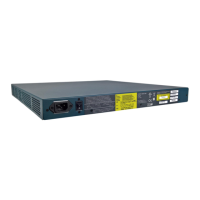
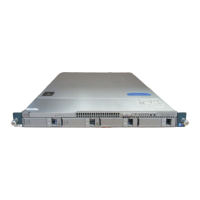
Cisco CSS 11501 • Requires WebNS 7.10 or later versions for CSS11501
• Requires WebNS 7.20 or later versions for CSS11501S-K9
• Fixed configuration with 8 10/100 Ethernet and 1 Gigabit Ethernet (GBIC) Port
• Rack Units: 1
• Aggregate switch throughput: 6 Gbps
• Dimensions (Height x Width x Depth):
1.72 x 17.3 x 18.1 in. (4.4 x 43.9 x 46.0 cm)
Key Cisco WebNS Features
The Cisco CSS 11500 supports all WebNS 7.20 features, including:
• Full URL parsing
• HTTP (1.0, 1.1)
• Sticky cookie insertion
• All TCP services, UDP, and SSL
• Content policy ACLs on all HTTP headers
• VLAN 802.1Q
• Management: Secure Shell Protocol (SSH), SNMP, SSL browser-based interface,
embedded GUI
• Integrated global load balancing with HTTP and DNS-based redirection
• Routing Information Protocol (RIP) versions 1 and 2, Open Shortest Path First
(OSPF)
• Server/node operating system compatibility: Any TCP/IP OS, including Windows
XP, Windows 2000, Windows NT, Windows 98, Windows 95, all UNIX platforms,
LINUX, and Mac OS
• Dynamic content support: Active Server Pages (ASP), Visual Basic Script, ActiveX,
Java, Virtual Reality Markup Language (VRML), Common Gateway Interface (CGI),
CoolTalk, NetMeeting, RealAudio, RealVideo, NetShow, QuickTime, PointCast, Any
HTTP Encapsulated Data


 To Next Page