EasyManua.ls Logo

CLIVET MU1-Y Series - User Manual

CLIVET MU1-Y Series
64 pages
Print Icon
To Next Page IconTo Next Page
Loading...
Change living home
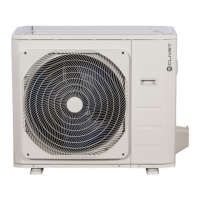
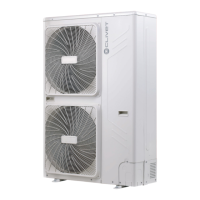
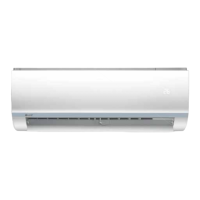
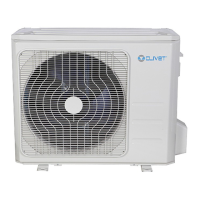
Outdoor unit - SM
INVERTER ONE-TWO/ONE-THREE/ONE-FOUR/ONE-FIVE SPLIT-
TYPE AIR CONDITIONER
INSTALLATION AND OPERATING MANUAL
R-32
R-32
Nominal cooling capacity
Dual from 4,1 to 5,3 kW
Triple from 6,2 to 7,9 kW
Quadri from 8,2 to 10,6 kW
Penta from 12,3 kW
Outdoor unit-SM R-32 (for MULTIsplit systems):
Series MU1-Y from 41M to 125M

Questions and Answers

CLIVET MU1-Y Series Specifications

General IconGeneral
BrandCLIVET
ModelMU1-Y Series
CategoryAir Conditioner
LanguageEnglish

Summary

Accessories

Safety Precautions

Note about Fluorinated Gasses

Explanation of Symbols

Installation Overview

Installation Diagram

Specifications

Outdoor Unit Installation

Outdoor Unit Installation Instructions

Detailed requirements for selecting an outdoor unit installation location.

Split Type Outdoor Unit

Drain Joint Installation

Notes On Drilling Hole In Wall

Selecting a 24 K Indoor Unit

Refrigerant Piping Connection

Safety Precautions

Important safety warnings for handling refrigerant piping and connections.

Refrigerant Piping Connection Instructions

Detailed steps and precautions for connecting refrigerant pipes, including cutting and flaring.

Wiring

Safety Precautions

Critical safety guidelines for electrical wiring and power connections.

Fuse Specifications

Information regarding the fuse specifications for the air conditioner's circuit board.

Outdoor Unit Wiring

Instructions for performing electrical wiring on the outdoor unit.

Air Evacuation

Safety Precautions

Essential safety precautions when using vacuum pumps for air evacuation.

Evacuation Instructions

Step-by-step procedures for evacuating the air conditioner system.

Note On Adding Refrigerant

Safety And Leakage Check

Electrical safety check

Procedures for checking insulated resistance, grounding, and electrical leakage.

Gas leak check

Methods for detecting gas leaks using soap water or a leak detector.

Test Run

Before Test Run

Points to confirm before performing the system test run.

Test Run Instructions

Steps to follow for conducting the test run of the air conditioner.

Function of Automatic Wiring;Piping Correction

Automatic Wiring;Piping Correction Function

Explanation of the automatic wiring/piping error correction feature.

Activating the Function

Steps required to activate the automatic wiring/piping correction function.

European Disposal Guidelines

Information Servicing

Area Checks for Servicing

Safety checks and precautions for working in areas with flammable refrigerants.

Servicing Work Procedures

Controlled procedures to minimize risks when working with flammable refrigerants.

General Work Area Safety

Instructions for maintaining a safe work environment when servicing.

Refrigerant Presence Check

Using detectors to ensure the absence of flammable refrigerant atmospheres.

Fire Extinguisher Requirement

Ensuring appropriate fire extinguishing equipment is available during hot work.

Ignition Source Control

Prohibiting ignition sources in areas where flammable refrigerants are present.

Ventilation Requirements

Ensuring adequate ventilation during servicing operations.

Refrigeration Equipment Checks

Checks for refrigeration equipment, including charge size and ventilation.

Checks to electrical devices

Initial Electrical Safety Checks

Initial safety checks for electrical components, including capacitors and live parts.

Repairs to sealed components

Sealed Component Repairs

Procedures for working on sealed components, including power disconnection and leak detection.

Component Repair Precautions

Attention to casing integrity, cable damage, and seal condition during repairs.

Repair to intrinsically safe components

Cabling

Detection of flammable refrigerants

Leak detection methods

Removal and evacuation

Charging procedures

Decommissioning

Labelling

Recovery

Transportation, marking and storage for units

Technical information

Unit Parts And Major Functions

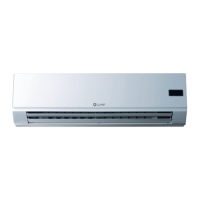
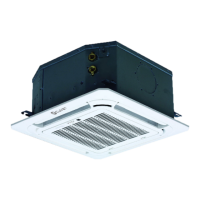
Indoor Unit Parts

Identification and illustration of parts for wall-mounted and duct/ceiling indoor units.

Operating Conditions

Features

Air Conditioner Protection Features

Features protecting the air conditioner, including compressor and anti-cold air.

White Mist Explanation

Explanation of white mist generation during cooling and defrosting.

Operational Noise Explanation

Description of normal operational noises from the unit.

Dust Emission Explanation

Reason for dust emission after periods of non-use or first use.

Indoor Unit Smell Explanation

Causes of unusual smells from the indoor unit.

Manual Operations And Maintenance

Operation Mode Selection

Guidelines for operating multiple indoor units simultaneously without mode conflicts.

Optimal Operation Tips

Tips for achieving optimal performance and comfort from the air conditioner.

Idle Unit Maintenance

Tasks to perform when leaving the unit idle for an extended period.

Post-Inactivity Checks

Checks to perform before resuming operation after a long period of inactivity.

Troubleshooting

Critical Cautions

Important cautions for immediate actions when specific conditions occur.

Common Operational Problems

Identification of common issues that may not require repairs.

Troubleshooting Tips

European Disposal Guidelines

Related product manuals