CMT2380F17
Rev0.1 | 258/347
21 Two Wire serial Interface (TWI0/ I2C0)
The Two-Wire serial Interface is a two-wire, bi-directional serial bus. It is ideally suited for typical
microcontroller applications.
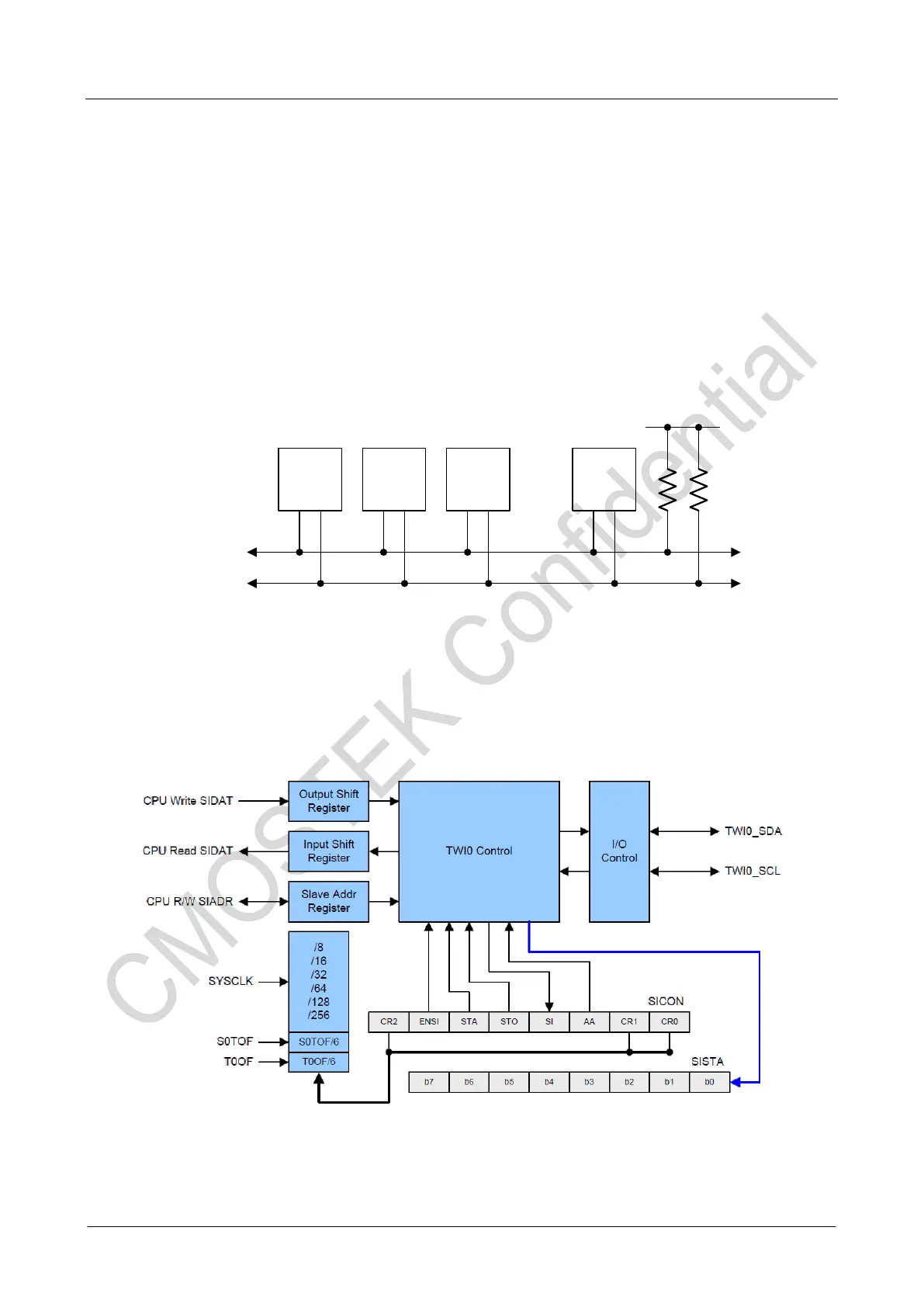
The TWI/ I2C protocol allows the systems designer to interconnect up to 128 different devices using only
two bi-directional bus lines, one for clock (TWI0_SCL) and one for data (TWI0_SDA). The TWI bus provides
control of TWI0_SDA (serial data), TWI0_SCL (serial clock) generation and synchronization, arbitration logic,
and START/STOP control and generation. The only external hardware needed to implement this bus is a
single pull-up resistor for each of the TWI bus lines. All devices connected to the bus have individual
addresses, and mechanisms for resolving bus contention are inherent in the TWI/ I2C protocol.
Device 0 Device 1 Device 2 Device n
TWI0_SDA
TWI0_SCL
VDD
………
Figure 21-1. TWI/ I2C Bus Interconnection
The TWI/ I2C bus may operate as a master and/or slave, and may function on a bus with multiple
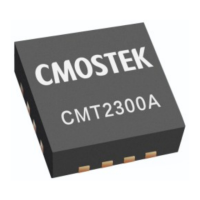
masters. The CPU interfaces to the TWI/ I2C through the following four special function registers: SICON
configures the TWI/ I2C bus; SISTA reports the status code of the TWI/ I2C bus; and SIDAT is the data
register, used for both transmitting and receiving TWI/ I2C data. SIADR is the slave address register. And, the
TWI/ I2C hardware interfaces to the serial bus via two lines: SDA (serial data line) and SCL (serial clock line).
Figure 21-2. TWI/ I2C Block Diagram
21.1 Operating Modes
There are four operating modes for the TWI/ I2C:



 To Next Page