19
INSTRUCTOR’S MANUAL
CUEING FOR GOOD TECHNIQUE
As with any sport, improper technique can result in injury as well as poor performance. Recognizing
errors is important, but correcting them is even more critical to your role as an instructor.
Repeat these reminders during various points in the class. The goal is to create muscle memory.
Repetition of movement and use of imagery help athletes accomplish physical goals.
Use the following verbal cues while instructing during each phase of the stroke;
THE SET/START
• Handles should be raised slightly
above the eyes
• Arms should be bent at about a 90
degree angle
• Feet comfortably spaced about hip
width apart
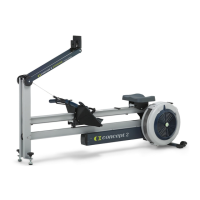
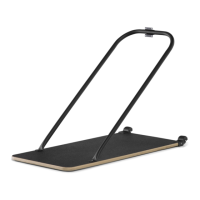
• Stand roughly 20” from the frame. (If
you have a floor stand, stand about
where the floorstand arms connect to
the base.)
• Brace through the midsection
DURING THE DRIVE
• Keep arms bent
• Crunch with the abs
• Drive handles toward feet
• Achieve comfortable bend in the legs
AT THE FINISH
• Extend the arms, but not to full
extension
• Handles stop near the thighs—no
need to go beyond your thighs
THROUGH THE RECOVERY
• Stand back up
• Raise handles to Start position
Stroke should be smooth and continuous with
no stopping at any point.
PRIMARY MUSCLES
(red):
These are the muscles that
contract to accomplish the
desired movement and
power; they have high power
output.
SECONDARY MUSCLES
(yellow):
These muscles play a
posture supporting and
stabilizing role; they have low
power output.
Both types of muscles work
together in a synchronized
fashion to accomplish the
movement, but with different
levels of involvement and
power output.


 To Next Page