37
Energy and environment tips
Here you can find tips on how to save energy when baking and
roasting and how to dispose of your appliance properly.
Saving energy
■ Only preheat the oven if this is specified in the recipe or in
the operating instruction tables.
■ Use dark, black lacquered or enamelled baking tins. They
absorb the heat particularly well.
■ Open the oven door as infrequently as possible while you are
cooking, baking or roasting.
■ It is best to bake several cakes one after the other. The oven
is still warm. This reduces the baking time for the second
cake. You can also place two loaf tins next to each other.
■ For longer cooking times, you can switch the oven off
10 minutes before the end of the cooking time and use the
residual heat to finish cooking.
Environmentally-friendly disposal
Dispose of packaging in an environmentally-friendly manner.
Tested for you in our cooking studio
Here you will find a selection of recipes and the ideal settings
for them. We will show you which type of heating and which
temperature or microwave power setting is best for your meal.
You can find information about suitable accessories and the
height at which they should be inserted. There are also tips
about ovenware and preparation methods.
Notes
■ The values in the table always apply to food placed into the
cooking compartment when it is cold and empty. Only
preheat the appliance if the table specifies that you should do
so. Before using the appliance, remove all accessories from
the cooking compartment that you will not be using.
■ Do not line the accessories with greaseproof paper until after
they have been preheated.
■ The times specified in the tables are only guidelines. They will
depend on the quality and composition of the food.
■ Use the accessories supplied. Additional accessories may be
obtained from specialist retailers or from the after-sales
service.
■ Always use an oven cloth or oven gloves when taking
accessories or ovenware out of the cooking compartment.
Defrosting, heating up and cooking with the
microwave
The following tables provide you with numerous options and
settings for the microwave.
The times specified in the tables are only guidelines. They may
vary according to the ovenware used, the quality, temperature
and consistency of the food.
Time ranges are often specified in the tables. Set the shortest
time first and then extend the time if necessary.
It may be that you have different quantities from those specified
in the tables. A rule of thumb can be applied: Double amount -
just under double the cooking time, half amount - half the
cooking time.
Place the ovenware in the centre of the lower wire rack. The
food will then absorb the microwaves from all sides.
Defrosting
Notes
■ Place the frozen food in an open container on the wire rack.
■ Delicate parts such as the legs and wings of chicken or fatty
outer layers of roasts can be covered with small pieces of
aluminium foil. The foil must not touch the cooking
compartment walls. You can remove the foil half way through
the defrosting time.
■ Turn or stir the food once or twice during the defrosting time.
Large pieces of food should be turned several times. When
turning, remove any liquid that has resulted from defrosting.
■ Leave defrosted items to stand at room temperature for a
further 10 to 60 minutes so that the temperature can
stabilise. The giblets can be removed from poultry at this
point.
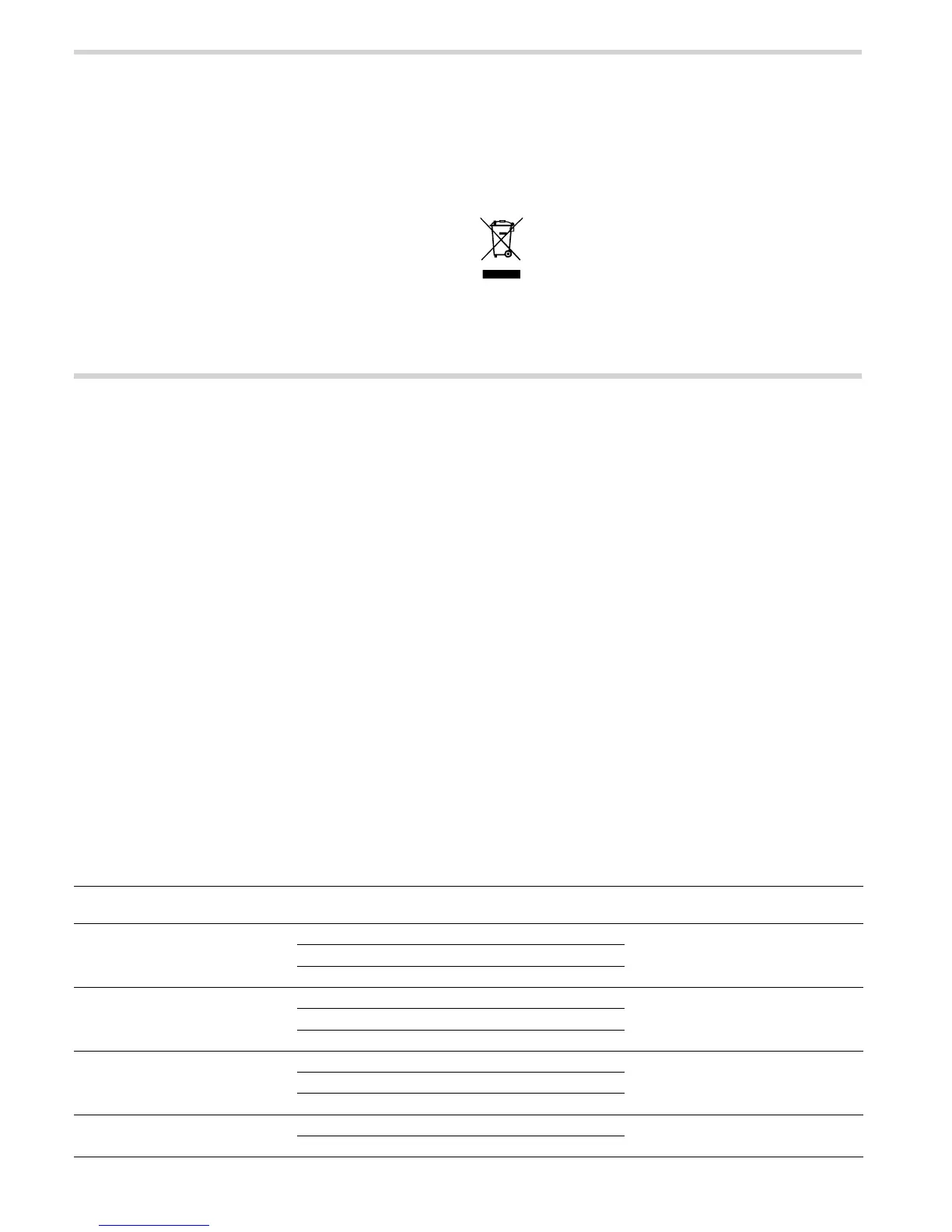
This appliance is labelled in accordance with
European Directive 2012/19/EU concerning used
electrical and electronic appliances (waste electrical
and electronic equipment - WEEE). The guideline
determines the framework for the return and recycling
of used appliances as applicable throughout the EU.
Defrost Weight Microwave power setting in watts,
cooking time in minutes
Notes
Whole pieces of meat (beef, veal or
pork - on the bone or boned)
800 g 180 W, 15 mins + 90 W, 10-20 mins Turn several times
1 kg 180 W, 20 mins + 90 W, 15-25 mins
1.5 kg 180 W, 30 mins + 90 W, 20-30 mins
Meat in pieces or slices of beef,
veal or pork
200 g 180 W, 3 mins + 90 W, 10-15 mins Separate any defrosted parts when
turning
500 g 180 W, 5 mins + 90 W, 15-20 mins
800 g 180 W, 8 mins + 90 W, 15-20 mins
Minced meat, mixed 200 g 90 W, 10-15 mins Freeze food flat if possible
Turn several times, remove any
defrosted meat
500 g 180 W, 5 mins + 90 W, 10-15 mins
800 g 180 W, 8 mins + 90 W, 15-20 mins
Poultry or poultry portions 600 g 180 W, 8 mins + 90 W, 10-15 mins Turn during cooking.
1.2 kg 180 W, 15 mins + 90 W, 25-30 mins
Duck 2 kg 180 W, 20 mins + 90 W, 30-40 mins Turn several times



 To Next Page