8
Maintenance & Care
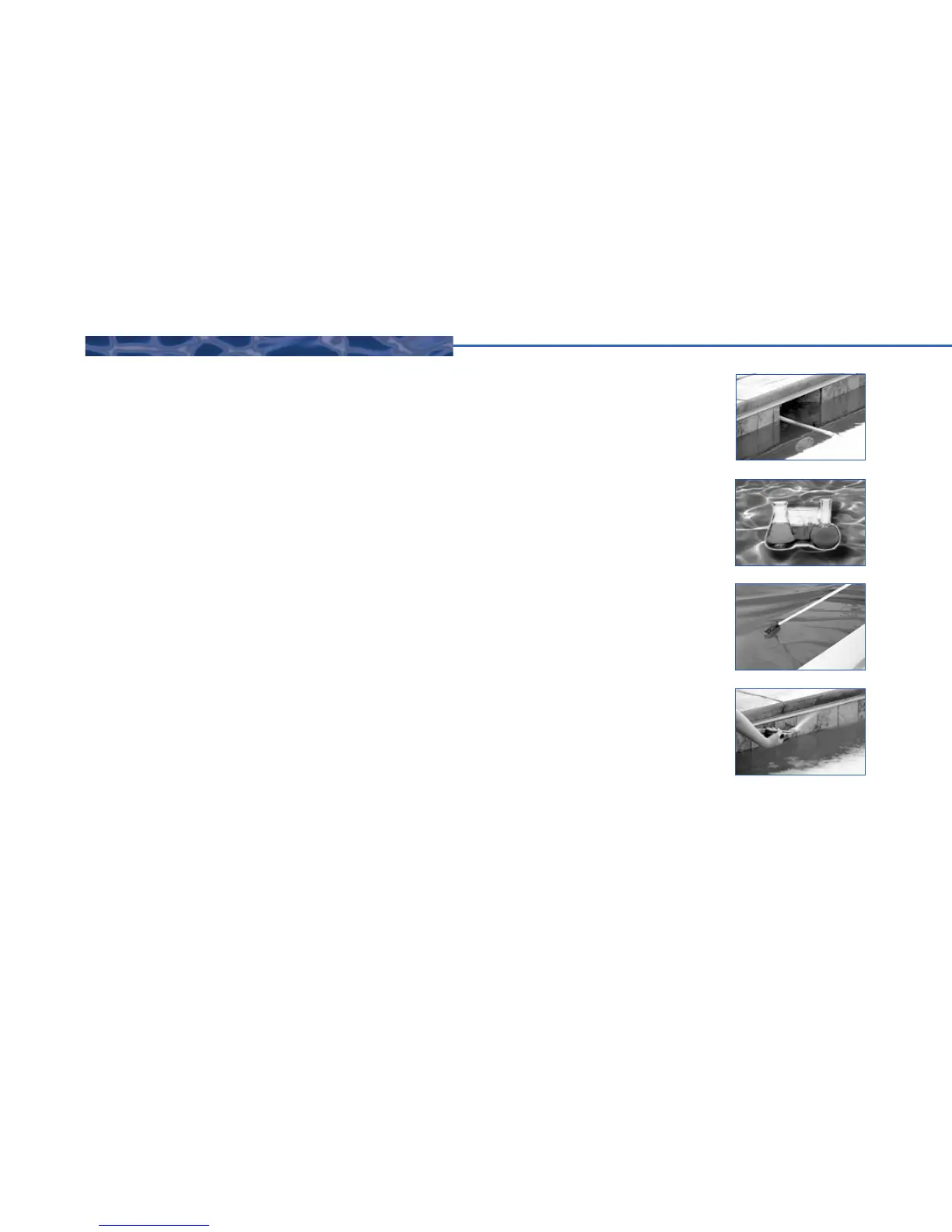
WATER LEVEL Keep the water level in the pool at the mid-skimmer level. If the pool is overfilled, the water can flow over the lowered bond
beam into the housing and flood the mechanism.
0//, #(%-)3429 We suggest, as all cover manufacturers do, that you only cover pool water that you would swim in. If the water is
temporarily out of balance due to chemical additive, covering the pool will shorten the life of the fabric. Use a good test kit frequently to maintain proper
chemical balance. You must avoid a build-up of chemicals in the pool water that can result in serious damage to pool walls and equipment. Such a
build-up can also create an improper water balance which may cause deterioration of the vinyl cover as well as other cover system components. A
deterioration so caused is not covered by the warranty. After adding any chemicals to your pool, allow the chemicals to circulate before closing the
cover. If you are unsure if it is safe to close the cover, test the water at the surface with your test kit. Some pH adjusters may create harmful levels of
alkalinity (high pH) if not allowed to mix with the water before the cover is closed. The same is true with chlorine shocks. Some chlorine shocks require
as long as 12-24 hours to return to swimmable range. Since safety is often the major reason people purchase a cover, we recommend the use of a
non-chlorine shock. With this type of shock the cover may be closed in 30 minutes or less. Please check with your pool service company for proper us-
age. The use of floating chlorine feeders is not recommended because they vent chlorine gas that can burn the cover fabric and often remain trapped
in the same location.
CLEANING THE COVER When you uncover the pool, the water in the pool is transferred from the pool to the top surface of the cover.
The sun then dries it, causing high concentrations of chlorine on top of the cover that may damage the fabric. You can wash the cover with a mild hand
dish washing liquid as necessary to remove this accumulation. However, do not use laundry detergent or any other chemicals to clean the cover.
COVER GUIDES Retract the cover completely off the pool and clean the cover guide rope and slider channel. Use a high pressure nozzle
on a garden hose to spray directly into the slots of the aluminum deck guides to remove built-up dirt and debris. Repeat as often as necessary to keep
the guides clean. Spray into the pulley housing at the end of the guides at close range to remove debris from within the housing. In windy and dusty
areas with blowing dirt, covers may become inoperable until the debris has been hosed from the guides. In these areas, guides will have to be flushed
clean more frequently. A build-up of sand and/or dirt will grind the webbings causing them to fail prematurely. The webbings used on our covers have
been proven over many years and thousands of covers to last beyond the life of the fabric if the cover guides are kept clean. Premature webbing failure
due to abrasion from debris in the guides is easily preventable and is not covered under the warranty.
HOUSING DRAINS On recessed systems, frequently check the drain(s) to be certain they drain the housing completely and do not allow
water to stay in the housing area. If water is allowed to stand in the mechanism area over periods of time, the system may become damaged by the
constant moisture. Damage to either electrical or mechanical components resulting from standing water or extended submersion is not covered under
the warranty. Clean leaves and debris from the housing as necessary. Run the cover over the pool, prop the housing lid open or remove it, and remove
the debris in the housing. Accumulated debris can hinder the proper operation of the cover or damage the cover material.
-%#(!.)3- 05,,%93 Clean all rotating surfaces and pulleys by spraying with a hose nozzle every 3 months or more often in
sandy or windy areas. Use a hose nozzle to completely wash all surfaces of the mechanism to prevent fine dust or sand from accumulating on the
moving surfaces of the mechanism.



 To Next Page