
 Need help?
Do you have a question about the Craftsman 358.34160 and is the answer not in the manual?
Explains kickback, its causes, and how to prevent it to avoid injury.
Lists methods and precautions to minimize the risk of kickback during operation.
Offers guidance on proper body positioning, grip, and balance for safe saw operation.
Introduces the user to the saw's features and components designed for safety.
Emphasizes the importance of preparing the work area and planning operations before cutting.
Describes pinch-kickback and pull-in, explaining how to avoid these dangerous reactions.
Details essential safety practices for operating the chain saw correctly and preventing accidents.
Guides users on maintaining the saw's operational condition and safety features.
Provides instructions on how to safely transport and store the chain saw when not in use.
Explains specific features like reduced-kickback bars and chains designed to mitigate kickback hazards.
Describes the double insulation system for electrical safety and protection against shock.
Lists the items included in the saw's packaging upon purchase.
Outlines initial preparations, including reading the manual and gathering necessary tools.
Details requirements for safe and proper power supply and extension cord usage.
Explains the function and operation of key controls like the trigger switch and lockout button.
Lists essential checks to perform before each use to ensure safety and proper function.
Provides instructions on how to safely start and stop the chain saw motor.
Explains the process of using the Power Sharp system for automatic chain sharpening.
Describes the manual filing process required for chain maintenance after Power Sharp system use.
Offers key considerations and tips for effective chain sharpening and maintenance.
Guides on how to replace or remove the sharpening stone in the Power Sharp system.
Explains fundamental principles and safety for general wood cutting tasks.
Outlines methods and precautions for safely felling trees of various sizes.
Provides specific techniques for felling smaller trees safely and efficiently.
Details the notch method for safely felling larger trees, including safety warnings.
Offers critical considerations for safe and effective bucking procedures.
Describes overcutting and undercutting techniques used during bucking operations.
Details techniques for bucking logs with and without support, and using stands.
Provides instructions on how to safely remove branches from a cut tree.
Details techniques for pruning limbs at or below shoulder height.
Explains how to clean the chain saw after each day's use to maintain performance.
Provides tips and procedures for extending the life of the guide bar and chain.
Details specific maintenance procedures for the guide bar, including cleaning and repair.
Explains how to clean, inspect, and replace the drive sprocket for optimal chain performance.
Provides instructions for storing the chain saw properly for extended periods.
Lists available accessories for maintaining the chain saw, such as files and lubricants.
This document is an operator's manual for Sears/Craftsman Electric Chain Saws, specifically models 358.34120-2.0/12", 358.34150-2.0/14", and 358.34160-2.0/14" P.S. It provides crucial information on assembly, operation, maintenance, and repair parts, emphasizing safety precautions to prevent personal injury. The manual highlights that it is an "IMPORTANT MANUAL" and advises users "Do Not Throw Away."
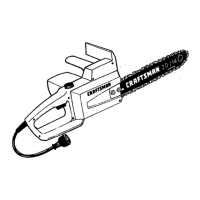
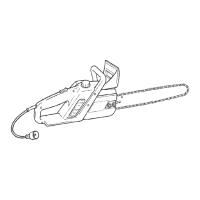
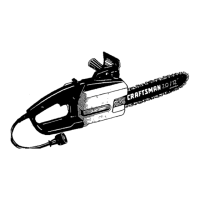
The Sears/Craftsman Electric Chain Saw is a high-speed wood-cutting tool designed for occasional use. Its primary function is to cut wood, whether for felling small or large trees, bucking felled trees into desired log sizes, or debranching and pruning. The saw is powered by an A.C. voltage supply and features a motor that drives a cutting chain around a guide bar. The chain's cutting teeth are designed to efficiently cut through wood.
The chain saw incorporates several features to enhance user experience and safety. It is equipped with a Lockout Button, a control feature designed to prevent accidental starting. The Lockout Button must be pushed in by the thumb while gripping the rear handle, allowing the index finger to squeeze the Trigger Switch to start the motor. Once the Trigger is engaged, it's not necessary to maintain pressure on the Lockout button. The Front and Rear handles are designed to provide a firm grip, which is crucial for maintaining control and neutralizing kickback. The saw should always be started with the chain moving at full speed before beginning a cut, and stopped only after leaving the material to avoid damage and overheating the motor.
For cutting, the manual outlines basic techniques, including beginning cuts with the saw frame against the log and allowing the chain to cut without excessive downward pressure. It advises against forcing the cut, as this can damage the bar, chain, or motor. The saw should be unplugged after each cutting operation.
Specific cutting techniques are detailed for felling trees, bucking, debranching, and pruning. When felling small trees (less than 6" in diameter), a single felling cut can be made on the side away from the direction of fall. For larger trees (6" or more), the notch method is used, involving a notch cut on the side of the desired fall direction, followed by a felling cut on the opposite side, leaving a hinge to control the fall. Wedges (plastic or wood, never metal) can be used to open cuts and control fall direction.
Bucking, the process of cutting a felled tree into lengths, involves making a first cut 1/3 of the way through the log on the pressure side, followed by a 2/3 cut on the opposite side to prevent pinching. The manual describes overcutting (top side of log, bottom of saw against log) and undercutting (under side of log, top of saw against log). It warns against turning the saw upside down for undercutting.
Debranching and pruning should be done slowly with a firm grip and secure footing. Debranching is performed after a tree is cut down, starting from the base and working towards the top, removing small limbs with one cut. Pruning is limited to limbs at or below shoulder height, using a 1/3 undercut near the trunk and a finish overcut farther out.
A unique feature of model 358.34160 is the Power Sharp® System, which automatically sharpens the saw chain. This system uses a built-in grinding stone to sharpen cutter top plates and set depth gauges. Users can activate it by turning the Power Sharp® Knob clockwise while pushing down, and depressing the knob for 8-10 seconds. This system performs approximately 80% of the necessary sharpening, with hand filing required periodically to correct side plates and depth gauges.
Regular maintenance is crucial for the saw's service life, safety, and performance. The manual emphasizes unplugging the saw before any servicing or accessory changes. All electrical repairs, including housing, switch, and motor, must be performed by a Sears Service Center.
Key maintenance tasks include:
The manual also includes a trouble-shooting chart to help users diagnose and remedy common issues such as inadequate oil, chain not moving, chain clattering or cutting roughly, chain stopping in the cut, or cutting at an angle. It also lists available maintenance accessories like files, file guides, depth gauge tools, and lubricants.
 General
| Engine Type | 2-Cycle |
|---|---|
| Type | Gas-powered |
| Chain Gauge | 0.050 inch |
| Bar Length | 16 inches |
| Chain Pitch | 3/8 inch |





 To Next Page