
 Need help?
Do you have a question about the Craftsman CMECS600 and is the answer not in the manual?
Critical safety information and instructions before chainsaw operation.
Explains DANGER, WARNING, CAUTION, and NOTICE symbols used in the manual.
Covers work area, electrical, and personal safety practices for power tools.
Details proper usage, maintenance, and care for power tools.
Outlines critical safety precautions specific to chainsaw operation.
Explains kickback causes and how to prevent it.
Detailed steps and precautions to avoid kickback incidents.
Describes built-in features designed to reduce kickback hazards.
Safe handling, operation, and environmental considerations for chainsaw use.
Proper extension cord selection and key chainsaw terminology.
Specifies intended applications and limitations for the chainsaw.
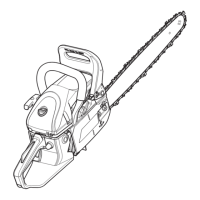
Identifies and describes main parts and features of the chainsaw.
Step-by-step guide for attaching the guide bar and saw chain.
Instructions for properly setting and checking saw chain tension.
Procedure for removing and installing a new saw chain.
Explains the automatic oiling system and lubrication maintenance.
Details how to securely connect an extension cord to the chainsaw.
Safe practices for operating, transporting, and starting the chainsaw.
Guidance on process and safety precautions for felling trees.
Specific cuts and considerations for felling trees.
Methods for cutting felled logs and removing branches.
Safe cutting on slopes and saw chain sharpening instructions.
Routine cleaning and maintenance procedures for the chainsaw.
Lists recommended accessories and FCC/IC compliance information.
Details product warranty, refund policy, and label replacement.
Offers solutions for common problems like starting issues or poor cutting.
This document is an operator's manual for a CRAFTSMAN CMECS600 Chain Saw, providing comprehensive instructions for its safe operation, assembly, maintenance, and troubleshooting.
The CRAFTSMAN Chainsaw is designed for pruning applications and cutting small logs up to 16 inches (406 mm) in diameter, intended for consumer use. It is an electric-powered tool, requiring an extension cord for outdoor use, and is equipped with an auto oiling system to ensure continuous lubrication of the saw chain and guide bar.
The primary function of this device is to cut wood using a rotating saw chain driven by an electric motor. The saw chain, equipped with cutting teeth, is supported and guided by a guide bar. The chainsaw is designed for two-handed operation, with a front handle and a rear handle, ensuring stability and control during use. It features a trigger switch for activation and a lock-off button to prevent unintentional starting. The auto oiling system continuously lubricates the saw chain and guide bar, which is crucial for efficient cutting and prolonging the life of these components. An oil level indicator allows the user to monitor the oil reservoir and refill it as needed. The chainsaw also incorporates safety features such as a reduced-kickback guide bar and a low-kickback chain, designed to minimize the risk of kickback, a dangerous sudden backward or upward motion of the guide bar.
Before operating the chainsaw, users must ensure proper assembly of the guide bar and saw chain. The manual emphasizes the importance of correct chain tensioning, which involves loosening a bar adjust locking knob, rotating a chain tensioning wheel to tighten the chain, and then securing the locking knob. The correct tension is achieved when the chain snaps back after being pulled 1/8 inch (3mm) away from the guide bar with light force. Over-tensioning is warned against as it can lead to excessive wear and reduced life of the bar and chain.
For starting the tool, the lock-off button must be depressed before squeezing the trigger switch. The tool is turned off by releasing the trigger switch. The manual provides detailed instructions for common cutting techniques, including felling and bucking. Felling, the process of cutting down a tree, requires careful planning of a retreat path and consideration of the tree's natural lean and wind direction. Notching undercut and felling back cut techniques are described to control the tree's fall. Bucking involves cutting a felled tree or log into lengths, with recommendations to use a saw horse for stability. When cutting, users are advised to start with the chain running at full speed, use the bottom spike of the chainsaw as a hinge, and exert only light pressure, allowing the chain to cut naturally. Limbing, the removal of branches from a fallen tree, also includes specific instructions to avoid binding the chainsaw and to cut branches under tension from the bottom up.
Safety is paramount, with warnings against one-handed operation, cutting above chest height, operating in trees or on unstable surfaces, and allowing any part of the body to be in line with the guide bar. Users are instructed to maintain a firm grip with both hands, keeping thumbs and fingers encircling the handles, and to position their body and arms to resist kickback forces.
Regular maintenance is crucial for the chainsaw's longevity and safe operation. The manual recommends cleaning the guide bar and chain thoroughly after every few hours of use. This involves removing the sprocket cover, lifting out the worn saw chain, and cleaning the groove of the guide bar.
Saw chain sharpening is another key maintenance task. Users are advised to wear protective gloves due to the sharp chain. For best results, a 4.5mm file with a file holder or filing guide should be used to ensure correct sharpening angles. The top plate filing angle should be 30°, and the file should be parallel with the chain, filing from the inside of each cutter to the outside. After sharpening one side, the saw should be turned around to repeat the process for the cutters on the other side. The tops of the rakers (portion of the chain link in front of the cutter) should be filed down to approximately .025 inch (.635 mm) below the tips of the cutters using a flat file. It is noted that each sharpening reduces the low kickback qualities of the chain, and a chain should not be sharpened more than four times.
The auto oiling system requires periodic checks of the oil level indicator, and the reservoir should be refilled with high-quality bar and chain oil when the level is less than a quarter full. Non-detergent SAE30 motor oil can be used as a temporary substitute, and vegetable-based oil is recommended for pruning trees. Waste oil or very thick oil should never be used as they can damage the chainsaw.
For cleaning the tool's plastic housing, only mild soap and a damp cloth should be used, avoiding solvents and preventing any liquid from entering or immersing the tool. The manual also states that repairs, maintenance, and adjustments should be performed by qualified service organizations using identical replacement parts to assure product safety and reliability.
 General
| Power Source | Electric |
|---|---|
| Automatic Oiler | Yes |
| Oiling System | Automatic |
| Chain Brake | Yes |
| Tool-less Chain Tensioning | Yes |
| Bar Length | 16 inches |
| Amperage | 12 Amps |
| Voltage | 120 Volts |
| Chain Pitch | 3/8 inch |
| Chain Gauge | .050 inch |







 To Next Page
