ENGLISH
6
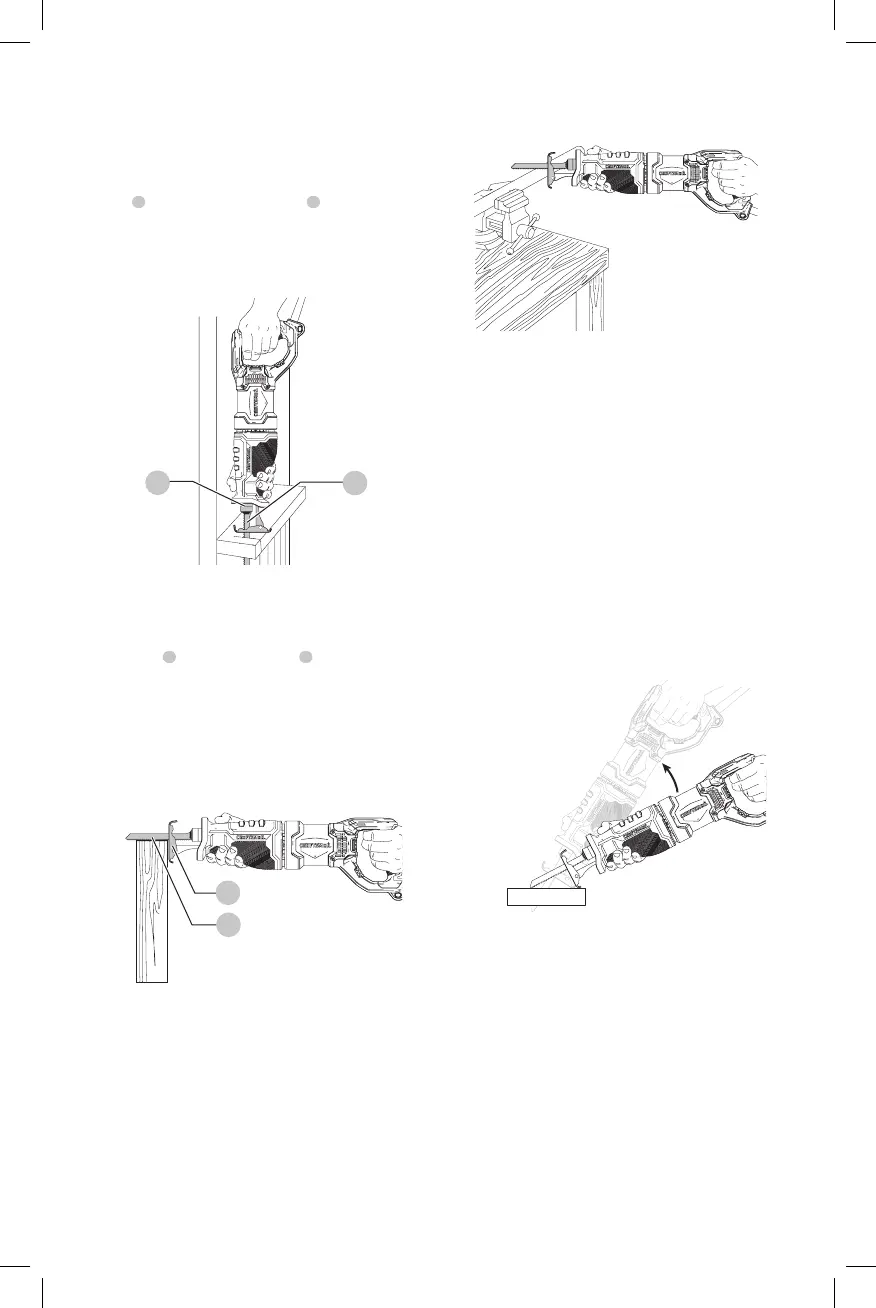
Flush Cutting (Fig. E)
The compact design of the recipro cating saw motor
housing and pivoting shoe permit close cutting to floors,
corners and other difficultareas.
1. To maximize flush cutting capabilities, insert the
blade
7
into the blade clamp collar
6
with the teeth of
the blade facingup.
2. Turn the saw upside down so you are as close to the
work surface aspossible.
Fig.E
7
6
Wood Cutting (Fig. F)
1. Before cutting any type of wood, be sure the workpiece
is firmly anchored or clamped to preventslipping.
2. Place blade
7
and adjustable shoe
5
firmly against
work to becut.
3. Switch on saw motor before starting thecut.
4. Always hold saw firmly with both hands while cutting.
Whenever possible, the shoe must be held firmly against
the material being cut. This will prevent the saw from
jumping or vibrating and minimize bladebreakage.
Fig.F
7
5
Metal Cutting (Fig. G)
1. Use a finer blade for ferrous metals and a coarse blade
for non-ferrousmaterials.
2. In thin gauge sheet metals it is best to clamp wood to
the underside of the sheet. This will ensure a clean cut
without excess vibration or tearing ofmetal.
3. Avoid forcing cutting blade as this reduces blade life
and causes costly bladebreakage.
NOTE: You should spread a thin film of oil or other coolant
along the line ahead of the saw cut for easier operation
and longer blade life. For cutting aluminum, kerosene
ispreferred.
Fig.G
Pocket Cutting - Wood Only (Fig. H)
Measure the surface area to be cut and mark clearly with a
pencil, chalk orscriber.
• Tip the saw backward until the back edge of the shoe
is firmly on the worksurface and the fully extended
moving blade will clear the surface.
• Switch motor on, permitting blade to attain
maximumspeed.
• Grip handle steadily and begin a slow, deliberate
upward swing with the handle of thesaw.
• The blade will begin to feed into material. Always
be sure blade is completely through material before
continuing with pocketcut.
NOTE: In areas where blade visibility is limited, use the
edge of the shoe as aguide.
Fig.H
Project Tips
• Cut only with sharp blades; they cut cleaner, faster and put
less strain on the motor whilecutting.
• When cutting, always ensure that the shoe is resting
against the workpiece. This will improve operator
control and minimizevibration.
• For longer blade life, use bi-metal blades. These
utilize a carbon steel back welded to high speed steel
teeth making the blade more flexible and less prone
tobreaking.



 To Next Page