KILN PLACEMENT AND INSTALLATION
All kilns should be located in an area free from flammable materials such as drapes, boxes, paper, spray
cans, paint, gasoline, etc. All kilns must be located a minimum of 18 inches from every vertical surface. Do
not place any kiln under any overhead obstruction such as cabinets, shelf, drapes, hanging plastic, etc., and
never lean anything against your kiln. Do not store anything between the kiln and a wall or under your kiln;
keep these areas clear at all times. Keep material off the top of your kiln; do not use the lid as a shelf.
Recommended floor surfaces include cement, ceramic tile with cement grout, brick, or stone. If it is
necessary to put your kiln on a synthetic of wooden floor, use a sheet of fireproof material underneath your
kiln and extending 24” beyond the kiln in all directions. A layer of hard firebrick is also acceptable for this
purpose. Floor coloration may be sensitive to heat.
Good housekeeping must be maintained at all times in the kiln area for safety.
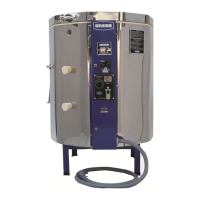
Your kiln must be fired on the meal stand provided; it has been designed specifically for the height and
weight of your kiln. Do not use any other stand. Be sure to center the kiln on the stand so that it is stable,
and position it so that the cord does not touch the sides of the kiln, which will be hot during firing. It is also
important that the stand and kiln be level (use a bubble level for this purpose), otherwise there is a
possibility of pieces of ware falling during firing. Screw the stand to the kiln with the screws provided.
Use your kiln only in a well ventilated room. Vapors containing poisonous gases are possible when firing
certain materials. Do not breathe fumes from kiln when firing.
ELECTRICAL SPECIFICATIONS
Proper electrical wiring is necessary to safely and efficiently operate a kiln. Even though the voltage is a
full 120 volts or 234 volts at the meter, the voltage on which the kiln operates will be somewhat lower at
the kiln location. Make sure your electrical outlet has the correct electrical capacity and voltage to handle
your kiln. It is necessary to measure the voltage at the location of the kiln with the kiln turned on. Voltage
drops occur on all wiring. Proper electrical wiring will provide an adequate operation voltage and current at
the kiln without significant voltage drop. (Voltage may be temporarily low during brownouts especially on
a hot day in the summer when all your neighbors have their air conditioning turned on during peak
electrical usage periods in your area). If the wire coming from your power source to the kiln is too small or
too long the kiln will not operate properly, even if the wire meets national electrical safety codes. If the
voltage is low, the kiln may not reach the maximum desired temperature or will fire too slowly. This may
reduce element life. 230 volt and 240 volt kilns may be used with 220 volt to 245 volt power.
Do not attempt to change the receptacle on an existing line without using the services of a licensed
electrician. The electrician will know whether the wire size is correct. It is advisable to use a large wire size
than absolutely necessary to prevent voltage drop, especially if the run to the meter is long. The increase in
cost is usually very small compared to the long term savings in firing times and line loss (voltage loss).
Never cut the plug off and replace it. If the plug becomes damaged, change the entire cord with a CRESS
factory supplied cord which will meet temperature as well as electrical requirements. The outlet must be in
good condition or heating of the cord and plug cap will occur. Do not use an extension cord at any time.
Temperature rating specifications as well as the electrical rating requirements for your kiln are listed on
your decal on the kiln. Your electrician must make sure all local codes are met with your house wiring.
Your licensed electrician is responsible for meeting the requirements for the local and national codes.


 To Next Page