SERIES
Features
Description
• Dramatically reduced net weight
• Linear power supply / switching output stages
• Very low current draw
• Latest generation of high-speed, wide-bandwidth output devices
• Cooled by variable speed fan with back-to-front airflow
• Inputs - Balanced female XLR, 1/4” TRS and three pin phoenix
• Outputs - Speakon and five-way binding posts
• Mode selector switch for stereo, parallel and bridged-mono operation
• Ground-lift switch and rear panel circuit breaker
• Recessed, stepped attenuators with removable knobs
• 16-gauge steel chassis, 14-gauge steel front-panel
TourClass
®
protection circuits
ACL (Active Clip Limiting) prevents speaker damage by providing
gentle gain reduction when signal approaches the clipping threshold.
IGM (Instantaneous Gain Modulation) monitors speaker loads to
detect conditions that may overstress output devices. This allows
safe operation into nominal 2Ω speaker loads.
AUTORAMP gradually increases gain to the attenuator level-settings
when the amplifier is turned on. This prevents abrupt turn-on level.
Other protection features include: short circuit, dc voltage, com-
prehensive thermal management, current in-rush turn-on/off tran-
sient, and sub/ultrasonic input.
The LT Series amplifier is the first in a family of elevated effi-
ciency amplification from Crest Audio. With sonic perform-
ance still the primary priority, the LT Series uses a combina-
tion of a linear power supply and a Class D output to deliver,
Crest Power in a compact and cost-effective package.
A full complement of features and power-points makes this
series very versatile, whether powering nightclub systems or
high school gymnasiums. The LT series amplifiers bring a new
generation of amplification to Crest Audio.
Linear-toroid power supply
A traditional linear power supply is used in the LT Series.
Because of the efficiency of the switching output stage
(approx 93%), the transformer does not need to be as big or
as heavy. This gives the LT Series an advantage in delivering
more power in a more compact package. The efficiency of the
output stage also gives the power supply the ability to handle
heavy-duty cycles without compromising sonic integrity
Switching output stage
To maintain sonic quality along with incorporating the advan-
tages of a switching output stage, Crest Audio’s engineering
has two years of development time in this new generation
Class D amplifier. The multiple rail technology is the key to its
efficiency and low operating temperature. An additional
advantage to this design is the amount of power needed over
time. This amplifier will dramatically reduce the number of kW
/ hr needed to operate.
power specifications 8Ω stereo 4Ω stereo 2Ω stereo 8Ω bridged 4Ωbridged
1kHz, 0.1% THD+N
LT2000 560w 1000w 1200w 2000w 2400w
LT1500 400w 750w 900w 1500w 1800w
LT1000 280w 500w 650w 1000w 1300w
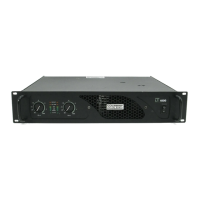
LT1000 - LT2000
Power Amplifiers
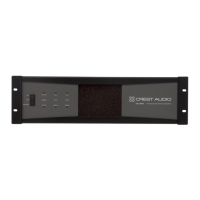
(LT2000 model shown)

 Need help?
 General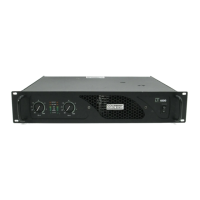


 To Next Page