4–14
FM30/FM100/FM250 User's Manual
i
n
q
u
e
s
t
o
m
o
n
d
o
,
f
o
r
s
e
,
u
n
o
s
i
d
i
c
e
s
e
d
i
c
i
a
m
o
c
h
e
m
a
s
c
r
i
v
e
n
d
o
c
o
n
i
n
q
u
e
s
t
o
m
o
n
d
o
,
f
o
r
s
e
,
u
n
o
s
i
d
i
c
e
s
e
d
i
c
i
a
m
o
c
h
e
m
a
s
c
r
i
v
e
n
d
o
c
o
n
m
a
s
c
r
i
v
e
n
d
o
c
o
n
i
n
q
u
e
s
t
o
m
o
n
d
o
,
f
o
r
s
e
,
u
n
o
s
i
d
i
c
e
s
e
d
i
c
i
a
m
o
c
h
e
m
a
s
c
r
i
v
e
n
d
o
c
o
n
m
a
s
c
r
i
v
e
n
d
o
c
o
n
in
q
u
e
s
t
o
m
o
n
d
o
,
f
o
r
s
e
,
u
n
o
s
i
d
i
c
e
s
e
d
i
ci
a
m
o
c
h
e
m
a
s
c
r
i
v
e
n
d
o
c
o
n
s
e
d
i
c
i
a
m
o
c
h
e
m
a
s
c
r
i
v
e
n
d
o
c
o
n
4.13 Chassis
The AC power supply components, as well as the bridge rectifier and main filter
capacitor are mounted on the chassis. Switching in the power-entry module
configures the power transformer for 100, 120, 220, or 240 VAC; see section 2.2 for
switching and fuse information. A terminal strip with MOV voltage-surge
suppressors and in-rush current limiters is mounted on the chassis between the
power entry module and the toroidal power transformer.
The main energy-storage/filter capacitor, C1001, is located between the voltage and
power regulator boards. The DC voltage across the capacitor will be 45–55 volts
(FM30 and FM100) or 65–70 volts (FM250) when the carrier is on.
4.14 RF Output Filter & Reflectometer
The RF low-pass filter/reflectometer are located in the right-hand compartment on
the top of the chassis. See Illustration 6–14 and accompanying schematic for
more information.
A ninth-order, elliptic, low-pass filter attenuates harmonics generated in the power
amplifier. The capacitors for the filter are circuit board pads.
The reflectometer uses printed circuit board traces for micro-strip transmission
lines. Transmission line segments (with an impedance of about 82 ohms) on
either side of a 50–ohm conductor provide sample voltages representative of the
square root of forward and reverse power.
DC voltages, representative of forward and reflected power, go through a bulkhead
filter board to the motherboard, then to the metering board, where they are
processed for power control and metering and for SWR metering and protection.
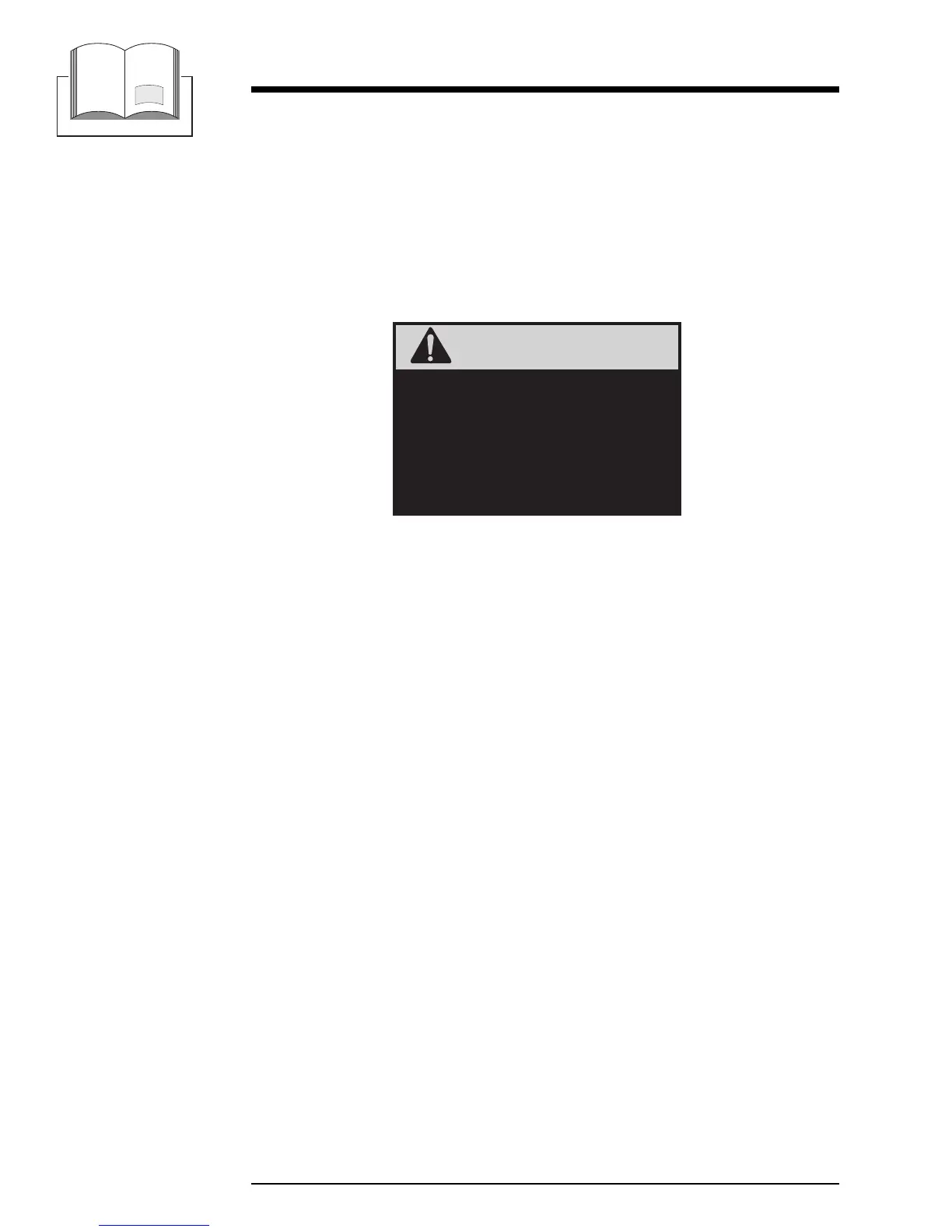
Shock hazard!
Do not attempt to short the capacitor
terminals. A bleeder resistor will
discharge the capacitor in
approximately one minute after
shutdown.
WARNING


 To Next Page
 Loading...