This document is a recipe booklet for a Cuisinart deep fryer, offering a range of recipes from basic to gourmet. It also includes essential tips and hints for effective deep frying, as well as maintenance advice for the appliance.
Function Description
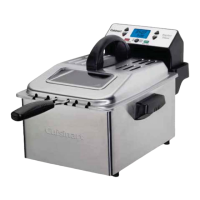
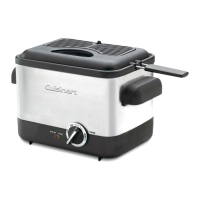
The Cuisinart deep fryer is designed for frying various foods using heated oil. It allows users to achieve crispy and golden results for a wide array of dishes, from appetizers and main courses to desserts. The appliance is capable of maintaining specific oil temperatures, which is crucial for proper frying and preventing greasy, oil-saturated food. It features a basket system for safely lowering and raising food into and out of the hot oil, and a designated pouring spout for oil management.
Usage Features
The booklet emphasizes several key usage features to ensure optimal results and safety:
- Temperature Control: The deep fryer allows for precise temperature control, typically between 350°F and 375°F for most foods, with a lower temperature (300°F) for the initial "blanching" of potatoes to achieve a crispy exterior. This control is vital for preventing food from becoming greasy or burning.
- Batch Frying: To maintain oil temperature and ensure even cooking, it's recommended to fry foods in small batches. Overcrowding the fryer basket can cause the oil temperature to drop significantly, leading to greasy or unevenly cooked food.
- Basket Positioning: Recipes specify whether to place food in the basket in the "up" or "down" position. When adding food to the hot oil, users are advised to gently ease ingredients into the oil's surface using tongs or a perforated skimmer to prevent splashing.
- Oil Management: The deep fryer is designed to hold a specific maximum oil level, which should be adhered to for safety and performance. Users are instructed to add more oil as needed during extended frying sessions to maintain the recommended level.
- Food Preparation:
- Drying Food: For foods not coated in batter, it's crucial to pat them dry thoroughly with paper towels. Excess moisture can cause the oil to spatter and the temperature to drop.
- Seasoning: Fried food should be seasoned with salt and pepper immediately after draining and while still hot for best flavor.
- Brining: For certain recipes, like chicken wings, brining the meat beforehand is recommended to produce a moist and juicy result.
- Coatings: The booklet provides recipes for versatile batters (Beer Batter, Tempura Batter) and crumb coatings (seasoned breadcrumbs, panko, graham cracker crumbs, cornflake crumbs). A standard coating method involves dredging in flour, then beaten egg, and finally the chosen crumb mixture, with refrigeration often recommended to help the crumbs adhere.
- Serving: Deep-fried foods are best served immediately after cooking and draining. For larger quantities, a preheated oven (200°F) with a wire rack on a jelly-roll pan can be used to keep fried food warm.
- Recipe Variety: The booklet offers a diverse range of recipes, including:
- Batters & Coatings: Beer Batter, Tempura Batter, Crumb Coatings.
- Appetizers/Snacks: Deep Fried Chicken Wings (with Buffalo and Asian Mahogany sauces), Fried Vegetable Wontons (with Soy Dipping Sauce), Vegetable Tempura, Cajun Shrimp, Fried Calamari (with Creole Mustard Mayonnaise), Crab Cake Fritters, Perfect French Fries, Potato Chips, Corn, Scallion, and Sweet Red Pepper Fritters, Hush Puppies (with variations), Deep Fried Sage & Prosciutto Ricotta Balls, Goat Cheese Ravioli, Shrimp and Leek Ravioli, Falafel, Sesame Chicken Fingers.
- Desserts: Sopaipillas, Apple Fritters, Chocolate Banana Purses.
- Creative Ideas: The booklet also suggests "Fun and Different Ideas" such as deep-frying cheeses (Camembert, Brie, chèvre), julienned leeks, egg roll wrapper strips for crispy noodles, corn tortillas for chips, and day-old bread for croutons.
Maintenance Features
Proper maintenance is crucial for the longevity and hygiene of the deep fryer:
- Oil Filtering and Storage: After frying, the oil should be allowed to cool completely (about 2 hours). It can then be filtered through a funnel lined with cheesecloth or a coffee filter to remove debris. If reusing, the filtered oil should be stored in a closed container in a dark and cool area.
- Oil Replacement: It is recommended to change the oil after every use, or at least after frying foods with distinct odors (like fish), as subsequent foods may absorb those flavors. The smoking point of oil also lowers with each use, indicating a need for replacement when it appears very dark.
- Cleaning: The best way to clean the unit is by adding 2 tablespoons of baking soda and water to the fill line and boiling for 5 minutes. This baking soda cleaning method is recommended after each use (each time the oil is changed). Users are directed to refer to the "Cleaning and Care" section in the main instruction booklet for more detailed cleaning instructions.
- Food Particle Removal: Small food particles should always be removed from the oil using a large, round slotted spoon or spider to keep the oil clean and prevent burning.

 Need help?
 General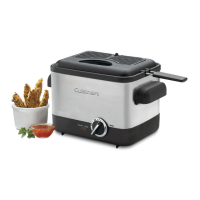


 To Next Page
