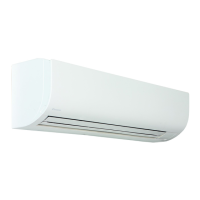
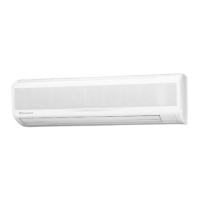
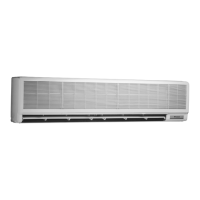
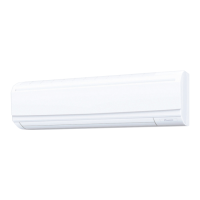
This document is an operation manual for Daikin Split System Air Conditioners, specifically wall-mounted types with model numbers FAA50BAVMA, FAA60BAVMA, FAA71BVMA, FAA85BVMA, and FAA100BVMA. It provides essential information for safe and optimal use, maintenance, and troubleshooting of the indoor unit.
Function Description
The Daikin Split System Air Conditioner is designed to provide cooling, heating, automatic, program dry, and fan operation modes, depending on whether it is a heat pump type or cooling-only type. It functions by circulating air through an indoor unit and an outdoor unit, adjusting the temperature and humidity of the room. The system uses R32 refrigerant.
Usage Features
Operation Modes:
- Cooling Operation: Lowers indoor temperature. If the indoor temperature is low, the unit may automatically switch to DEFROST OPERATION to prevent frost formation on the heat exchanger.
- Heating Operation: Warms the room. It may take longer to reach the set temperature compared to cooling. The unit employs a warm air circulating system. During heating, the airflow direction becomes horizontal to prevent drafts.
- Automatic Operation: The system automatically selects the appropriate mode (cooling or heating) based on the room temperature.
- Program Dry Operation: Lowers humidity without significantly changing the indoor temperature. Fan speed and temperature are set automatically in this mode.
- Fan Operation: Circulates air without cooling or heating.
Airflow Direction Adjustment:
The airflow direction can be adjusted in two ways:
- Up and Down Direction: The horizontal blade can continuously swing or be fixed in a desired position. During continuous downward airflow in cooling or program dry modes, the air blows in an automatically set direction for a period to prevent condensation. In heating, the airflow becomes horizontal at the start or if the room temperature exceeds the set temperature to avoid blowing air directly at occupants.
- Left and Right Direction: The edge louvers (horizontal airflow direction adjustment blades) can be manually adjusted left and right to suit room conditions or preference. Adjustments should only be made when the swing operation is stopped and the blades are in a position where they can be held.
Control Systems:
The air conditioner can operate under different control systems:
- Individual Control: One remote controller controls one indoor unit.
- Group Control System: One remote controller controls up to 16 indoor units, with all indoor units set equally.
- Two Remote Controllers Control System: Two remote controllers control one indoor unit (or one group of indoor units in a group control system).
Timer Operation:
The TIMER OPERATION function can be used to schedule operation, which is particularly advisable for heating to allow the indoor temperature to reach the set point in advance.
Power Management:
- It is recommended to turn on the main power switch 6 hours before operation to ensure smooth running.
- For prolonged periods of non-use, turning off the main power switch saves energy.
- If a power failure occurs during operation, the air conditioner will automatically restart once power is restored.
Optimal Operation Tips:
- Prevent direct sunlight from entering the room during cooling by using curtains or blinds.
- Keep doors and windows closed to maintain cooling/heating efficiency.
- Avoid placing objects near the air inlet and outlet to prevent obstruction.
- Adjust room temperature appropriately to avoid excessive heating or cooling, which wastes electricity.
- Do not use the air conditioner for purposes other than its intended use, such as cooling precision instruments, food, or plants, as this may negatively affect their quality or longevity.
Maintenance Features
Air Filter Cleaning:
- The remote controller will indicate "Time to clean filter" or a specific icon when the air filter needs cleaning, typically after 200 hours (1 month) for normal contamination or 100 hours (2 weeks) for more contaminated spaces.
- To clean, open the front panel, pull out the air filter, and clean it using a vacuum cleaner or by washing it with water and a neutral detergent.
- After washing, remove excess water and dry the filter in the shade before reattaching it.
- Do not wash the filter with water 50°C or higher, or heat it with fire for drying.
- If contamination is difficult to remove, the air filter should be replaced (optional accessory).
Front Panel Cleaning:
- The front panel can be removed for cleaning.
- To remove, open the front panel, then push the axis on either side towards the center and pull it forward.
- Clean the panel gently with a soft wet cloth and neutral cleaning agents. Wipe off remaining water and dry in the shade.
- Ensure the front panel is solidly in place after cleaning.
General Cleaning:
- Air inlet, air outlet, and outside panel can be wiped with a dry soft cloth. For stubborn stains, use a cloth dipped in water-diluted neutral detergent, then wipe with a dry cloth.
- Do not use organic solvents (e.g., gasoline, benzine, thinner, polishing powder, liquid insecticide) for cleaning any part of the unit, as this may cause discoloration, deformation, or cracks.
Seasonal Maintenance:
- Before starting up after a long stop: Check that air inlets and outlets of both indoor and outdoor units are not blocked. Clean the air filter and outside panel. Turn on the power circuit breaker at least 6 hours before operation.
- Before stopping for a long period: Run the unit in FAN OPERATION for half a day on a dry day to dry the indoor unit and prevent mold. Then, turn off the power circuit breaker. Clean the air filter and outside panel.
Professional Maintenance:
- The inside of the air conditioner may become contaminated over several seasons, leading to performance degradation and water leakage. Cleaning the inside of the indoor unit requires a qualified service person.
- Consult your local dealer for any modifications, repairs, or internal cleaning beyond user maintenance.
Safety Precautions for Maintenance:
- Always turn off the air conditioner and disconnect the power supply breaker before maintenance to prevent electric shocks and injuries.
- When working at heights (e.g., cleaning air filters), ensure stable footing to prevent falls.
- Do not touch the heat exchanger after removing the filter to avoid injury.
- Only qualified service personnel are allowed to perform maintenance involving internal parts.


 To Next Page
 General