NOISE DIAGNOSIS
Noises generated by the accessory drive belt are
most noticeable at idle. Before replacing a belt to
resolve a noise condition, inspect all of the accessory
drive pulleys for contamination, alignment, glazing,
or excessive end play.
ACCESSORY DRIVE BELT DIAGNOSIS CHART
CONDITION POSSIBLE CAUSES CORRECTION
RIB CHUNKING (One or more ribs
has separated from belt body)
1. Foreign objects imbedded in
pulley grooves.
1. Remove foreign objects from
pulley grooves. Replace belt.
2. Installation damage 2. Replace belt
RIB OR BELT WEAR 1. Pulley misaligned 1. Align pulley(s)
2. Abrasive environment 2. Clean pulley(s). Replace belt if
necessary
3. Rusted pulley(s) 3. Clean rust from pulley(s)
4. Sharp or jagged pulley groove
tips
4. Replace pulley. Inspect belt.
5. Belt rubber deteriorated 5. Replace belt
BELT SLIPS 1. Belt slipping because of insuffi-
cient tension
1. Inspect/Replace tensioner if nec-
essary
2. Belt or pulley exposed to sub-
stance that has reduced friction
(belt dressing, oil, ethylene glycol)
2. Replace belt and clean pulleys
3. Driven component bearing fail-
ure (seizure)
3. Replace faulty component or
bearing
4. Belt glazed or hardened from
heat and excessive slippage
4. Replace belt.
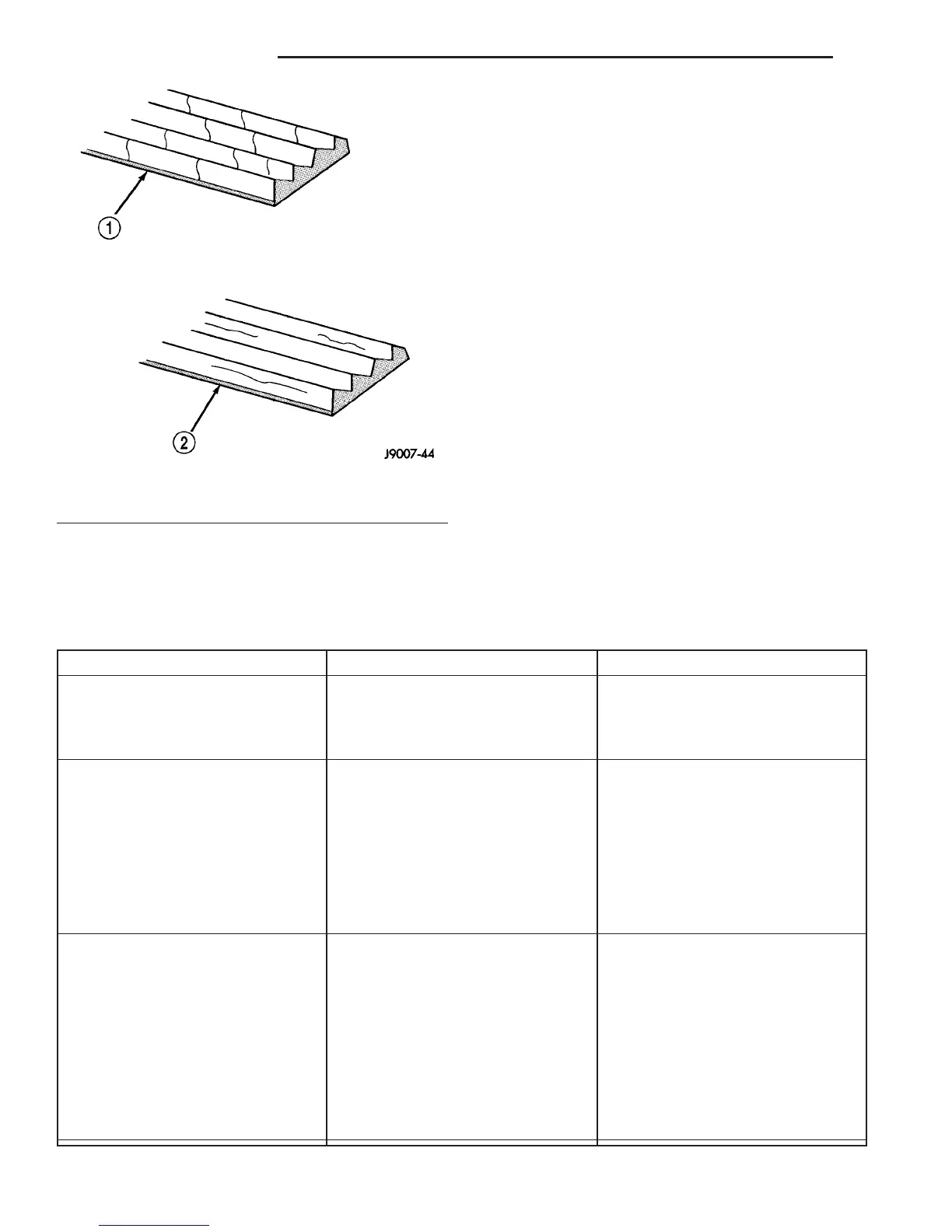
Fig. 2 Belt Wear Patterns
1 - NORMAL CRACKS BELT OK
2 - NOT NORMAL CRACKS REPLACE BELT
7 - 6 ACCESSORY DRIVE VA


 To Next Page