The Davey ChloroMatic Salt Water Pool System is a chlorinator designed for sanitizing swimming pools using salt water. It comes in two main series: ESC Self Cleaning and ESR Self Regulating, with various models within each series (e.g., MCS16C, MCS24C, MC16C, MC20C). Some models, like the MCS16CT and MCS24CT, include a 12 Volt Light Output. The system is also suitable for use with mineral salt pools.
Function Description:
The ChloroMatic system generates chlorine from salt water to sanitize the pool. It features an electronic control and warning system that regulates output and indicates potential faults or damaging operating conditions. The Cell Output is displayed as a percentage, fluctuating around 100% during normal chlorine production, or around 85% in Winter Mode.
Key Features:
- Sanitiser Output Control: This dial varies the amount of time the electrolytic cell operates during the filtration cycle, from MIN (OFF) to MAX (ON). It adjusts in 10% steps.
- Automatic Time Clock Operation: The system can be fitted with either a digital or analogue timer. The digital timer allows setting of two ON/OFF time sequences for automatic filtration system operation. The analogue timer has small pins for setting operating times, with a pre-set of 8 hours per day.
- Winter Mode: This feature is activated when pool water temperature drops, altering the Low Salinity Indicator setting and reducing cell output by approximately 15%. It's designed for cold pool environments and should not be used during swimming season.
- Low Salinity Indicator: This system uses operation LEDs to indicate when salt levels in the pool are low, which can increase wear on the cell. A red LED indicates that salt levels should be increased.
- Gas Sensor: Incorporated into the unit and cell, this safety device switches off chlorination if gas is detected in the cell housing or if there is no water flow.
- Thermal Cut-out: Prevents overheating by automatically disconnecting power if the temperature rises too high, resuming operation when it cools down.
- Optional Pool Light Transformer: Some models can be fitted with a pool light transformer (Max power: 150W at 12VAC).
- Optional pH Dosing System (ESCpH models): This combination unit includes a pH monitoring, auto-dosing peristaltic pump that feeds diluted acid into the pool to reduce pH levels. It operates during the preset filtration timer cycles of the chlorinator.
Specific Features of ESC Self Cleaning System:
- Polarity Indicator on Output Display: A ± symbol appears before the cell output display to indicate the current polarity (positive or negative), which alternates and is factory pre-set.
- Sanitiser Output Display: When adjusting the Sanitiser Output, the Cell Output Display flashes the control setting for a few seconds before resuming the Cell Output display or standby light.
- Cleaning of Cell: Utilizes a patented Electronic reverse polarity system to clean the cell, minimizing maintenance.
- Pump Cut-Out: A protective interlock system cuts off power to the pool pump if there is no water flowing through the cell housing, preventing the pump motor from burning out.
Important Technical Specifications:
- Optimum Salt Levels: 4500-6000ppm. Operating at low salt levels will damage the cell and reduce its life.
- Calcium Hardness: 200-275ppm for Concrete and Tiled Pools; 100-225ppm for other surfaces.
- pH Levels: 7.2-7.4 for Fibreglass; 7.4-7.6 for Concrete & Tiled.
- Total Alkalinity: Ideal range 80-150 ppm.
- Stabiliser (Cyanuric Acid): 30-50 ppm, not to exceed 100 ppm.
- Chlorine Production: The unit expresses production as pure 100% chlorine. When using mineral salts exclusively, chlorine production is 50% of the normal rated output.
- Power Supply Installation: Must be mounted vertically, 1.5 meters above ground level, within one meter of filtration equipment, and not within 3 meters of pool water.
Usage Features:
- Pre-Start Up Procedure: Requires loading salt into the pool (45-60kg per 10,000 litres for all models) and ensuring complete dispersal. For new pools, add sufficient chlorine (liquid or granular) to achieve 3 ppm or run the chlorinator continuously for at least 24 hours. Stabiliser must be added and maintained.
- Running Times: During summer, the chlorinator should run approximately eight hours per day (preferably in two periods: 6-8 am and 5-11 pm). In winter, 4-6 hours per day is recommended. Running the chlorinator for 24 hours a day or for long periods will greatly reduce cell life.
- "Shock" Treatment: Periodically, especially in hot conditions, the amount of chlorine can be boosted by adding liquid or granulated chlorine, or by extending running time.
- pH Dosing System (ESCpH): Automatically doses diluted acid to maintain pH levels. The pH probe must be located before a heater or an electrolyser.
Maintenance Features:
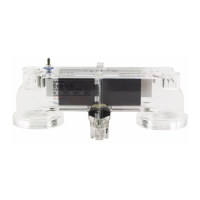
- Electrolytic Cell Maintenance: Regular inspection and cleaning of the cell are essential to prevent calcium scale build-up, which can reduce efficiency and lifespan. Reverse polarity models minimize scale build-up but may require occasional manual cleaning in hard water areas or when using mineral salts.
- Cell Cleaning:
- MCS50C Cell: Disconnect from power supply and pool return line. Place inverted in a tub/bucket. Pour cleansing fluid into the cell, ensuring plates are fully submersed. Examine after a few minutes and repeat if necessary. Rinse with clean water and refit.
- 16-40g Cell: Turn off chlorinator, remove leads, unscrew cell from housing. Immerse cell in a solution of 1 part Hydrochloric Acid to 10 parts WATER for a few minutes. Alternatively, use an approved commercial cell cleaning solution. Never use concentrated acid, leave the cell in solution for extended periods, or use metal implements/scourers/brushes.
- Power Supply Maintenance: Little maintenance is required, except for replacing blown fuses. Periodically spray the wall/post (not the unit itself) with insect repellent to prevent insect damage.
- pH Peristaltic Pump Module Maintenance (ESCpH): The "squeeze" tube in the peristaltic pump is perishable and should be replaced approximately once per year. The roller holder should be inspected and replaced every 2 years. Ensure the sensor probe remains moist to prevent damage.
- Water Chemistry Monitoring: Regularly test salt levels, pH, total alkalinity, calcium hardness, and stabiliser levels. Refer to the recommended pool water chemistry chart for ideal ranges.
- Power Supply: Three Years
- Electrolytic Cell: Three Years
- pH Pump Module: One Year
- Sensor Probe: One Year
The guarantee does not cover commercial or semi-commercial installations running more than an average of 8 hours per day (12 months warranty for these). Using copy electrodes or not maintaining optimum salt levels will void the warranty.

 Need help?
 General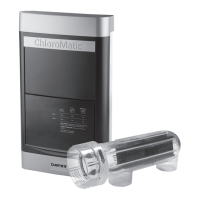


 To Next Page