
 Need help?
Do you have a question about the Davey RainBank Evolution MkII and is the answer not in the manual?
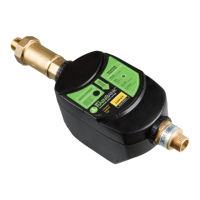
The Davey RainBank Evolution MkII is an automatic water controller designed to optimize water usage in residential settings by prioritizing rainwater from a tank for household applications, with seamless automatic switching to mains water when rainwater is unavailable. This system is designed to save up to 40% of a home's mains water usage, potentially saving up to 100,000 liters of water per year, depending on roof catchment area, rainfall, and tank size.
The RainBank Evolution MkII operates by sensing demand for water from fixtures like toilets, washing machines, or garden taps. When a demand exceeding 1.5 liters per minute is detected, the system first checks the rainwater tank level. If sufficient rainwater is present, the RainBank activates a connected pump. The pump's pressure is designed to overcome the mains water pressure within the RainBank, moving a plunger to allow rainwater to flow to the demand point. Mains water pressure is not restricted during this process.
When the water demand ceases, the RainBank detects the cessation of water movement in the pipes, switches off the pump, and enters a standby mode, awaiting the next water demand.
In scenarios where the rainwater tank has insufficient water, the RainBank automatically allows mains water to flow, ensuring an uninterrupted supply. This automatic switchover is seamless, meaning users experience no disruption in water supply.
A key safety feature is its automatic backup to mains water in the event of a power failure during a water demand. This ensures continuous water supply even when the pump cannot operate.
The RainBank Evolution MkII incorporates an in-built "dual check valve" for low hazard backflow prevention, which is a critical feature for systems connected to both rainwater and mains water supplies. This design ensures that rainwater cannot contaminate the mains water supply. However, local water authorities may require additional external backflow prevention valves, especially if the tank is partially or fully submerged, so checking local plumbing guidelines is recommended.
The system is designed for energy efficiency, only operating the pump when there is a demand for rainwater. The daily power consumption for a RainBank and pump system supplying two toilets in a three-person dwelling is minimal, comparable to running a reverse cycle air conditioner for 3 minutes, a clothes dryer for 3 minutes, a washing machine for 10 minutes, or a TV/PC for 30 minutes.
The RainBank Evolution MkII offers a "hands-off" experience for the user, requiring no manual intervention or adjustment for its daily operation. Its automatic switching between rainwater and mains water is seamless, providing convenience and ensuring a continuous water supply.
The system is designed for easy installation, and its WaterMark approval signifies compliance with Australian plumbing standards, which is important for plumbing inspections and insurance coverage.
The RainBank provides mains water as a backup under several conditions: when there is no rainwater in the tank, when there is no electricity to run the pump, or if the pump has been removed for servicing. This contrasts with conventional air-gap systems that rely solely on pumps to pressurize all water and would not function without them.
For optimal performance, it is recommended to use at least 20mm or 3/4 inch plumbing to and from the RainBank to minimize pipe friction. Galvanized pipe is not recommended. Regular cleaning of the internal filters is also advised.
The system is specifically designed to handle clean rainwater and mains water. It should not be used to interconnect with bore water, dam water, grey water, stormwater, or recycled water systems.
Installation must be carried out by a licensed plumber due to its connection to mains water. Mains water pressure should be limited to 600kPa.
During installation, the pump is lowered into the rainwater tank using a cable or chain, not by straining the power lead, to prevent damage to the pump's water seals. PVC (DN25) piping is connected to the pump outlet, and the pump power lead is cable-tied to the pipework.
The RainBank unit is fastened to the tank top using self-drilling sheet metal screws. The standpipe from the pump aligns with the RainBank inlet at the base of the primary filter chamber, and four screws in the base of the primary chamber clamp the standpipe in position.
After plumbing mains and outlet connections, power is switched on, and a flashing green light indicates the system is booting up. To commission the system, a tap downstream of the RainBank should be opened to clear air from the lines, requiring a flow rate of at least 10 liters per minute for one minute. The manual override button on top of the RainBank can then be pressed to start the pump and flush air from the rainwater lines, provided there is rainwater in the tank.
Testing the system involves checking mains water flow with an empty rainwater tank (pump should not turn on), filling the tank to activate the pump, ensuring the pump is correctly primed and free of airlocks, and then turning on a tap or flushing a toilet in the rainwater system to confirm pump operation and rainwater delivery. The 'status' light should glow 'green' when the pump is running.
While the RainBank itself requires minimal maintenance, several actions can be taken to ensure its reliable operation:
The manual provides guidance for common issues:
The Davey RainBank Evolution MkII is a comprehensive solution for integrating rainwater harvesting into a home's water supply, designed for reliability, efficiency, and ease of use, while adhering to important safety and plumbing standards.
 General
| Model | RainBank Evolution MkII |
|---|---|
| Warranty | 2 years |
| Frequency | 50Hz |
| Ingress Protection | IP55 |
| Housing Material | Stainless steel |
| Type | Water Pump |
| Inlet Size | 1 inch |
| Outlet Size | 1 inch |
| Maximum Suction Lift | 8 meters |




 To Next Page