PAGE 9 OF 12
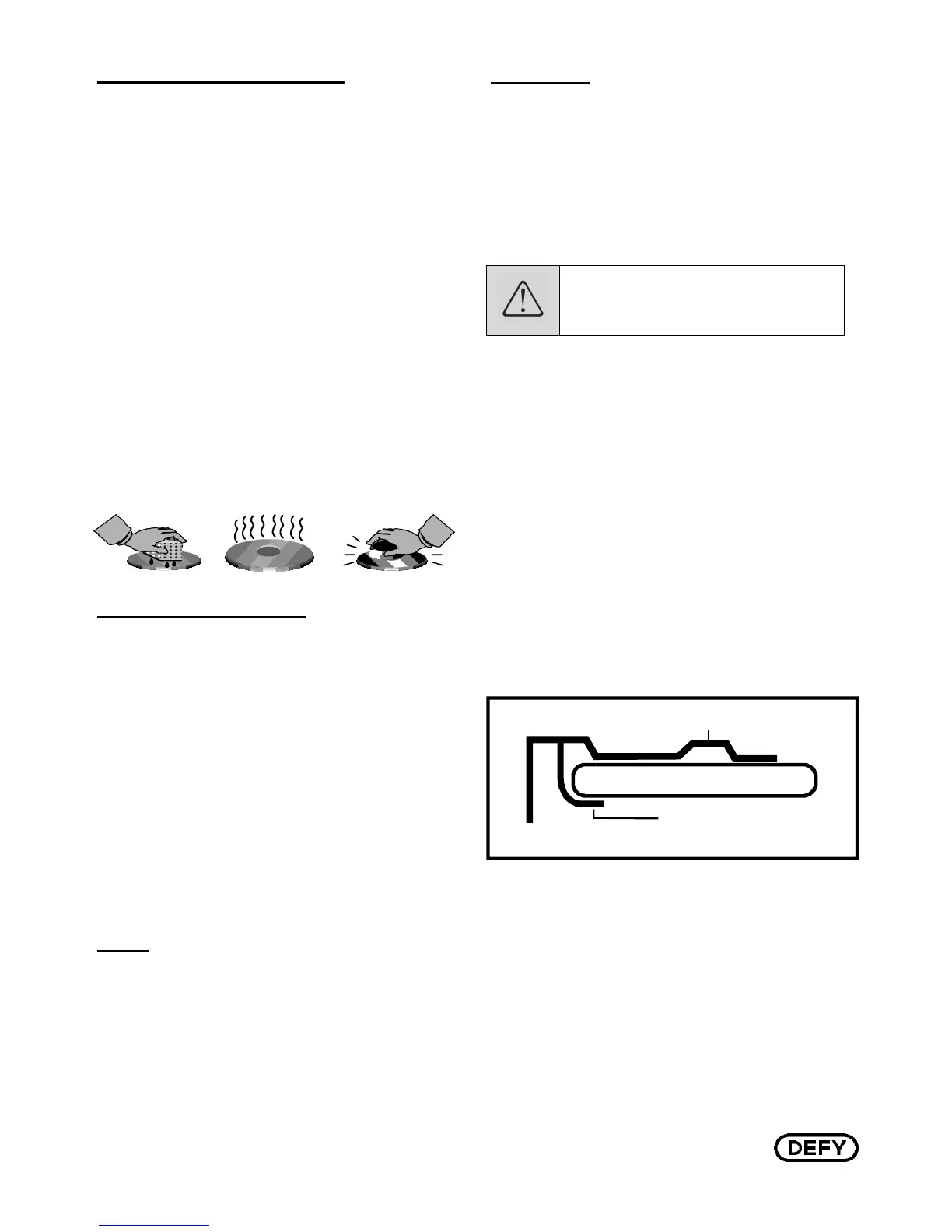
ELEMENT GUARD
ELEMENT
HOOK
Cleaning
Do not use a steam cleaner.
Cleaning the Exterior
• Switch off the electrical supply to the
stove before cleaning any part of it
• Use a damp soapy cloth and avoid the
use of abrasive powders and scouring
pads.
Caring for solid plates
• To prevent blotchy discolouration and
corrosion, moisture from spatters and
spills should be cleaned off immediately.
• To clean the plates, wipe them with a
damp cloth or nylon pad. A little liquid
detergent may be used. Do not use metal
scourers or sharp metal objects to clean
the plates.
• After cleaning, dry the plates by
switching them on for a short while.
• To prevent rust, periodically apply some,
sewing machine oil or electrical hotplate
polish - available from Defy Service
Centres. Extra attention is required in
areas of high humidity or in close
proximity to the sea.
Recommendations
• Use only pots with a solid level base.
An uneven base can prolong cooking
times and waste energy.
• Use pots with a base diameter slightly
larger than the plate. This will ensure
even heat distribution and prevent
spillage from dripping onto and staining
the hot plate.
• Always cover the pot with a lid. This will
conserve energy and minimise spillage.
• Thermal shock could damage the plates.
Do not put cold pots on very hot plates.
Note
• The warranty does not cover the
replacement or repair of rusted or
corroded solid plates. It is therefore the
owners responsibility to care for them as
described above.
Switch off the power at the mains
in the event of a fault or when
cleaning the appliance.
Cleaning the Oven
• Use a hot, soapy damp cloth to clean any
part of the oven. Stubborn stains may
require the use of a nylon scrubbing
brush and a liquid cleaner. Do not use
metal scouring pads or abrasive cleaners.
Element and guard
• After cleaning the oven, ensure that the
oven element is securely clipped into the
hook of the element guard. Failure to
observe this precaution will allow the
element to rest on and damage the oven
enamel.


 To Next Page