Need help?
Do you have a question about the Delta Tau 3-4045 Series and is the answer not in the manual?
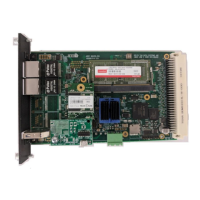
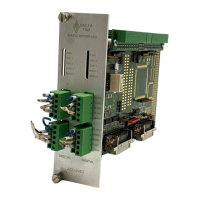
The Power PMAC UMAC 465 CPU board is a robust computing engine designed for Universal Motion and Automation Controller (UMAC) rack-mounted systems. This 3U-format Eurocard (100 mm x 160 mm) board serves as both a dedicated controller and a general-purpose embedded computer, leveraging the Linux operating system with a hard-real-time kernel to ensure deterministic performance for critical tasks like servo loop closure. It is compatible with a wide range of UMAC accessory boards, including those used with the older Turbo PMAC2 UMAC CPU board, as well as a new generation of "PMAC3" UMAC accessory boards that utilize a new generation ASIC and a 32-bit data bus on the backplane. These accessory boards provide essential interfaces to various machine elements for both motion and non-motion I/O, encompassing digital and analog signals.
The Power PMAC UMAC 465 CPU board is designed to integrate seamlessly into UMAC rack systems. Its primary function is to provide the processing power and control logic necessary for advanced motion and automation applications. The board communicates with accessory boards via the UBUS backplane, allowing for a modular and expandable system architecture. The Linux operating system, coupled with a real-time kernel, ensures that time-critical operations are executed with precision and reliability. This makes the Power PMAC UMAC 465 CPU suitable for applications requiring high determinism and responsiveness.
The board features a dual-core Power PMAC CPU with built-in hardware floating-point math capabilities, enhancing its ability to handle complex calculations efficiently. It includes active memory with error correction, ensuring data integrity and system stability. Boot flash memory is provided for system startup, and built-in NAND flash memory offers ample storage for user applications.
Connectivity is a key aspect of the Power PMAC UMAC 465 CPU. It includes Ethernet communication ports for host computer interaction and network integration. These ports provide transformer isolation to prevent ground-loop problems, ensuring reliable communication in industrial environments. USB ports are available for connecting peripheral devices, such as flash drives and keyboards, allowing for flexible data transfer and system interaction. An RS-232 communications port offers an additional serial communication option.
For system monitoring and safety, the board incorporates a watchdog timer with a dedicated output connector. This feature allows for fail-safe shutdown of power circuitry in the event of a timer trip or loss of controller power, enhancing the overall safety of the controlled system. Optional features, such as a PCI Express expansion port, further extend the board's capabilities, allowing for the integration of specialized expansion cards like video cards, vision systems, or additional Ethernet ports.
The Power PMAC UMAC 465 CPU board is designed for straightforward installation and operation within a UMAC rack. To connect the board to the UBUS backplane, it is simply slid into any available slot that has a bus connection socket. While any slot can be used, the CPU board is customarily installed in the leftmost slot. Mating the P1 backplane connector firmly with the backplane socket may require some force, but it can be easily done by hand. Securing the front plate flush with the rack and tightening the front screws ensures a good and stable connection. The board receives its electrical power through the UBUS backplane, which can be supplied by a Delta Tau power supply or an external user-provided supply.
The Ethernet ports on the front panel, labeled ETH 0 and ETH 1 (optional), accept standard CAT-5 Ethernet cables with RJ-45 connectors. ETH 0 is the primary port for communication with a host computer, typically used with an Integrated Development Environment (IDE) program for application development. Multiple computers on a single network can communicate with the CPU board through this port. ETH 1 is an auxiliary Ethernet port, primarily intended for EtherCAT connectivity, but it can be reprogrammed for Power PMAC communications within the Linux system.
The USB "host" port, labeled "USB 1" on the front panel, is a "Standard-A" format connector. This port allows the Power PMAC CPU to act as a host computer, enabling the connection of various peripheral devices. A common use is with "USB stick" flash drives, which the CPU board automatically recognizes. It is even possible to boot the CPU from a properly formatted USB drive. Other USB peripheral devices, such as true disk drives and keyboards, can also be connected. It is important to note that USB ports are not electrically isolated, so care must be taken with grounding schemes when connecting separately powered devices to avoid ground loop issues or potential component damage.
The RS-232 port, an IDC 10-pin connector on the front panel, provides standard RS-232 connectivity using a flat cable crimped to an IDC 10-pin header and a 9-pin D-sub connector. Delta Tau's ACC-3L cable is designed for this purpose. The watchdog timer connection (TB1), a 3-point removable terminal block on the bottom edge of the board, provides an output for the on-board watchdog timer. This solid-state relay output can be used to implement fail-safe shutdowns.
For expansion, an optional PCI Express connector (P18) is located on the back side of the board. This "times 4" (x4 – four serial channels) connector allows for the installation of PCI Express expansion cards, such as video cards or vision systems, provided there is available space in the UMAC rack. These accessory boards will be parallel to the CPU board and may occupy 2 or 3 slots in the UMAC rack. An optional mezzanine board can further extend capabilities, including a socket for SD card insertion at the bottom right corner of the front panel, allowing the use of standard "camera card" flash memory for various purposes, including booting the CPU.
The Power PMAC UMAC 465 CPU board is designed with minimal hardware setup requirements, simplifying installation and maintenance. The E-point jumpers on the board are primarily for factory use and generally do not require user intervention in normal operation. However, it is crucial to understand their function for troubleshooting or specific factory-level operations. For instance, E0 must not be shorted in normal operation as it locks the board in a reset state. Similarly, E1, if shorted, disables the watchdog timer, which is necessary for loading "bootstrap" firmware at the factory but is a critical safety feature that should not be disabled in an actual application.
LED indicators on the board provide visual feedback on the system's status. D10 is a dual-colored LED: green indicates +5V input power, while red indicates a tripped watchdog timer. D12, a red LED, lights up if the "Power Good" subsystem has failed. D15, an amber LED, indicates that the backplane reset has completed and Power PMAC is ready for communication. These indicators are valuable for quick diagnostics and status checks without requiring specialized tools.
The design emphasizes robustness for industrial applications. It is expected that the products be protected from hazardous or conductive materials and environments that could damage components or cause electrical shorts. When used in an industrial setting, installation into an industrial electrical cabinet or PC is recommended to shield the board from excessive or corrosive moisture, abnormal ambient temperatures, and conductive materials. This proactive protection helps ensure the long-term operation and reliability of the device.
All Delta Tau Data Systems, Inc. motion controller products, including the Power PMAC UMAC 465 CPU, contain static-sensitive components. Proper handling is essential to prevent damage. Users should avoid contact with highly insulated materials and discharge any static electricity by touching an unpainted, metal, grounded surface before handling the equipment. Only qualified personnel should handle this equipment to ensure proper installation and maintenance procedures are followed. During operation, all covers and cabinet doors should remain shut, as the product contains electrically charged components and hot surfaces. Control and power cables can carry high voltage even when the motor is not rotating, so disconnecting or connecting the product while the power source is energized should be avoided to prevent electric arcing. These guidelines contribute to both user safety and the longevity of the device.
 General
| Category | Computer Hardware |
|---|---|
| Type | Motion Controller |
| Model | 3-4045 Series |
| Manufacturer | Delta Tau |
| Operating Temperature | 0°C to 50°C |
| Storage Temperature | -20°C to 70°C |
| Humidity | non-condensing |


 To Next Page