SB-2-252-P (12/2017) 1 / 8 www.carlisleft.com
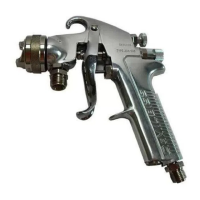
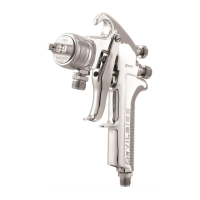
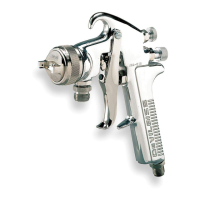
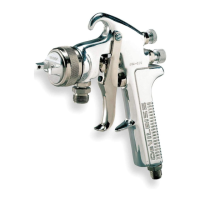
JGA-510 CONVENTIONAL SPRAY GUN
■ Major Repair Kit KK-4987-2
IMPORTANT: Before using this equipment,
read all safety precautions and instructions.
Keep for future use.
Strain material thru 60 or 90 mesh screen.
Adjust fluid pressure to deliver the desired
paint volume. Adjust air pressure and
flow to provide a uniform dispersion of
atomized paint throughout the pattern.
Keep air pressure as low as possible to
minimize bounce - back and overspray.
Excessive fluid flow will result in heavy
center spray patterns. Inadequate flows
may cause the pattern to split. See
“Troubleshooting”, Page 6, if any problems
occur.
PREVENTIVE MAINTENANCE
To clean air cap and fluid tip, brush exterior
with a stiff bristle brush. If necessary
to clean cap holes, use a broom straw
or toothpick. Never use a wire or hard
instrument. This may scratch or burr holes
causing a distorted spray pattern.
To clean fluid passages, remove excess
material at source, then flush with a
suitable solvent using a device such as the
SolventSaver™ (see Accessories). Wipe
gun exterior with a solvent dampened
cloth. Never completely immerse in
solvent as this is detrimental to the
lubricants and packings.
Note
When replacing the fluid tip or fluid
needle, replace both at the same
time. Using worn parts can cause
fluid leakage. Also, replace the
needle packing at this time. Lightly
lubricate the threads of the fluid
tip before reassembling. Torque
to 20-25 ft. lbs. Do not overtighten
the fluid tip.
To prevent damage to the fluid tip
(4) or fluid needle (33), be sure to
either 1) pull the trigger and hold
while tightening or loosening the
fluid tip or 2) remove fluid needle
adjusting screw (28) to relieve
spring pressure against needle
collar.
DESCRIPTION
The JGA-510 can be utilized with the wide
range of air caps and needles. It is a general
purpose, heavy duty, high production
spray gun suitable for use with most
types of materials. The fluid tip and needle
and internal fluid passages are stainless
steel.
Conversion to HVLP - The JGA-510, plus
JGA-503 models, can be converted to
HVLP if desired. Contact DeVilbiss for
information.
Note
This gun includes 300 series stainless
steel fluid passages and 300/400
series tip and needle. Guns may
be used with chlorinated solvent
materials, but see page 2 for
additional warnings.
Important: This gun may be used with
most common coating and finishing
materials. It is designed for use with mildly
corrosive and non-abrasive materials. If
used with other high corrosive or abrasive
materials, it must be expected that
frequent and thorough cleaning will be
required and the necessity for replacement
of parts will be increased.
OPERATION
Note
Protective coating and rust inhibitors
have been used to keep the gun in
good condition prior to shipment.
Before using the gun, flush it with
solvent so that these materials will be
removed from fluid passages.
A
C
D
B
E
■
Government NSN No. 4940-01-046-9919 =
KK-4987-2.
EN
SERVICE MANUAL
IMPORTANT! DO NOT DESTROY
It is the Customer's responsibility to have all operators and service personnel read and understand this manual.
Contact your local DeVilbiss representative for additional copies of this manual.
READ ALL INSTRUCTIONS BEFORE OPERATING THIS DEVILBISS PRODUCT.
FLUID INLET GASKET (7) REPLACEMENT
INSTRUCTIONS
1. Remove fluid inlet adapter with ap-
propriate wrench.
2. Clean Loctite from gun body inlet
threads and seal area.
3. Place gasket (7) squarely onto the fluid
inlet adapter and push it down until it
is flat against the boss.
4. Place a couple of drops of medium
strength blue No. 242 Loctite on
threads before installing fluid inlet
adapter.
5. Torque fluid inlet adapter to 20-25 ft.
lbs., and tighten locknut.
SPRAY GUN LUBRICATION
Daily, apply a drop of SSL-10 spray gun
lube at trigger bearing stud (21) and the
stem of the air valve (13) where it enters
the air valve assembly (17). The shank of
the fluid needle (33) where it enters the
packing nut (19) should also be oiled. The
fluid needle packing (18) should be lubri-
cated periodically. Make sure the baffle
(6) and retaining ring (1 or 2 ) threads are
clean and free of foreign matter. Before
assembling retaining ring to baffle, clean
the threads thoroughly, then add two
drops of SSL-10 spray gun lube to
threads. The fluid needle spring (30) and
air valve spring (12) should be coated
with a very light grease, making sure that
any excess grease will not clog the air
passages. For best results, lubricate the
points indicated, daily.
A. Trigger Points
B. Packing
C. Adjusting Valves
D. Baffle Threads
E. Air Valve Cartridge


 To Next Page

 General