EasyManua.ls Logo

DeWalt DCS380B - User Manual

DeWalt DCS380B
15 pages
Print Icon
To Next Page IconTo Next Page
Loading...
1
English
Defi nitions: Safety Guidelines
The definitions below describe the level of severity for each
signal word. Please read the manual and pay attention to these
symbols.
DANGER: Indicates an imminently hazardous situation
which, if not avoided, will result in death or serious injury.
WARNING: Indicates a potentially hazardous situation which,
if not avoided, could result in death or serious injury.
CAUTION: Indicates a potentially hazardous situation which,
if not avoided, may result in minor or moderate injury.
NOTICE: Indicates a practice not related to personal injury
which, if not avoided, may result in property damage.
IF YOU HAVE ANY QUESTIONS OR COMMENTS ABOUT THIS OR
ANY D
EWALT TOOL, CALL US TOLL FREE AT: 1-800-4-DEWALT
(1-800-433-9258).
WARNING: To reduce the risk of injury, read the instruction
manual.
General Power Tool Safety Warnings
WARNING! Read all safety warnings and all instructions.
Failure to follow the warnings and instructions may result in
electric shock, fire and/or serious injury.
SAVE ALL WARNINGS AND INSTRUCTIONS
FOR FUTURE REFERENCE
The term “power tool” in the warnings refers to your mains-operated
(corded) power tool or battery-operated (cordless) power tool.
1) WORK AREA SAFETY
a) Keep work area clean and well lit. Cluttered or dark areas
invite accidents.
b) Do not operate power tools in explosive atmospheres,
such as in the presence of flammable liquids, gases or
dust. Power tools create sparks which may ignite the dust or
fumes.
c) Keep children and bystanders away while operating a
power tool. Distractions can cause you to lose control.
2) ELECTRICAL SAFETY
a) Power tool plugs must match the outlet. Never modify
the plug in any way. Do not use any adapter plugs with
earthed (grounded) power tools. Unmodified plugs and
matching outlets will reduce risk of electric shock.
b) Avoid body contact with earthed or grounded surfaces
such as pipes, radiators, ranges and refrigerators. There
is an increased risk of electric shock if your body is earthed or
grounded.
c) Do not expose power tools to rain or wet conditions.
Water entering a power tool will increase the risk of electric
shock.
d) Do not abuse the cord. Never use the cord for carrying,
pulling or unplugging the power tool. Keep cord away
from heat, oil, sharp edges or moving parts. Damaged or
entangled cords increase the risk of electric shock.
e) When operating a power tool outdoors, use an extension
cord suitable for outdoor use. Use of a cord suitable for
outdoor use reduces the risk of electric shock.
f) If operating a power tool in a damp location is unavoidable,
use a ground fault circuit interrupter (GFCI) protected
supply. Use of a GFCI reduces the risk of electric shock.
Question and Answer IconNeed help?

Do you have a question about the DeWalt DCS380B and is the answer not in the manual?

Summary

General Power Tool Safety Warnings

Work Area Safety

Keep work area clean and well lit, avoid explosive atmospheres, and keep children away.

Electrical Safety

Ensure proper plugs, avoid grounding, keep tools dry, and use appropriate cords and GFCI.

Personal Safety

Stay alert, use PPE, prevent unintentional starting, dress properly, and manage dust.

Important Safety Instructions for All Battery Packs

General Battery Pack Handling

Read instructions, avoid explosive atmospheres, keep away from metal objects, and do not force packs.

Important Safety Instructions for All Battery Chargers

Charger Safety and Operation

Read instructions, avoid shock hazard, charge only DEWALT packs, and keep away from liquids.

Charger Use and Care

Keep charger cavities clean, use correct chargers, avoid rain/snow, and use proper extension cords.

Charger Operation and Indicators

Indicator Light Operation

Explanation of indicator lights for charging status, hot/cold delay, and problem detection.

Charge Indicators and Problem Diagnosis

Understanding indicator lights for problems and troubleshooting steps for faulty packs or chargers.

Charger Features and Notes

Hot;Cold Delay Feature

Charger delays charging for hot or cold batteries to maximize battery life.

Important Charging Notes

Optimal charging temperatures, pack warming, cold pack charging rates, and basic troubleshooting.

Battery Pack Storage and Troubleshooting

Troubleshooting Charging Issues

Checking receptacle, moving charger, and taking tool to service center for persistent charging problems.

Battery Fuel Gauge and Blade Installation

Blade Installation

Step-by-step guide to installing a blade using the clamp release lever.

Advanced Cutting Methods

Overhead and Site Inspection

Use caution for overhead cutting and inspect site for hidden wires or pipes before cuts.

Product Registration and Warranty

Overview

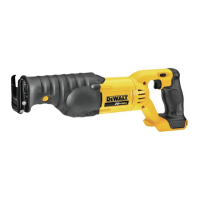
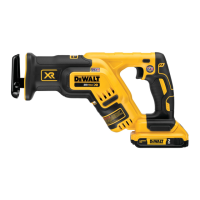
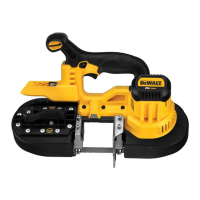
This manual describes a reciprocating saw, a versatile power tool designed for various cutting operations, and its associated battery packs and chargers. The tool is primarily used for cutting different materials, including wood and metal, and offers features that enhance safety, control, and user convenience.

Function Description

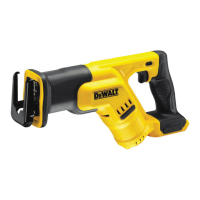
The reciprocating saw is a cutting tool that operates by moving a blade back and forth in a reciprocating motion. It is suitable for a wide range of applications, from rough cuts in construction to more precise tasks. The tool is available in two models, DCS380 and DCS381, with slight variations in features such as shoe adjustability and blade positioning.

The saw is powered by rechargeable battery packs, making it a cordless tool that offers portability and freedom of movement without being tethered to a power outlet. The battery packs are designed to be easily installed and removed from the tool, and they are charged using specific DEWALT chargers.

Usage Features

  • Variable Speed Trigger Switch: The saw is equipped with a variable speed trigger switch, allowing users to control the cutting speed by adjusting the pressure on the trigger. This feature provides versatility, enabling slower speeds for starting cuts and higher speeds for faster material removal.
  • Lock-Off Button: For safety, the saw includes a lock-off button that prevents unintentional starting. Users must press this button to unlock the trigger switch before operating the tool. It is recommended to always lock the trigger switch when carrying or storing the tool.
  • Blade Installation and Removal: The saw features a blade clamp release lever that facilitates easy installation and removal of blades. Different blade lengths are available to suit various applications, and the blade should always extend past the shoe and the thickness of the workpiece during a cut to prevent breakage and ensure safety. The DCS380 model allows for blade installation in four positions, while the DCS381 allows for two, including an upside-down position for flush-to-cutting.
  • Horizontal Blade Position (DCS380 only): The DCS380 model is equipped with a horizontal blade clamp, which allows for cutting close to floors, walls, or ceilings where clearance is limited. This feature enhances the tool's versatility in tight spaces.
  • Adjustable Shoe (DCS380 only): The DCS380 model features an adjustable shoe that allows users to limit the depth of cut. This is achieved by pushing a button on the hand grip and sliding the shoe to one of three settings. The DCS381 model, however, has a fixed shoe.
  • Cutting Operations:
    • General Cutting: Users are advised to hold the saw firmly with both hands during all cutting operations. Before cutting, the workpiece should be firmly anchored or clamped to prevent slipping. The blade should be placed lightly against the work, and the motor should be allowed to reach maximum speed before applying pressure. Keeping the saw shoe firmly against the material helps prevent jumping or vibrating and minimizes blade breakage.
    • Flush-to Cutting: The compact design of the saw's motor and spindle housing allows for extremely close cutting to floors, corners, and other difficult areas.
    • Pocket/Plunge Cutting (Wood Only): This technique involves measuring and marking the surface area to be cut. The saw is tipped backward until the back edge of the shoe rests on the work surface and the blade clears it. After switching on the motor and allowing it to reach speed, the user can begin a slow, deliberate upward swing, keeping the shoe firmly in contact with the workpiece, to feed the blade into the material.
    • Metal Cutting: The saw can cut various metals depending on the blade type. Finer blades are used for ferrous metals, and coarser blades for non-ferrous materials. For thin gauge sheet metals, clamping wood to both sides of the sheet is recommended to ensure a clean cut and minimize vibration.
  • Battery Pack Fuel Gauge (Some DEWALT battery packs): Some battery packs include a fuel gauge with three green LED lights that indicate the remaining charge level. Pressing a button on the battery pack illuminates these lights.

Maintenance Features

  • Cleaning: Regular cleaning of the tool is essential for its longevity and safe operation. Users should blow dirt and dust out of all air vents with clean, dry air at least once a week. The non-metallic parts of the tool can be cleaned with a cloth dampened with water and mild soap. Solvents or harsh chemicals should not be used as they can weaken plastic materials.
  • Charger Cleaning: The charger should be disconnected from the AC outlet before cleaning. Dirt and grease can be removed from the exterior of the charger using a cloth or soft non-metallic brush. Water or cleaning solutions should not be used.
  • Tool Repair: For product safety and reliability, repairs, maintenance, and adjustments should be performed by a DEWALT factory service center or qualified service personnel using identical replacement parts. The charger and battery pack are not serviceable and contain no user-serviceable parts.
  • Battery Pack Storage: For optimal results and longest life, battery packs should be stored in a cool, dry place, away from direct sunlight and excessive heat or cold. For long storage, it is recommended to store a fully charged battery pack out of the charger. Battery packs should not be stored completely depleted of charge.
  • Charger Operation and Storage: Chargers should be kept in a clean, well-lit area. They should not be exposed to rain or snow. When disconnecting the charger, pull by the plug, not the cord, to prevent damage. The cord should be located to avoid being stepped on, tripped over, or subjected to damage. Chargers should not be operated if they have a damaged cord or plug, or if they have received a sharp blow or been dropped. They should be taken to an authorized service center for repair.
  • Battery Pack Recycling: The RBRC™ Seal on nickel cadmium, nickel metal hydride, or lithium ion batteries indicates that DEWALT has paid for their recycling. Users are encouraged to return spent battery packs to an authorized DEWALT service center or local retailer for recycling to protect the environment and conserve natural resources.

DeWalt DCS380B Specifications

General IconGeneral
Voltage20V MAX
Strokes per Minute0-3000 SPM
Keyless Blade ClampYes
Variable Speed TriggerYes
Power SourceBattery
TypeReciprocating Saw
Tool-Free Blade ChangeYes
Battery IncludedNo
Charger IncludedNo
Stroke Length1-1/8 inches
Battery TypeLithium-Ion

Related product manuals