• 4 •
FASTENING THE INVERTER TO A FLAT SURFACE4.
For convenience your inverter can be fastened to a at surface, horizontally or vertically. The area
where the inverter is to be fastened must be dry, well ventilated and away from any combustible
material or fumes.
Turn off and disconnect the inverter.1.
Place the back of the inverter with the mounting bracket against a secure and at surface.2.
Attach the inverter to the at surface using corrosion resistant screws.3.
CONNECTING INVERTER CABLES5.
The inverter and power source must be in the OFF mode.
Make sure you connect your inverter to a 12-volt power supply only.
INVERTER CONNECTION:
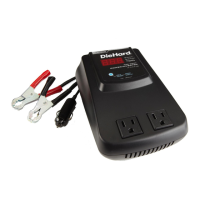
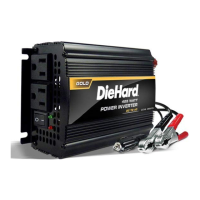
NOTE: Determine whether you will be using the battery clips (425 watt output maximum) or the
12V accessory plug (100 watts maximum).
Locate the positive and negative plastic terminals located on the right side of the inverter 1.
and remove the terminal caps completely.
Install the positive (red) cable ring lug onto the positive (red) terminal screw. Install the 2.
negative (black) cable ring lug onto the negative (black) terminal screw. Tighten each
terminal so that the cable cannot come loose.
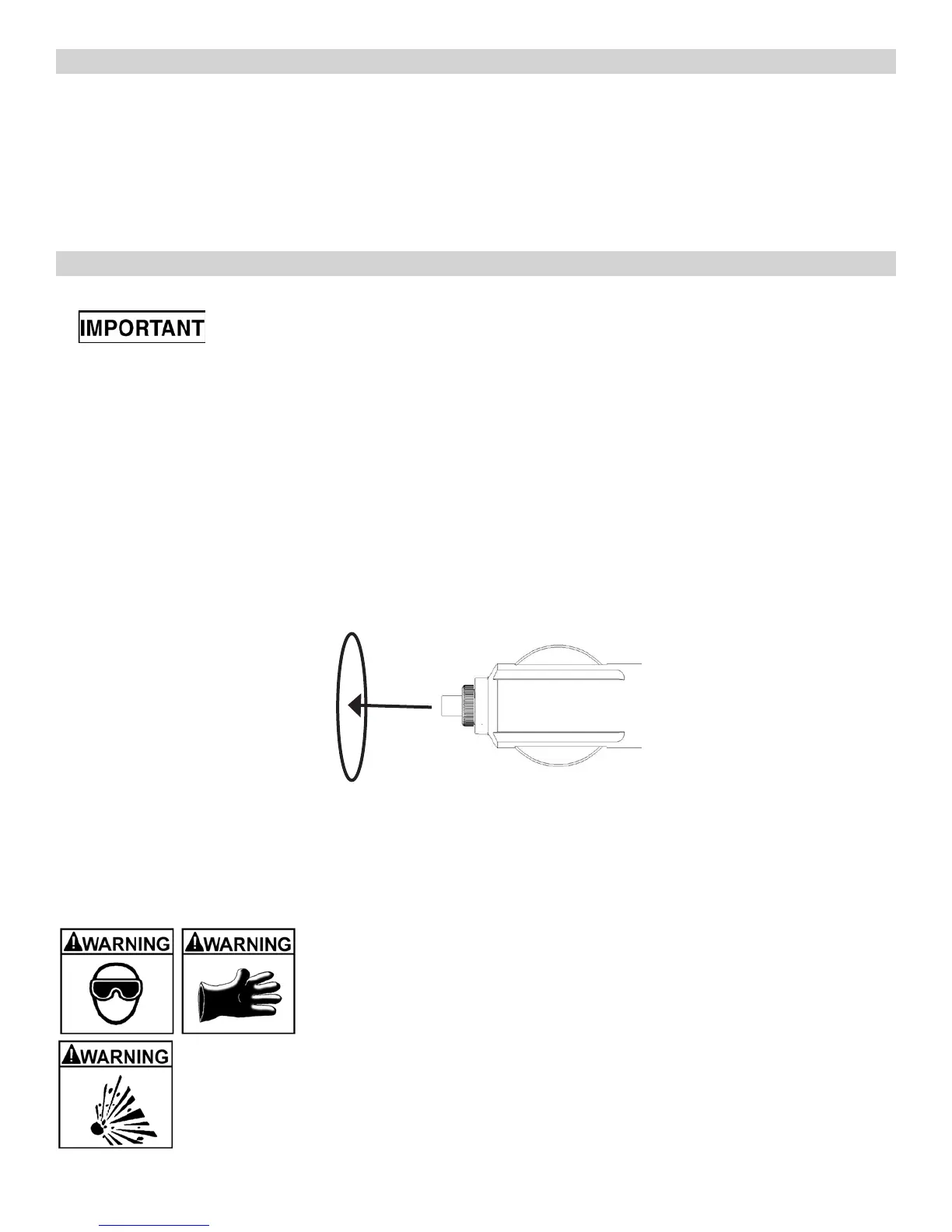
CONNECTING INVERTER CABLE TO A VEHICLE (100 watts maximum):
DC Outlet
DC Plug
Remove the cigarette lighter from its outlet.1.
Push the 12-volt power plug rmly into the outlet.2.
CONNECTING INVERTER CABLES TO 12V BATTERY OR 12V POWER SOURCE (maximum
inverter output):
RISK OF CONTACT WITH BATTERY ACID. BATTERY ACID IS A
HIGHLY CORROSIVE SULFURIC ACID.
A SPARK NEAR THE BATTERY MAY CAUSE A BATTERY EXPLOSION. TO
REDUCE THE RISK OF A SPARK NEAR THE BATTERY:


 To Next Page