EasyManua.ls Logo

Digi CM Series - User Manual

Digi CM Series
2 pages
Print Icon
To Next Page IconTo Next Page
Loading...
Quick Start Guide
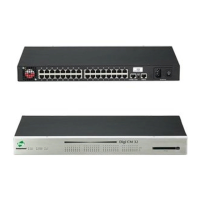
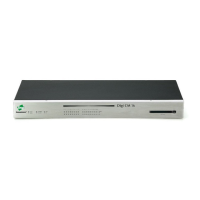
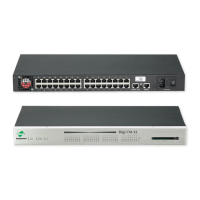
Digi CM™
Welcome to your Digi product
Get started: This guide helps you with initial product setup. Need more? Find additional
supporting material for this product at www.digi.com/products/consoleservers/digicm. Or
connect to the online documentation by scanning this code:
Digi Technical Support: Digi offers multiple support plans to help you get the most out of your
product. For information on Technical Support plans and pricing, contact us at 877.912.3444 or
visit www.digi.com/support.
Documentation feedback: To provide feedback on this documentation, send your comments
to techcomm@digi.com.
1 Verify your components
Verify that you have all included equipment. If any item is missing or damaged, contact your supplier.
Note A loose label sticker that includes the unique device password is included in the box. Retain this label sticker with your hardware records.
This default password will be needed if the device is factory reset and you want to access the web UIon the device.
2 Connect the hardware
1. Connect the Ethernet cable.
2. Connect the power supply.
3. Switch the power on.
3 Initial configuration
1. Run the Device Discovery Utility or DPA utility:
a. Go to www.digi.com/products/consoleservers/digicm.
b. From the Product Support tab, click Utilities.
c. Select your operating system from the drop-down list,
then download and run the Device Discovery Utility for
Windows or the DPA utility for Unix/Linux.
2. Click Configure to set the initial IPaddress, if it hasn't already
been assigned.
3. Click Open Web Interface to configure the device. A login screen
appears.
4. Enter the default user name and password. The default user name
is root. The default password is printed on the device label. If a
password is not on the label, the default password is dbps. If
neither default password works, the password may have been
updated. Check with your system administrator.
To perform initial device configuration, use the discovery tool or use the straight-thru serial cable with the appropriate adapter to the CM
console port, https, or SSHv2.
If you are a power user, you can use the configuration menu:
© 2019 Digi International Inc.
Digi, Digi International, and the Digi logo are trademarks or registered trademarks in the United States and other countries worldwide. All other trademarks mentioned in this
document are the property of their respective owners.
Question and Answer IconNeed help?

Do you have a question about the Digi CM Series and is the answer not in the manual?

Summary

Verify Your Components

Included Equipment

Verify all included equipment, including adapters and cables, and check for a password label.

Connect the Hardware

Hardware Connection Steps

Connect the Ethernet cable, power supply, and switch on the device for hardware setup.

Initial Configuration

Using the Discovery Tool

Download and use the Digi Device Discovery Utility to find the device and set its IP address.

Initial Login and Access

Access the device via its web interface using default credentials and check system administrator for updates.

Test Configuration

Console Port Test

Log in via the console port, verify the default user/password, and test connectivity by typing text.

Web Interface Test

Access the web interface via the console port and verify device configuration and management settings.

Overview

The Digi CM is a console server designed for remote management of network devices. It allows administrators to securely access and control serial console ports of servers, routers, switches, and other network equipment from a central location, even when the primary network is down. This capability is crucial for out-of-band management, troubleshooting, and configuration of critical infrastructure.

Function Description:

The primary function of the Digi CM is to provide secure, remote access to the console ports of connected devices. This is achieved by converting serial console signals into IP-based network traffic, allowing administrators to use standard network protocols like Telnet, SSH, or a web browser to interact with the console of a remote device. The device supports various serial adapters (DB-9M Modem, DB-9F Console, DB-25F Console, DB-25M Modem, DB-25M Console) to accommodate a wide range of connected equipment. This flexibility ensures compatibility with different types of serial ports found on network devices, servers, and other IT infrastructure.

The console server acts as a central point for managing multiple devices, simplifying administration tasks and reducing the need for physical presence in data centers or remote sites. It's particularly useful for managing devices that are geographically dispersed or located in secure environments where direct physical access is limited. The system supports a "Device Discovery Utility" or "DPA utility" for initial setup, which helps in identifying and configuring the console server on the network. This utility allows administrators to assign an initial IP address and then access a web-based interface for further configuration.

Important Technical Specifications:

While specific detailed technical specifications like CPU type, memory, or exact throughput are not explicitly listed in the provided text, several key aspects can be inferred:

  • Connectivity: The Digi CM features Ethernet connectivity for network integration and multiple serial ports (e.g., Digi CM 32 implies 32 serial ports) for connecting to managed devices. The presence of RJ-45 diagnostic loop back and RJ-45 cable indicates standard network interfaces.
  • Power: It requires a power supply, as indicated by the "Connect the power supply" instruction.
  • Adapters: The device supports a variety of serial adapters, including DB-9M Modem (Order # 76000702 for DCE devices like modems with DB9 female ports), DB-9F Console (Order # 76000671 for Bay Accelar, Nortel, and other DB-9 DTE), DB-25F Console (Order # 76000673 for DTE devices with DB-25 male ports), DB-25M Modem (Order # 76000670 for DCE devices like modems), and DB-25M Console (Order # 76000672 for Sun SPARC and other DTE devices with DB-25 female ports). These adapters are typically supplied in quantities of 8.
  • Protocols: The system supports Telnet and SSHv2 for secure remote access, as well as a web-based interface (HTTPS) for configuration and management. The "JAVA Telnet Applet" screenshot suggests support for Java-based client access.
  • Firmware: The screenshot shows a firmware version of "v1.7.0rc2," indicating a robust, version-controlled software environment.
  • Network Configuration: It supports standard network settings including IP address, subnet mask, and default gateway.

Usage Features:

  • Remote Configuration: The Digi CM can be configured remotely via its web interface, Telnet, or SSH. This allows for initial setup and ongoing management without requiring physical presence.
  • Device Discovery: The "Device Discovery Utility" simplifies the initial network setup by automatically finding the device and allowing for IP address assignment.
  • Web-based Management: A comprehensive web interface provides a graphical user interface for managing connections, configuring serial ports, monitoring system status, and performing administrative tasks. The "Digi Configuration and Management" screenshot illustrates a detailed menu structure for network configuration, custom menus, serial port settings, clustering, PC card management, system status & log, system administration, and statistics.
  • Secure Access: Support for SSHv2 ensures encrypted communication, protecting sensitive console access from eavesdropping. Default passwords are provided on the device label or are "dbps," with a strong recommendation to change them for security.
  • Console Access: Users can establish serial connections through the console port (9600, 8, N, 1) for direct local management or use remote protocols to access individual serial ports.
  • Port Title Customization: The system allows for customization of port titles (e.g., "Port Title #1," "Port Title #2"), which helps in identifying connected devices more easily.
  • Diagnostic Tools: The inclusion of an RJ-45 diagnostic loop back cable suggests built-in diagnostic capabilities to verify port functionality and network connectivity. The "Test configuration" section outlines a procedure to use this loop back for verifying serial port connections.
  • User Management: The system supports user authentication with a default "root" user and a device-specific password, allowing for controlled access to the console server.

Maintenance Features:

  • Firmware Updates: While not explicitly detailed, the presence of a firmware version implies that the device supports firmware updates, which are essential for security patches, bug fixes, and new feature additions.
  • System Status and Logs: The web interface includes "System status & log" and "System statistics" sections, providing administrators with tools to monitor the device's health, performance, and operational events. This is crucial for proactive maintenance and troubleshooting.
  • Factory Reset: The mention of a "unique device password" that is needed if the device is "factory reset" indicates a built-in factory reset function. This is a critical maintenance feature for restoring the device to its default state in case of misconfiguration or for redeployment.
  • Technical Support: Digi International provides multiple support plans, technical support contact information (877.912.3444), and a support website (www.digi.com/support), ensuring that users can get assistance with maintenance and troubleshooting.
  • Documentation: Comprehensive online documentation is available at www.digi.com/products/consoleservers/digicm, including a "Product Support tab" with "Utilities" for downloading necessary software. This resource is vital for self-service maintenance and understanding device functionalities.
  • Feedback Mechanism: A dedicated email address (techcomm@digi.com) for documentation feedback suggests a commitment to improving user resources, which indirectly supports device maintenance by providing clearer instructions.

Digi CM Series Specifications

General IconGeneral
BrandDigi
ModelCM Series
CategoryNetwork Hardware
LanguageEnglish

Related product manuals