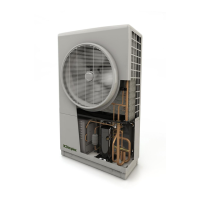
An inverter compressor starts gently ramping up to its
maximum speed over a couple of minutes meaning the
current increase is very gradual. The fixed speed
compressor has a larger starting current because it
doesn‟t turn on gradually. The starting current is smoothed
by an inbuilt soft-starter to keep it within acceptable limits.
The starting current does not cause any problems
because an in-built randomised time delay that ensures
multiple heat pumps to not turn on at the same time.
An inverter heat pump is able to modulate down its output
as the external temperature increases. A fixed speed heat
pump will run at a constant speed meaning that its output
increases with rising temperature. This means that an
inverter compressor could achieve slightly higher cylinder
temperatures for the same size coil although in practice
both types of compressor can achieve suitable cylinder
temperatures.
Advantages of fixed speed compressors
A fixed speed compressor is designed to work at the
optimum performance level all of the time. An inverter
compressor does not always work in the optimum zone
because it modulates its output to match the heat demand.
The „over-driving‟ of an inverter compressor causes it
efficiency to drop.
Since the output of both the fixed and inverter
compressors drop with decreasing temperature, there
becomes a point when a secondary heat source is
required to match the properties heat demand, known as
the Bivalent point. At lower temperatures an inverter
compressor and a fixed speed compressor are equally as
efficient despite the inverter needing more immersion
support.
Heat pump labelling
The product code for the inverter range of heat pumps
continues the same convention as the rest of Dimplex‟s
heat pump range.
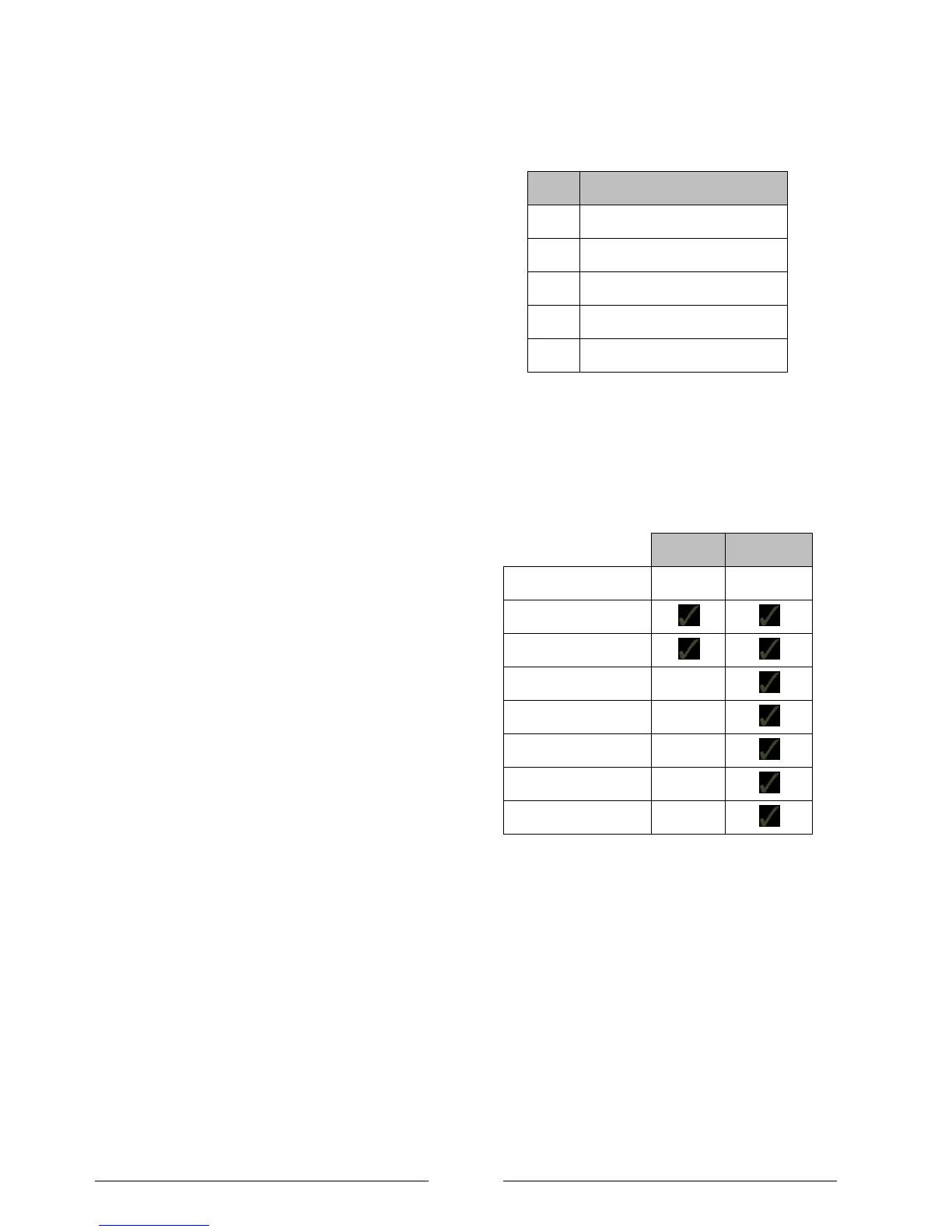
Table 1: Product coding convention
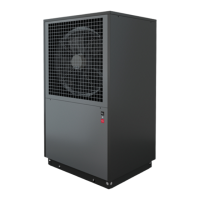
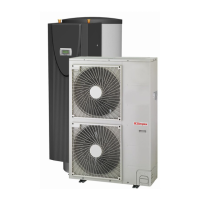
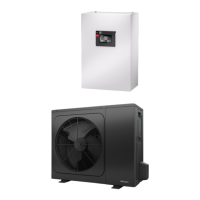
Comparison of the LA MS and LA MI ranges
The LA MI and LA MS range of heat pumps are ideal for
providing DHW and space heating. In addition, the MS
range of heat pumps also has a sophisticated controller
capable of controlling more complicated systems.


 To Next Page