8
Classic II system permits the placing of salads, desserts, and so on, directly on the tray
without cumbersome and unattractive plastic over-wraps. Patient perception is enhanced;
convenience is improved for both patients and dietary staff; and clean-up is reduced. The
ability to use disposable, reusable plastic, or china dishware interchangeably is helpful in
fulfilling specific patient needs.
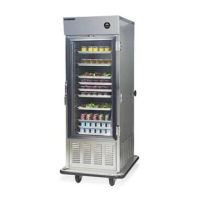
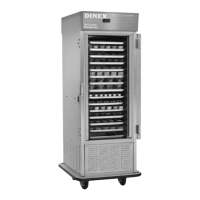
The limits of dietary staffing require staggering the delivery of Perfect•Temp carts to
patient areas. The “Station Commander” controller enables the system to stagger completion
times as needed, preset the frequency and duration of holding cycles, and run automatically
or manually. An indicator on each controller verifies that the cart has been placed in the
refrigerator, has been electrically connected, and is ready for the rethermalization cycle to
begin. Once started, other indicators on the controller indicate rethermalization, holding, or
ready status. A 10-second buzzer sounds at the end of every heating or hold cycle.
Perfect•Temp Cart Heater Pad Design
Each tray level on the Perfect•Temp cart is equipped with two heater pads. The small
pad is primarily for the rethermalization of hot cereals and soups. The larger pad is for the
entrée.
The heater pad assembly consists of an engineered resin casting, a computer-designed
heating grid, a layer of insulation, thermostat and thermal fuse. The entire assembly is
permanently sealed to prevent water penetration and eliminate potential residue build-up. .
The heater pad fixture serves a dual purpose. First, it provides a protective shell into
which the heater pad is assembled. Second, the casting is designed to be fastened
mechanically in the cart, offering superior strength and durability.
The heater pad fixture is fabricated with a flanged end that mates to a box channel
running the width of the cart at each tray level. All electrical wires run inside the box channel
and connect to each heater pad. The heater pad casting is then secured with two screws that
pass through the flange of the casting into the box channel.
The top surface of the heater pad is a layer of coated (nonstick) aluminum. A
computer-designed heater grid is vulcanized to the underside of the aluminum. The design of
the heater grid is specific to the heating requirements, which means that the grid pattern for
each of the pads is different. The purpose of changing the grid pattern is to develop the
thermal patterns necessary for each application. The needs of the soup or hot cereal heating
pad are not the same as the needs for the entrée heating pad. Three different grid patterns
resulted.
Beneath the top layer of aluminum and its bonded heater grid is fiberglass insulation to
help direct the transfer of heat toward the dish and to shield the tray and cover below from
unnecessary thermal conductivity.
The insulation is protected from moisture by the bottom of the heater pad fixture. The
resulting assembly is then completely sealed with silicone sealant.


 To Next Page