EasyManua.ls Logo

DOF Reality P6 - User Manual

Default Icon
35 pages
To Next Page IconTo Next Page
Loading...
Assembly Instructions DOF Reality H6 and
P6
1
WARNING! Assembled platform will have exposed motors moving parts. Never operate it with small
children around. Protection cover sold separately. During initial assembly don’t tighten the bolts
completely, do it after everything is assembled. First you need to assemble the full frame and tighten
the screws and bolts after.
Please check all the motor power and sensor plugs. Reconnect them if they happen to have
been disconnected during shipping. This is very important: Never change the wiring. Mixing the colors
to the connectors can damage the motors and platform controllers.
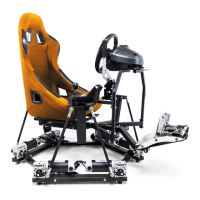
Our platform is very lightweight and simple due to its perfect weight balance. This allows us to
use affordable motors and gearboxes. If you plan to put something besides standard wheel, pedals,
yoke, gear shifter, throttle and HOTAS you need to plan and install it properly. Each additional element
(even if it is light weight) connected to the moving platform should be well positioned and
counterbalanced. Even a light-weight screen/monitor placed on our simulator can cause problems. It is
always better to consult us first, before installing any extra equipment on the platform.
Don’t put ANY controllers on the platform before it is completely tested and proven to be
working as desired. After assembly attach the seat only; nothing extra. After you ensure that the
simulator is moving appropriately, you can start adding controllers one by one, doing movement tests
with the a person seated in the chair. This will replicate the weight distribution.
Each platform control box is shipped preset to the voltage of the destination country. If you
are not sure about the proper voltage settings, turn it upside-down and check ALL 2 or 3 red switches
inside the box and consult us.
If you not sure what bolts to use print the following 1:1 template on corresponding paper size without
extra borders or spacing:
For US Letter Paper : https://dofreality.com/hardware_template_Letter.pdf
For A4 Paper : https://dofreality.com/hardware_templateA4.pdf
Never ever leave platform powered unattended and powered on when not used. Motors
are constantly doing micro adjustments. When overheated over 70C they can loose the
power.
Question and Answer IconNeed help?

Do you have a question about the DOF Reality P6 and is the answer not in the manual?

DOF Reality P6 Specifications

General IconGeneral
TypeMotion Simulator Platform
CompatibilityPC
Degrees of Freedom6
ActuationElectric
Software CompatibilityFlight Simulators, Racing Simulators
Power Requirements110-240V AC

Summary

Initial Setup and Safety Precautions

General Warnings and Checks

Initial warnings about motor safety, wiring, and unattended operation.

Platform Usage Guidelines

Guidelines for placing controllers and additional equipment on the platform.

Voltage Settings and Bolt Templates

Information on checking voltage settings and using 1:1 bolt templates for assembly.

Step-by-Step Assembly

Motor Attachment to Hex Base

Attach motors to the hex base using M8x75 bolts, ensuring correct orientation.

Shock Absorber Installation

Instructions for attaching 3 shocks to the hexagon frame and using body weight for compression.

Motor and Control Box Connection

Connect motors to control boxes via round sensor plugs, checking connections and firmware.

Platform Setup and Calibration

Power Supply Requirements

Guidance on using two separate power cords for US and 110-120V countries to prevent breaker trips.

Platform Balancing Procedure

Critical step to balance weight for optimal performance and lifespan using a specific app.

Additional Controller Mounting

Wheel and HOTAS Mounts

Instructions for installing rigid wheel support brackets and HOTAS mounts, including joystick placement.

Buttkicker Mount

Guidance on using rail or bottom mounts for attaching a buttkicker.

Software Setup and Configuration

Install SimRacingStudio (SRS)

Install SimRacingStudio (SRS) to connect the platform to your computer and enable game interaction.

License and Hardware Configuration

Activate your license and configure hardware settings in SRS, verifying motionbox connection status.

Hardware Testing

Test hardware functionality using SRS sliders to verify correct platform movement and direction.

Game Setup and Compatibility

Configure SRS for PC games, checking game statuses and following setup instructions for compatibility.

Playing the Game with SRS

Connect SRS to your game by starting the game with SRS running and checking profile status.

Understanding Game States and Tuning

Understand game states (Stand By, Game Running, Telemetry Data) and tune motion effects via SRS sliders.

Virtual Reality (VR) Integration

VR Motion Compensation

Utilize software like SRS or OpenVR to compensate for platform movement in VR for a smoother experience.

VR Tracker Mounting

Mount VR trackers correctly for base station or inside-out tracking headsets to ensure proper VR motion tracking.

Alternative VR Compensation Methods

Explore alternative software (OpenVR Input Emulator) and hardware solutions like covering cameras for VR motion compensation.

Oculus Rift Sensor Mounting

Mount the Oculus Rift sensor on the platform for simulated motion compensation, noting potential compatibility issues.

Troubleshooting and Maintenance

Platform Not Connected in SRS

Troubleshoot 'Not Connected' errors in SRS by checking Device Manager for COM ports and reinstalling drivers.

Motor Stuck or Unresponsive

Unlock unresponsive motors by using SMC3Utils to reset their position and recalibrate.

Neutral Motor Arm Position

Correct the neutral motor arm position, ensuring it is horizontal and aligned properly.

Motor Arm Recalibration Procedure

Detailed procedure to recalibrate motor arms to a horizontal position using the SMC3 tool and provided hardware.

SMC3 Recalibration Steps

Final steps for SMC3 recalibration, including setting values and testing the motor movement.

General Platform Issues

Troubleshoot common issues like SRS detection, antivirus conflicts, and in-game connectivity problems.

Motor Behavior and Adjustments

Understand why motors make small adjustments and how to address shaking or jerky movements.

Game Play and Motion Shaking Issues

Diagnose issues like unbalanced platforms, incorrect settings, or shaking motion during gameplay.

Technical Specifications

Simulator Component Details

Details on power input, consumption, peak current, weight, and manufacturing information.

Related product manuals