Safety Section
16
Fire Extinguisher
Have a fire extinguisher-type BC and 1.5KG
minimum capacity-on rear overhead guard leg with
latch and know how to use it. Inspect and have it
serviced as recommended on its instruction plate.
Ether
Ether is poisonous and flammable.
Breathing ether vapors or repeated contact of ether
with skin can cause personal injury.
Use ether only in well-ventilated areas.
Do not smoke while changing ether cylinders.
Use ether with care to avoid fires.
Do not store replacement ether cylinders in living
areas or in the operator's compartment.
Do not store ether cylinders in direct sunlight or at
temperatures above 39°C (102°F).
Discard cylinders in a safe place. Do not puncture or
burn cylinders.
Keep ether cylinders out of the reach of
unauthorized personnel.
Lines, Tubes and Hoses
Do not bend or strike high pressure lines. Do not
install bent or damaged lines, tubes or hoses.
Repair any loose or damaged fuel and oil lines,
tubes and hoses. Leaks can cause fires. Contact
your DOOSAN dealer for repair or replacement.
Check lines, tubes and hoses carefully. Do not use
your bare hand to check for leaks. Use a board or
cardboard to check for leaks. See Fluid Penetration
in the Safety Section for more details. Tighten all
connections to the recommended torque. Replace if
any of the following conditions are found.
End fittings damaged or leaking.
Outer covering chafed or cut and wire
reinforcing exposed.
Outer covering ballooning locally.
Evidence of kinking or crushing of the flexible
part of hose.
Armoring embedded in the outer cover.
End fittings displaced.
Make sure that all clamps, guards and heat shields
are installed correctly to prevent vibration, rubbing
against other parts, and excessive heat during
operation.
Tire Information
Explosions of air-inflated tires have resulted from
heat-induced gas combustion inside the tires. The
heat, generated by welding or heating rim
components, external fire, or excessive use of
brakes can cause gaseous combustion.
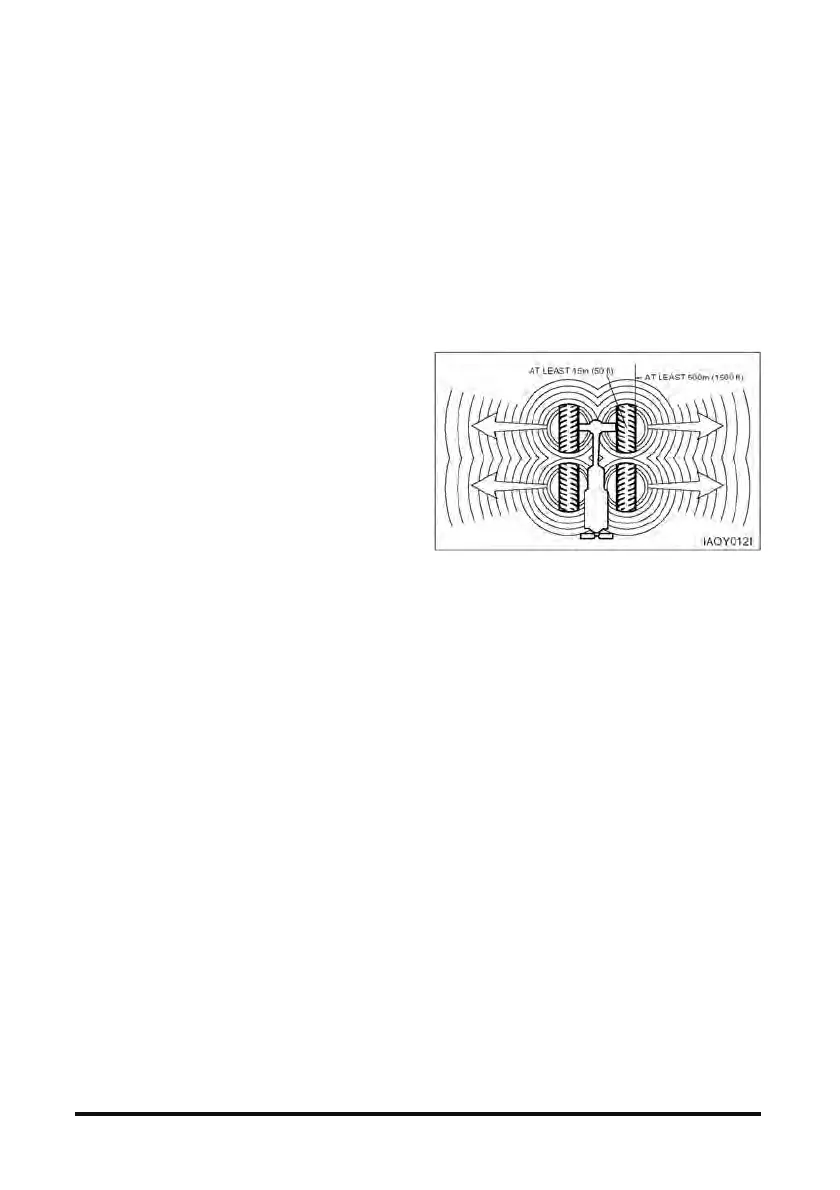
A tire explosion is much more violent than a blowout.
The explosion can propel the tire, rim and axle
components as far as 500 m (1500 ft) or more from
the lift truck. Both the force of the explosion and the
flying debris can cause personal injury or death, and
property damage.
Do not approach a warm tire closer than the outside
of the area represented by the shaded area in the
above drawing.
Dry nitrogen (N2) gas is recommended for inflation
of tires. If the tires were originally inflated with air,
nitrogen is still preferred for adjusting the pressure.
Nitrogen mixes properly with air.
Nitrogen inflated tires reduce the potential of a tire
explosion, because nitrogen does not support
combustion. Also, nitrogen helps prevent oxidation
and the resulting deterioration of rubber and
corrosion of rim components.
Proper nitrogen inflation equipment and training in
its use are necessary to avoid over inflation. A tire
blowout or rim failure can result from improper or
misused equipment.
Stand behind the tread and use a self-attaching
chuck when inflation a tire.
Servicing, changing tires and rims can be dangerous
and should be done only by trained personnel using
proper tools and procedures. If correct procedures
are not followed while servicing tires and rims, the
assemblies could burst with explosive force and
cause serious personal injury or death. Follow
carefully the specific information provided by your
tire or rim servicing personnel or dealer.



 To Next Page