OP000756Inspection, Maintenance and Adjustment
4-62
Replace Pipes and Hoses
1. Replace hoses that carry brake fluid to wheel brakes. Also
replace hoses that carry hydraulic fluid to steering
cylinders.
2. It is difficult to determine condition of many hoses. The
best way to ensure safe operation and to maintain
maximum performance is to replace hoses on a regular
basis. If any brake or steering hoses become damaged or
appear defective in any way, replace them immediately
despite time interval since their last replacement.
Bleed Brakes
When brake hoses or brake tubes are replaced, air can be
introduced into brake hydraulic system. Air can cause brakes to
operate intermittently, which is a dangerous condition. Never
operate machine with air in brake hydraulic system. A spongy
feel when pressing brake pedal is a sign that air is present in
brake hydraulic system.
To bleed air out of brake hydraulic system, perform the following
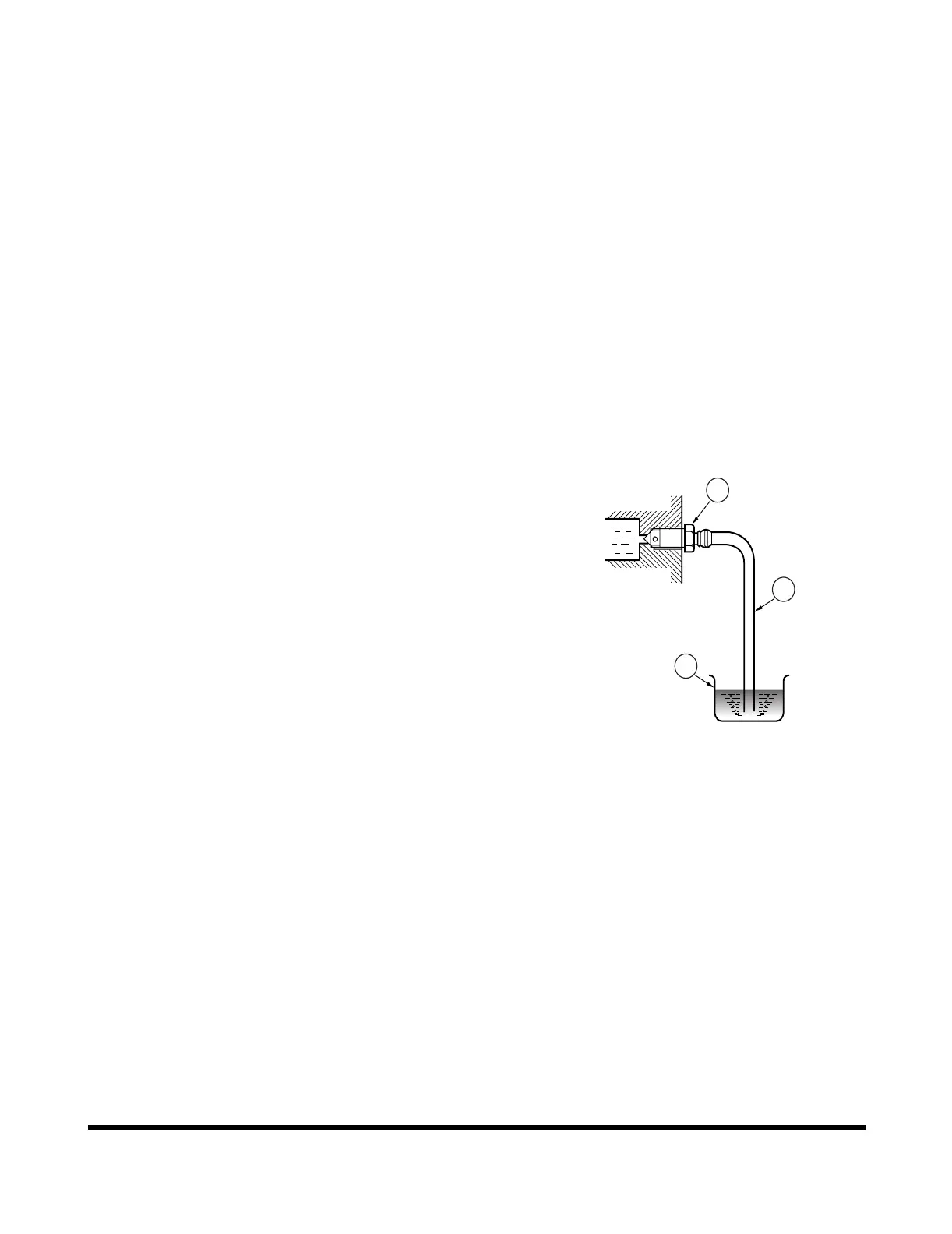
steps: (Figure 94)
1. Start engine and place transmission in "NEUTRAL."
2. Remove rubber cap from bleeder screw on wheel.
3. Place one end of a plastic hose (2) over bleeder screw (1).
Place other end of hose in a container (3) filled with brake
fluid.
4. Station one person in operator’s cab, and one person at
bleeder screw on wheel being bled.
5. Open bleeder screw (1). Then press down on brake pedal
until it rests on floor of cab. Hold pedal down on floor of
cab. Close bleeder screw while pedal is being held down.
After bleeder screw has been closed, allow brake pedal to
return to upright position. Continue to open bleeder screw
and press down pedal as described in this step, until fluid
expelled from bleeder hose has no air bubbles present.
6. Securely close bleeder screw (1). Install rubber cap on
bleeder screw.
1
2
3
HLB3018L
Figure 94


 To Next Page