mmHg
/
Mild Hypertension
BloodPressure Classification Indicator
Blood Pressure
Blood pressure is the force of blood pushing against the walls of
arteries. It is typically measured in millimeters of mercury (mmHg.)
Systolic blood pressure is the maximum force exerted against blood
vessel walls each time the heart beats. Diastolic blood pressure is the
force exerted on blood vessels when the heart is resting between beats.
An individual’s blood pressure frequently changes throughout the
course of a day. Excitement and tension can cause blood pressure
to rise, while drinking alcohol and bathing can lower blood pressure.
Certain hormones like adrenaline (which your body releases under
stress) can cause blood vessels to constrict, leading to a rise in blood
pressure.
If these measuring numbers become too high, it means the heart
is working harder than it should.
Health Reminder
Hypertension is a dangerous disease that can affect the quality of
life. It can lead to a lot of problems including heart failure, kidney
failure, and cerebral hemorrhaging. By maintaining a healthy lifestyle
and visiting your physician on a regular basis, hypertension and
relative diseases are much easier to control when diagnosed in the
early stages.
Q: What is the difference between measuring blood pressure at
home or at a professional healthcare clinic?
A: Blood pressure readings taken at home are now seen to give
a more accurate account as they better reflect your daily life.
Readings can be elevated when taken in a clinical or medical
environment. This is known as White Coat Hypertension and may
be caused by feeling anxious or nervous.
Note: Abnormal test results may be caused by:
1. Improper cuff placement
Make sure cuff is snug-not too tight or too loose.
2. Improper body position
Make sure to keep your body in an upright position.
3. Feeling anxious or nervous
Take 2-3 deep breaths, wait a few minutes and resume testing.
Blood Pressure Information
Blood Pressure Information
Blood Pressure Q&A
Unit Operation
Problem
Blood pressure
results are not
within typical
range
Cuff is too tight or not
properly positioned on
the wrist
Cuff fails to inflate
properly
Improper operation
Pressurization is over
300mmHg
Inaccurate test
results due to body
movement or monitor
movement
Firmly reposition cuff on
wrist making sure no wiggle
is present. ( See Page 15)
Check for leaks in cuff.
Read user manual carefully
and re-test properly.
Read user manual carefully
and re-test properly.
Sit in a relaxed position
placing wrist level with
heart. Avoid speaking or
moving body parts while
testing. ( See Page 8)
displayed
Possible Cause Solution
Troubleshooting
WHO Blood Pressure Classification Indicator
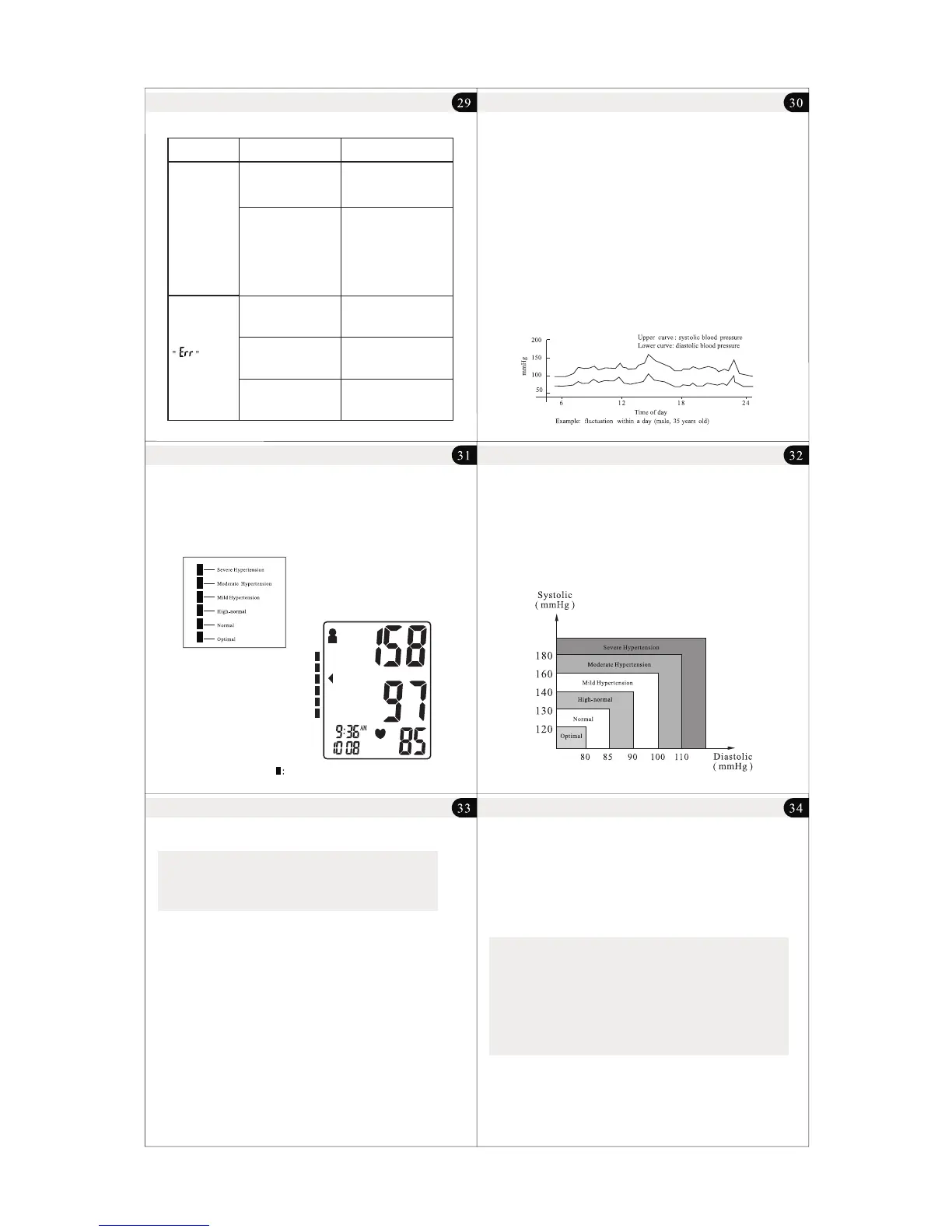
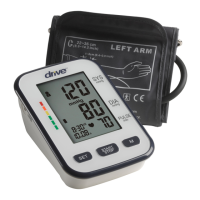
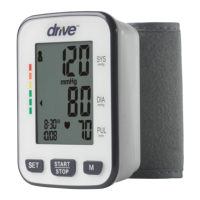
The BP3200 is equipped with a classification indicator based on
established guidelines from the World Health Organization.
The chart below (color coded on monitor unit) indicates test results.
Note: Do not be alarmed if an abnormal reading occurs. A better
indication of an individual’s blood pressure occurs after 2-3 readings
are taken at the same time each day over an extended period of time.
Consult your physician if test results remain abnormal.
Blood Pressure Information
Blood Pressure Information
1


 To Next Page