EasyManua.ls Logo

Dualsky Summit ESC - User Manual

Default Icon
4 pages
Print Icon
To Next Page IconTo Next Page
Loading...
1
SUMMIT ESC Manual
1. Initialization process
Turn on the correct power (tone: 4-2-4) -> Battery cells number prompt -> throttle signal is correct
(tone: 4-2-4) -> Finish, ready to run.
* If the throttle signal alarm occurs, please follow the status table.
2. Battery cells number prompt
* Summit ESC is designed for lithium-ion polymer batteries. The number of cell is automatic
recognized, and the sound is prompted.
* Prompt the battery number of cells = long tone times x 3 + short tone times (1 or 2)
* For example: one long tone and one brief tone are 4S batteries, two long tone are 6S batteries, two
long tone and two brief tone are 8S batteries, and four long tone are 12S batteries
* If the battery number of cells is difference from actual battery number of cells, please check the
battery and to ensure it is fully charged.
3. Throttle calibration
*Whenever the model data in the remote control is used with the Summit ESC for the first time, it is
strongly recommended to do "throttle calibration".
* If the calibration is not calibrated, the lowest throttle signal may be high and the ESC alarm will not
work. It is also possible that the throttle signal is low and the ESC brake function is activated..
* The transmitter is turned on, the throttle stick is placed at the highest position, and the Summit
power is turned on (tone: 4-2-4) -> Battery cell number prompt (tone 4) -> Wait for about 3 seconds, long
tone (tone 2) - > Immediately lower the throttle, long tone (tone 4) -> complete throttle calibration ->
check throttle signal (tone: 4-2-4) -> Summit ready to run
* If the remote throttle signal is reversed at the first time, the throttle calibration procedure will be
entered. Please pay special attention to this, power off, adjust the throttle signal positive and negative.
4. Change the direction of motor rotation
The Summit ESC can change the direction of motor rotation by setting, without having to go through
the physical way of changing the two-phase motor line.
The transmitter is turned on, the throttle stick is placed at the highest position, and the Summit
power is turned on (tone: 4-2-4) -> Battery cells number prompt (tone 4) -> Wait for 3S or so, single long
tone (tone 2), This is the entrance to the "throttle calibration". Do not do any operation -> Wait for 3S or so,
double long tone, enter the motor rotation direction detection program -> Move the motor to the correct
direction by hand -> If you hear a long prompt Tone, indicating that the new direction of rotation has been
recorded -> move the throttle to the lowest position (tone: 4-2-4) -> Summit is ready to run.
* Do the throttle calibration first, then do the operation to change the direction of rotation. If the
motor rotates in the right direction, do not operate.
* In this operation, the motor must be in a state where no propeller is installed.
* This operation only records the direction of the motor once. If it needs to be re-recorded, it must be
Question and Answer IconNeed help?

Do you have a question about the Dualsky Summit ESC and is the answer not in the manual?

Summary

Initialization Process

Battery Cells Number Prompt

Throttle Calibration

Change Motor Rotation Direction

Timing and Applicable Motors

Set Idle Speed and Energy Recovery

Set Brake Functionality

Throttle Lock Switch Setup

Switch and Sleep Modes

Summit ESC Protection Features

Status and Tones Overview

Details the built-in LED and tone indicators for various ESC operational statuses and protections.

Disclaimer

Precautions

Warranty Regulations

Overview

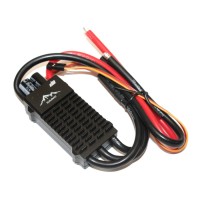
The SUMMIT ESC (Electronic Speed Controller) is a sophisticated device designed for use with remote-controlled models, primarily those powered by brushless motors. It incorporates intelligent algorithms and automatic timing to ensure optimal performance and compatibility with a wide range of motors, including Dualsky ECO, EA, DA, GA, MR, HD series, as well as other high-quality senseless brushless outer and inner rotor motors. This eliminates the need for users to manually experiment with different timing settings, simplifying setup and enhancing user experience.

Function Description:

The primary function of the SUMMIT ESC is to control the speed and direction of a brushless motor in a remote-controlled model. It achieves this through precise throttle signal interpretation and motor management.

  • Initialization Process: Upon power-on, the ESC performs an initialization sequence, indicated by specific tone patterns (4-2-4). It then prompts for the battery cell count and verifies the throttle signal. A successful initialization means the ESC is ready for operation. If a throttle signal alarm occurs, users are directed to a status table for troubleshooting.
  • Battery Cell Number Recognition: The SUMMIT ESC automatically recognizes the number of cells in a connected lithium-ion polymer battery and provides an audible prompt. This prompt uses a combination of long and short tones to indicate the cell count (e.g., one long tone and one brief tone for 4S, two long tones for 6S). If the recognized cell count differs from the actual battery, users are advised to check the battery and ensure it is fully charged.
  • Throttle Calibration: This is a crucial step recommended for first-time use with a new remote control or model data. Calibration ensures that the ESC accurately interprets the full range of throttle signals from the transmitter. Without proper calibration, issues such as high minimum throttle signals (leading to alarms) or low throttle signals (activating the ESC brake function) can occur. The calibration process involves turning on the transmitter with the throttle stick at its highest position, then powering on the ESC, waiting for specific tone prompts, and finally lowering the throttle stick to its lowest position. If the remote throttle signal is reversed, the ESC will enter the calibration procedure, requiring users to power off and adjust the throttle signal polarity.
  • Motor Rotation Direction Change: The SUMMIT ESC allows users to change the motor's rotation direction electronically, eliminating the need to physically rewire the motor phases. This is done through a specific sequence involving the transmitter and ESC. Users power on the ESC with the throttle stick at its highest position, wait for specific tone prompts, and then manually move the motor in the desired direction. A long prompt tone confirms the new direction has been recorded. This operation should only be performed after throttle calibration and when no propeller is installed on the motor. The direction is recorded once and requires a power cycle to re-record if needed.
  • Idle Speed and Energy Recovery: After throttle calibration, the ESC's default minimum throttle setting is "Freewheel." By slightly increasing the throttle trim, users can simulate a gas engine's idle speed. This idle speed offers several advantages: faster motor acceleration response, engagement of an energy recovery mode, and improved deceleration compared to freewheel.
  • Brake Function: When the throttle is lowered below the unpowered position (via trim or throttle curve), the ESC enters the brake zone. The SUMMIT series offers finely adjustable braking force from 0-100%, with greater force applied at lower throttle positions. This feature is particularly useful for aerobatic maneuvers like F3A.
  • Throttle Lock Switch: To prevent accidental propeller rotation at high speeds, which can be dangerous, the ESC recommends setting a throttle lock using the "Throttle cut" function on the transmitter. This provides an additional layer of safety and works effectively in conjunction with the idle function.
  • Switch and Sleep (for BEC versions): For SUMMIT ESCs with a Built-in BEC (Battery Eliminator Circuit), the BEC output can be controlled by an FSS-4 switch. Turning off the BEC also puts the ESC into a sleep state. The FSS-4 switch is designed with a fail-safe mechanism, ensuring the ESC remains operational even if the switch fails.
  • Sleep State (for HV series without BEC): The SUMMIT HV series without BEC enters a sleep state if the throttle signal disappears for more than 3 seconds. To restart the ESC after signal recovery, the throttle must be lowered to its minimum position. This feature allows models to be connected to the main battery and placed in a waiting area without the remote control system being turned on. However, it's noted that the sleepy ESC still draws a few milliamps of power and is not recommended for periods longer than 24 hours.
  • Protection Features: The SUMMIT ESC incorporates a comprehensive suite of protection features to ensure safe and reliable operation. These include:
    • Arc protection
    • Power-on overvoltage and undervoltage protection
    • Unsafe throttle signal protection
    • Low voltage protection
    • Out of control protection
    • Stall protection
    • Out of step protection
    • Over current protection
    • Over temperature protection
    • Short circuit protection These protections are indicated by specific LED patterns (Red, Green, HV ONLY) and audible tones, as detailed in the "SUMMIT ESC status and tones" table. For example, a "No throttle signal" condition is indicated by a repeating short and long tone, with both Red and Green LEDs off and the HV ONLY LED on, prompting the user to check the throttle/receiver. A "Power-on under voltage" condition (battery voltage below 13.2V) is indicated by three short tone repeats, with the Red LED off, Green LED on, and HV ONLY LED on, advising the user to check input voltage and power on again.

Usage Features:

  • Ease of Setup: The automatic battery cell recognition and intelligent timing simplify the initial setup process, making it more user-friendly.
  • Flexible Motor Control: The ability to electronically change motor rotation direction offers convenience and flexibility in model configuration.
  • Enhanced Safety: Features like throttle calibration, throttle lock switch, and comprehensive protection mechanisms contribute to safer operation of the model.
  • Optimized Performance: Idle speed and energy recovery modes, along with finely adjustable braking force, allow for tailored performance characteristics suitable for various flying styles, including aerobatics.
  • Clear Status Indicators: The combination of audible tones and LED indicators provides clear and immediate feedback on the ESC's status and any potential issues, aiding in troubleshooting.

Maintenance Features:

The manual primarily focuses on operational aspects and troubleshooting rather than explicit maintenance procedures for the ESC itself. However, implicit maintenance considerations include:

  • Regular Checks: The importance of checking the battery and ensuring it is fully charged (Section 2) and verifying all components are intact, the propeller and motor are installed correctly, and screws are not loose before flying (Section 11) are crucial for preventing damage and ensuring safe operation.
  • Proper Handling: Adhering to the precautions outlined in the manual, such as staying away from crowds and high-voltage lines, not approaching rotating propellers, and using recommended power supplies and accessories, contributes to the longevity and proper functioning of the device.
  • Warranty Support: The 12-month warranty period and the conditions for claiming warranty service (providing cashier receipts, operating correctly, using recommended accessories, and avoiding damage from water ingress, reverse polarity, or heavy loads) provide a framework for addressing potential defects or failures.
  • Troubleshooting Guidance: The "SUMMIT ESC status and tones" table serves as a valuable troubleshooting guide, allowing users to diagnose issues based on the ESC's audible tones and LED indicators. This empowers users to identify and potentially resolve common problems without requiring professional intervention.

In summary, the SUMMIT ESC is a robust and intelligent electronic speed controller designed to provide reliable and high-performance motor control for RC models, with a strong emphasis on user convenience, safety, and comprehensive protection.

Dualsky Summit ESC Specifications

General IconGeneral
PWM Frequency8KHz
Protection FeaturesLow voltage cutoff
TypeElectronic Speed Controller (ESC)
Voltage Range2-6S LiPo (7.4V-22.2V)
Programming MethodTransmitter stick programming or programming card

Related product manuals