TRANSPORTING / STORAGE
Proper storage preparation is essential for keeping your pump troublefree
and looking good. The following steps will help to keep rust and
corrosion from impairing your pump’s function and appearance, and will make
the engine easier to start when you use the pump again.
Cleaning
1. Wash the engine and pump.
Wash the engine by hand, and be careful to prevent water from entering the
air cleaner or muffler opening. Keep water away from controls and all other
places that are difficult to dry, as water promotes rust.
·Using a garden hose or pressure washing equipment can force water
into the air cleaner or muffler opening. Water in the air cleaner will soak
the air filter, and water that passes through the air filter or muffler can
enter the cylinder, causing damage.
·Water contacting a hot engine can cause damage. If the engine has
been running, allow it to cool for at least half an hour before washing.
2. Wipe dry all accessible surfaces.
3. Fill the pump chamber with clean, fresh water, start the engine outdoors, and
let it run until it reaches normal operating temperature to evaporate any external
water.
Dry operation will damage the pump seal. Be sure the pump
chamber is filled with water before starting the engine.
4. Stop the engine, and allow it to cool.
5.
6.
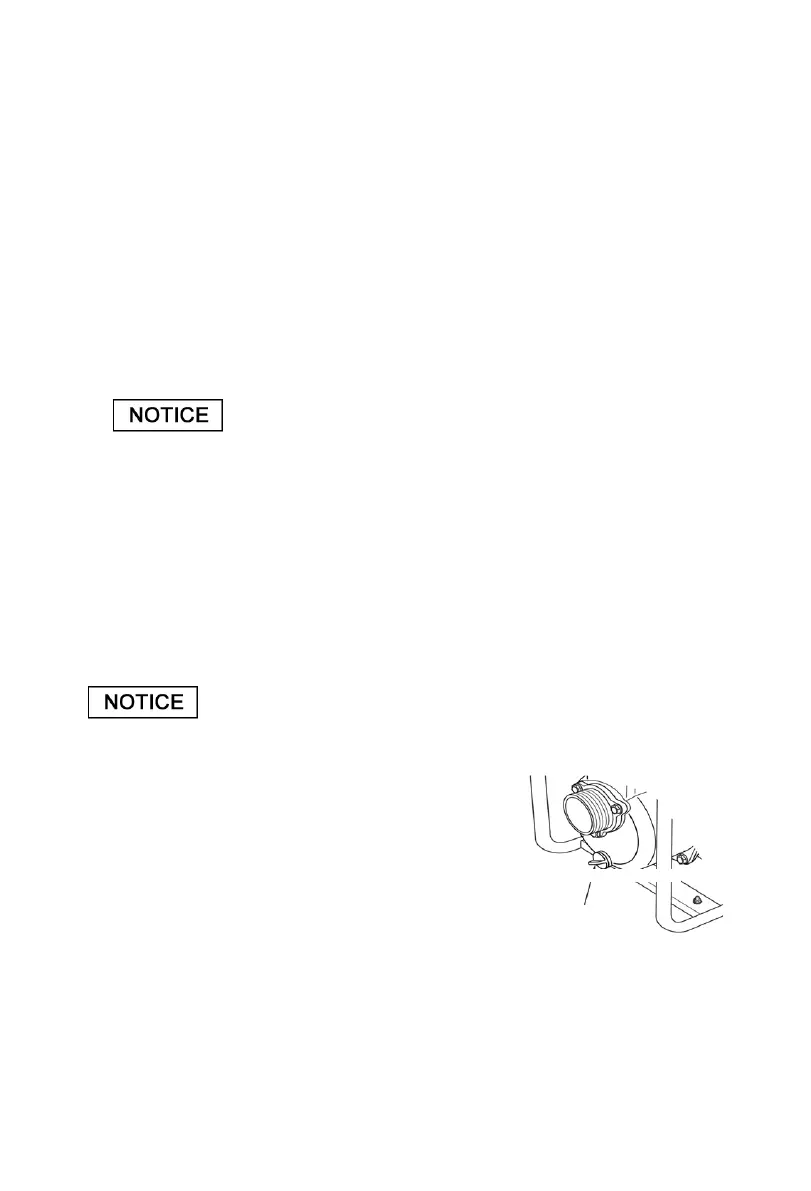
Remove the pump drain plug, and flush the pump
with clean, fresh
water. Allow the water to drain
from the pump chamber, and then reinstall the
drain plug.
After the pump is clean and dry, touch up any
damaged paint, and coat areas that may rust
with a light film of oil. Lubricate controls wit
h a
silicone spray lubricant.
Fu
el
Gasoline will oxidize and deteriorate in storage. Old gasoline will cause
hard starting, and it leaves gum deposits that clog the fuel system. If the
gasoline in your engine deteriorates during storage, you may need to have the
carburetor
24
PUMP DRAIN


 To Next Page