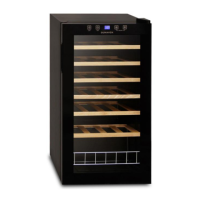
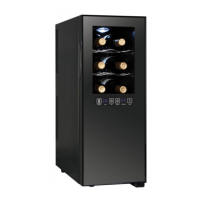
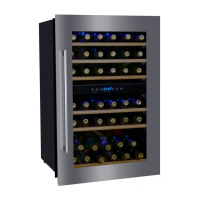
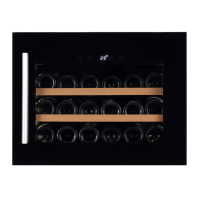
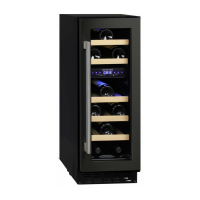
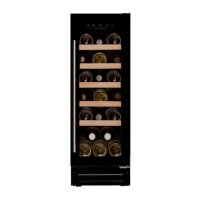
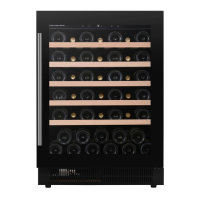
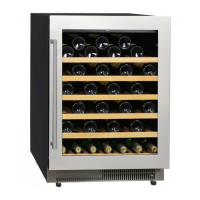
This document provides an instruction manual for Dunavox wine cabinets, covering various models and their features, installation, operation, and maintenance.
Function Description
Dunavox wine cabinets are designed for the storage of wine, ensuring optimal conditions for preservation and serving. They utilize a dynamic compressor-type cooling system to maintain an even distribution of temperature and humidity within the interior. Some models also include a heating function to achieve perfect storage and service conditions. The appliances are CFC- and HFC-free, using Isobutane (R600a) as a refrigerant, which is environmentally friendly.
Usage Features
The wine cabinets offer flexible installation options, including built-in, recessed, or free-standing setups, depending on the model. They come with single, dual, or three-temperature zones, allowing for precise control over different types of wine. Temperature settings can be adjusted between 5°C and 22°C (40°F and 72°F) and displayed in either Fahrenheit or Celsius. Some models are specifically designed for long-term storage at maturing temperatures or for serving red, white, or sparkling wines at their ideal temperatures.
The control panel features a digital display and touchpad input for easy temperature adjustment. An ON/OFF switch controls the soft LED interior light, which can operate in either a functional mode (lights on only when the door is open) or a showcase mode (lights on continuously). The unit includes an open-door and malfunction warning system, as well as a Sabbath mode that turns off displays, interior lights, and audible alarms for religious observances while maintaining normal cooling operations. A temperature memory function ensures that the unit reverts to the last set temperature after a power interruption.
The wine cabinets are equipped with reversible tempered double/triple pane glass doors that protect wine from UV light, minimize condensation, and reduce noise. The interior features a black-coated matte steel outer frame and black plastic liner for durability and to prevent excessive light from damaging the wine. Full glass or seamless stainless steel-framed glass doors with stainless steel handles are available. Beech shelves (except for DX-7.20 models) offer maximum convenience and flexibility for various bottle sizes. A security lock system with keys is included in some models.
For energy saving, the LED lights automatically switch off after 10 minutes, though they can be set to remain on continuously if desired. The control panel can be locked to prevent accidental changes to settings.
Maintenance Features
Regular maintenance is crucial for the longevity and performance of the wine cabinet. The appliance features automatic defrosting with defrost water evaporation. Users are advised to clean the interior surfaces with lukewarm water and baking soda solution, and the outside cabinet with warm water and mild liquid detergent. Stainless steel surfaces should be cleaned with an all-in-one stainless steel cleaner, always cleaning in the direction of the grain. Steel wool pads should not be used on stainless steel.
Shelves can be removed for cleaning or to accommodate larger bottles. For models with roller systems, shelves can be gently pulled out until they stop, with an emergency stop feature to prevent them from falling when loaded. For specific models, shelves can be tilted and pulled out or pushed in to sit securely on support brackets.
Some models include an active charcoal air filter, located at the back of the compartment, which should be replaced once a year. This filter helps maintain an odor-free environment for the wine.
The appliance is designed with a passive humidity control system, and some models include a humidity box that can be filled with water to maintain the correct humidity level, especially in dry environmental conditions.
In case of power failures, the unit remembers previous temperature settings. For long absences, it is recommended to unplug the appliance, clean and dry the interior thoroughly, and leave the door slightly open to prevent odor and mold growth.
The troubleshooting guide helps users identify and resolve minor operating problems, such as the appliance not operating, not cooling sufficiently, turning on and off frequently, or displaying error codes. For more complex issues or specific error codes (like "E0" for communication errors in three-zone models or "E1" to "E7" for sensor or heater failures), users are advised to contact customer service.


 To Next Page
 General