tr
action. When crossing railway lines or cattle grids, do so carefully and at a 45° angle. If you are
not s
ure of riding surface conditions, walk your bike. Ensure you use your bell to alert others of
your approach. If somebody should walk in front of you or unexpectedly opens the door of a
parked car, you could be involved in a serious accident and should use your bell to alert others of
your approach.
We strongly recommend that all riders wear a bicycle helmet whilst riding. Any bicycle helmet
should be CE approved and tested to EN 1078. Look for these labels in the helmet. Most serious
cycling injuries involve head injuries that may have been less severe had the rider worn a helmet.
Wear light, bright and reflective clothing to make yourself more visible, especially at night. It is
imperative that you follow the instructions contained in this manual to perform regular checks on
your brakes, tyre pressure, steering and rims. No brakes, whatever their make or design will
perform as effectively in wet weather as they do in the dry. Ensure you anticipate the extra
distance it will take to stop in the wet. Wet weather also reduces traction so remember to take
wider, slower turns in the wet and on painted surfaces. Try to avoid riding in wet weather when
visibility is reduced.
Strong winds can make a bicycle turn or steer unexpectedly. Slow down or use another form of
transportation in windy conditions. Whilst our adult bicycles are designed to be compatible with
pannier racks and leading child seat brands, you should be mindful to cover any springs under
your saddle before carrying a child in a rear carrier. Do this to prevent the child fingers getting
caught and / or damaged by your saddle.
Like any activity, cycling involves risk of injury and damage. By choosing to ride a bicycle, you
assume the responsibility for that risk, so you need to know -and to practice- responsible riding
and of proper use and maintenance. Proper use and maintenance of your bicycle reduces risk of
injury.
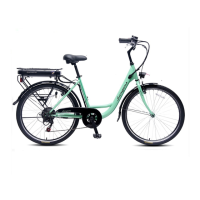
Special Warning on luggage racks
•Never exceed the maximum stated loading capacity of any rack.
•Do not attempt to use the rack as a passenger seat or a child carrier.
•Never attach a trailer to any rack.
•Before each ride, ensure the rack is properly attached to your frame and there are no loose
straps on your load that may interfere with the rear wheel.
•A loaded rack can affect the stability and alter the riding characteristics of your bicycle,
particularly the steering and braking.
•Always ensure any load does not obscure the rear reflector.
•Do not make any modifications to your rack. Structural alterations could jeopardize you or other
highway users and participants.
•We particularly recommend you make the following checks before each ride:
• Ensure neither the total load capacity of your bicycle nor the capacity of your rack has
been exceeded.
• Ensure all fasteners on your bike (screws, nuts, quick-release-skewers) are tightened to
the correct torque value and locked.
• Ensure any luggage is attached and securely fitted in accordance with the manufacturer’s
instructions.
F O R M E B I K E S . C O . U K



 To Next Page