
 Need help?
Do you have a question about the Eaton PXG1000 and is the answer not in the manual?
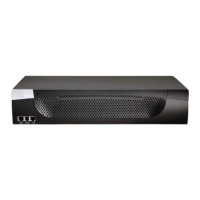
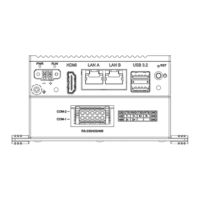
Physical front view and overall dimensions of the PXG1000 hardware.
Instructions for mounting the PXG1000 device in a panel enclosure.
Instructions for mounting the PXG1000 device onto a standard DIN rail.
Procedure for properly grounding the PXG1000 hardware for safety.
Diagram and guidelines for connecting the 24 VDC power supply.
General guidelines, terminal block suitability, torque values, and wire connection steps.
Notes regarding terminal block suitability, conductor type, strip length, and ferrules.
Pinout details for COM1 and COM2 RS-485 communication signals.
Configuration details for static IP addresses on LAN B and LAN A ports.
How to determine the default admin password and access the device.
Overview of available Ethernet and RS-485 communication ports.
Explanation of LED indicators for Ethernet port link and activity status.
Requirements for secure access using HTTPS and certificate credentials.
Steps to download and install the PXG1000 certificate for secure browser access.
Definitions of WARNING, CAUTION, and NOTICE symbols used in the manual.
Information on potential electrical shock hazards during installation and operation.
Notice regarding the PXG1000's lithium battery and proper disposal.
The Eaton PXG1000 is a versatile hardware device designed for power distribution monitoring and control, facilitating communication and data acquisition within industrial and commercial environments. It serves as a gateway, enabling seamless interaction between various components of a power system and a central monitoring platform.
The PXG1000 acts as a central hub for collecting and transmitting data from Modbus RTU devices, such as meters and sensors, to a monitoring and control system. It features two RS-485 ports (COM 1 and COM 2) that support Modbus RTU communication at baud rates up to 115.2 kbps, allowing it to interface with a wide range of compatible devices. These COM ports are internally configured for RS-485 communication, with built-in 120-ohm termination resistors enabled by default, simplifying installation and ensuring reliable data transmission.
In addition to serial communication, the PXG1000 is equipped with two 10/100/1000 Base-T Ethernet RJ-45 connectors (LAN A and LAN B). These Ethernet ports provide network connectivity, allowing the device to integrate into existing IT infrastructures for data transfer and remote management. The dual Ethernet ports can be configured for different network segments, offering flexibility in network design and enhancing system redundancy.
The device's primary function is to bridge the gap between Modbus RTU devices and Ethernet-based monitoring systems. It collects data from connected Modbus devices, processes it, and makes it available over the network, typically via an application user interface accessible through a web browser. This enables users to monitor power parameters, analyze trends, and control connected equipment remotely, contributing to efficient power management and operational optimization.
The PXG1000 is designed for straightforward installation and operation. It supports both panel mounting and DIN rail mounting, offering flexibility in deployment within control cabinets or other industrial enclosures. The compact dimensions of the device (124 x 70 x 60mm for panel mounting and 30 x 47mm for DIN rail mounting) make it suitable for space-constrained environments.
For power supply, the PXG1000 requires a 24 Vdc source, with an operating voltage range of 10-30 Vdc. The terminal block for the 24 Vdc connection is compatible with 16-24 AWG copper conductors, and a torque value of 2.5 lb-in is specified for secure wiring. It is crucial to use input power connection cables with a temperature rating higher than 105° C (221° F) to ensure safety and reliability.
Upon initial connection, the PXG1000's network ports (LAN A and LAN B) are configured in private mode with static IP addresses. LAN B (Network 1) is set to 169.254.1.1 with a subnet mask of 255.255.0.0, and LAN A (Network 2) is set to 172.22.17.254 with the same subnet mask. This default configuration allows users to establish a direct connection from a PC or laptop to access the device's application user interface. Users can then modify these IP settings as needed to integrate the device into their specific network environment.
Accessing the PXG1000's user interface requires a secure connection, necessitating the download and installation of its certificate credentials. This cybersecurity measure ensures that only authorized users can access and manage the device, preventing unauthorized access and potential security breaches. The process involves pointing a web browser to the device's IP address, downloading the Root CA Certificate, and installing it as a trusted root certification authority on the user's computer. Once the certificate is installed, the device can be accessed securely via HTTPS.
The device provides visual feedback through Ethernet LEDs on its front panel, indicating the link status (off for 10 Mbps, orange for 100 Mbps, green for 1000 Mbps) and network activity (green for active). These indicators help users quickly assess the network connectivity and operational status of the device.
The PXG1000 is designed for robust and reliable operation in industrial settings. While specific routine maintenance procedures are not extensively detailed, the device's design emphasizes ease of installation and secure operation, which inherently contribute to its maintainability.
The use of standard terminal blocks for wiring simplifies connection and disconnection, facilitating any necessary troubleshooting or component replacement. The recommendation to crimp on ferrules for serial port connections further enhances wiring integrity and reduces the likelihood of loose connections, which can lead to intermittent operation or data loss.
The device's reliance on a secure certificate-based access mechanism for its user interface is a key maintenance feature from a security perspective. By enforcing secure access, it helps protect the device from unauthorized configuration changes or malicious attacks, thereby preserving its operational integrity. Regular updates to the device's firmware and adherence to cybersecurity best practices, as outlined in the software release notes and security updates section, are crucial for maintaining the device's security posture and ensuring its long-term reliability.
The PXG1000 contains a lithium battery, which is a critical component for maintaining certain device functions. Users are warned about the risk of explosion if the battery is replaced with an incorrect type. This highlights the importance of following manufacturer guidelines for any internal component replacements and adhering to local and state regulations for the proper disposal of lithium batteries, ensuring both safety and environmental responsibility.
In cases where further assistance or information is needed, Eaton provides customer support channels, including phone numbers and email addresses, allowing users to access expert help for troubleshooting, configuration, or any other operational queries. This support infrastructure is a vital aspect of maintaining the device's functionality and ensuring continuous operation.
 General
| Model | PXG1000 |
|---|---|
| Maximum Output Current | 16A |
| Number of Outlets | 8 |
| Network Management | Yes |
| Input Current | 16A |
| Mounting | 1U |
| Form Factor | Rack-mounted |




 To Next Page