3
ECOWATER
S Y S T E M S
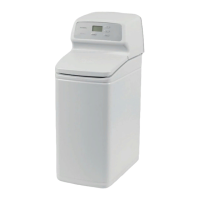
Specifications & Performance Claims
SPECIFICATIONS
Model EEC 1502R25 EEC 1502R40
Model Code EC25 EC40
Rated Softening Capacity (grains @ lb. salt dose)
10,500 @ 2.1
22,200 @ 6.6
26,600 @ 11.2
11,700 @ 2.3
30,800 @ 8.5
39,000 @ 14.7
Rated Efficiency (grains / lb. @ minimum salt dose) 5,000 @ 2.1 5,100 @ 2.3
Water Used During Regeneration @ Minimum Salt Dose 3.0 gal. / 1,000 grains 3.3 gal. / 1,000 grains
Total Water Used Per Regeneration @ Maximum Salt Dose 32.4 gal. 38.3 gal.
Amount of High Capacity Resin 36.4 lbs. (0.70 cu. ft.) 56.2 lbs. (1.08 cu. ft.)
Resin Tank Nominal Size (dia. x height) 8 x 40 in. 9 x 40 in.
Service Flow Rate 6.0 gpm 9.9 gpm
Pressure Drop at Rated Service Flow 10.4 psig 15.0 psig
Intermittent Flow @ 15 psi p
7.5 gpm 10.2 gpm
Water Supply Maximum Hardness 70 gpg 110 gpg
Water Supply Maximum Clear Water Iron ¢
4 ppm 5 ppm
Min. - Max. Water Supply Pressure u
20 - 125 psi
Min. - Max. Water Supply Temperature 40 - 120 °F
Minimum Water Supply Flow Rate 3 gpm
Regeneration Cycle Flow Rates
Fill (flow to brine tank) 0.3 gpm 0.3 gpm
Brining (flow to drain) 0.15 gpm 0.22 gpm
Brine Rinse (flow to drain) 0.10 gpm 0.15 gpm
Max. Backwash (flow to drain) 2.0 gpm 2.0 gpm
Max. Fast Rinse (flow to drain) 2.0 gpm 2.0 gpm
p Intermittent flow rate does not represent the maximum service flow rate used for determining the unit’s rated
capacity and efficiency. Continuous operation at flow rates greater than the service flow rate may affect capacity
and efficiency performance.
¢ Capacity to remove clear water iron is substantiated by WQA test data. State of Wisconsin requires additional
treatment if water supply contains greater than 5 ppm clear water iron.
u Canada working pressure limits: 1.4 - 7.0 kg/cm².
These units conform to NSF/ANSI 44 for the specific performance claims as verified and substantiated by test data.
These models are efficiency rated. The efficiency rating is valid only at the minimum salt dose and the service flow
rate. The softeners have a demand initiated regeneration (D.I.R) feature that complies with specific performance
specifications intended to minimize the amount of regenerant brine and water used in their operation.
These softeners have a rated softener efficiency of not less than 3,350 grains of total hardness exchange per pound
of salt (based on sodium chloride) and shall not deliver more salt than their listed rating or be operated at a sus-
tained maximum service flow rate greater than their listed rating. These softeners have been proven to deliver soft
water for at least ten continuous minutes at the rated service flow rate. The rated salt efficiency is measured by lab-
oratory tests described in NSF/ANSI Standard 44. These tests represent the maximum possible efficiency that the
system can achieve. Operational efficiency is the actual efficiency after the system has been installed. It is typically
less than the rated efficiency, due to individual application factors including water hardness, water usage, and other
contaminants that reduce a softener's capacity.


 To Next Page