Need help?
Do you have a question about the Edwards 3100738 and is the answer not in the manual?
Lists standards relevant to duct smoke detectors installation and maintenance.
Describes the general purpose and application of the duct smoke detector in commercial HVAC systems.
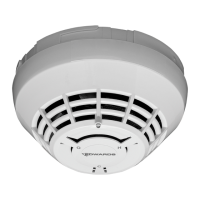
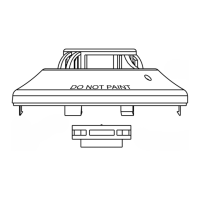
Details the physical components of the duct smoke detector, including housing, PCB, cover, and tubes.
Lists the key features of the duct smoke detector, such as environmental compensation and self-diagnostics.
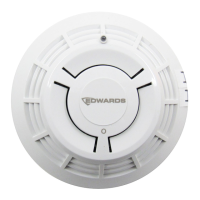
Describes the magnetic test switch, Alarm LED, and Power LED on the detector.
Explains the detector's behavior when no trouble conditions or smoke are present.
Details the conditions and indicators when the detector enters an alarm state.
Outlines the conditions that cause the detector to enter a trouble state and how to resolve it.
Provides recommendations for locating the detector and positioning the sampling tube in the HVAC duct.
Lists the steps required for installing the duct smoke detector.
Describes an alternative method for installing the sampling tube from the front of the detector.
Outlines the recommended schedule for visual inspections and alarm tests.
Explains the procedure for testing the duct smoke detector's alarm reporting capability.
The SuperDuct Signature Duct Smoke Detector, model SIGA-SD, is a sophisticated device designed for early smoke detection within HVAC systems. Its primary function is to provide an early warning of an impending fire and to initiate the shutdown of the HVAC unit, thereby preventing smoke from circulating throughout a building. While typically used to detect smoke in the supply side of an HVAC system, it can also supervise the return side.
The duct smoke detector operates by drawing air from the HVAC duct into a sensing chamber via a sampling tube. An exhaust tube then directs the sampled air back into the ventilation system. The difference in air pressure between these two tubes creates a continuous flow of sampled air through the sensing chamber. When a sufficient amount of smoke is detected, the device signals an alarm state to a compatible fire alarm control panel.
The detector incorporates a microprocessor that performs comprehensive self-diagnostics and stores operational data such as hours of operation, last maintenance date, and the number of alarms and troubles. This information is stored in nonvolatile memory and can be retrieved for review.
It utilizes differential sensing to prevent false alarms that might be triggered by gradual environmental changes. Instead, it responds to rapid changes in environmental conditions, such as those caused by smoke from a fire. The detector is designed to operate within extended temperature ranges, making it suitable for self-contained commercial rooftop HVAC systems.
The SuperDuct Signature Duct Smoke Detector boasts a range of features that enhance its usability and reliability. It includes environmental compensation with differential sensing, ensuring stable, drift-free, and reliable sensitivity. A magnet-activated test switch allows for easy testing of the detector's alarm functionality. The device is equipped with a PCB-mounted photoelectric detector that incorporates onboard intelligence for advanced processing.
For added security, a cover tamper switch is integrated. The sampling tube, which varies in length depending on the HVAC duct size and is ordered separately, can be installed either with or without the cover in place. It can also be rotated in 45-degree increments to ensure proper alignment with duct airflow.
The detector provides clear visual indicators: Alarm (red) and Power (green) status LEDs. It supports standard sampling tube spacing and field connections, facilitating easy migration from other duct detectors. It is designed to operate across extended temperature and air velocity ranges.
An important feature is the inclusion of one Form C auxiliary alarm relay, which allows for the control of ancillary equipment, such as HVAC controls, upon alarm activation. The device supports electronic addressing, simplifying integration into fire alarm systems. Its self-diagnostic capabilities contribute to its overall reliability, and it can also operate in standalone mode.
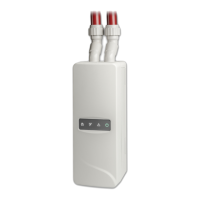
In installations where the detector's controls and indicators are not easily visible, a remote test station or an LED indicator can be connected to provide these functions remotely.
The SuperDuct Signature Duct Smoke Detector is designed with maintenance in mind. It features a clear plastic cover that permits visual inspections without the need to disassemble the detector, as it forms an airtight chamber around the sensing electronics.
The detector issues a "dirty sensor" warning when its preset limit for environmental compensation is reached, indicating that servicing is needed. If the detector's ability to compensate for environmental changes reaches its maximum, it signals a trouble condition.
For maintenance, a visual inspection is recommended upon installation and every six months thereafter. An alarm test should be performed upon installation and every twelve months thereafter. The detector's ability to report an alarm condition can be tested using an SD-MAG (test magnet kit), an SD-TRK (keyed remote test-reset station), or an SD-TRM (magnetic remote test-reset station).
Cleaning the duct smoke detector is recommended when it becomes 80% to 99% dirty or sooner if conditions warrant. The cleaning process involves removing the cover, powering down the detector, and then using a vacuum cleaner, compressed air, or a soft bristle brush to remove loose dirt and debris from the housing and cover. Isopropyl alcohol and a lint-free cloth can be used to clean the gasket on the cover. The optic housing can be lifted away from the printed circuit board by squeezing retainer clips, allowing for gentle removal of dirt and debris from around the optic plate and inside the optic housing. After cleaning, the optic housing and detector cover are replaced.
Troubleshooting guidance is provided for common issues such as the Power LED not blinking, internal trouble event messages on the control panel, and the detector's dirty level. All troubles are latched by the duct smoke detector, requiring the trouble condition to be cleared and the control panel to be reset to restore the detector to its normal state.
 General
| Model Number | 3100738 |
|---|---|
| Product Type | Smoke Alarm |
| Brand | Edwards |
| Type | Photoelectric |
| Sensor Type | Photoelectric |
| Hush Feature | Yes |
| Interconnect Capability | Yes |
| Alarm Sound Level | 85 dB |
| Compliance | UL 217 |
| LED Indicator | Green power-on LED, red alarm LED |
| Humidity Range | 10% to 95% relative humidity (non-condensing) |


 To Next Page