BASIC MAINTENANCE PROCEDURESBASIC MAINTENANCE PROCEDURES
FUEL (GASOLINE)FUEL (GASOLINE)
Fuel Recommendation -Fuel Recommendation -Any unleaded gasoline with an octane rating of 90 or higher.
e engine in your motorcycle has been designed to run on any gasoline with a pump octane rating of 86 or high-
er. Most service stations will display the octane rating above each pump. Although it is not required, EGL MotorEGL Motor
recommends use of gasoline with a 90 octane, rating or higher to ensure maximum performance and reliability.
Use of a lower octane gasoline can cause pre-detonation in the engine. When this occurs, you will hear a per-
sistent “pinging” or “spark knock” which, if severe, can cause engine damage. It is however no cause for concern
if you hear light pinging while the engine is under hard acceleration, such as climbing up a hill. If pinging occurs
under normal load and a steady engine speed, switch brands of gasoline and be sure you are using the proper oc-
tane rating. Use of unleaded fuel is recommended because it produces fewer engine deposits and extends the life
of the engine and exhaust components.
Never use stale or contaminated gasoline. Never use gasoline that has been mixed with oil. Avoid getting dust, dirt
and water into the fuel tank.
INSPECTION & REFUELING PROCEDUREINSPECTION & REFUELING PROCEDURE
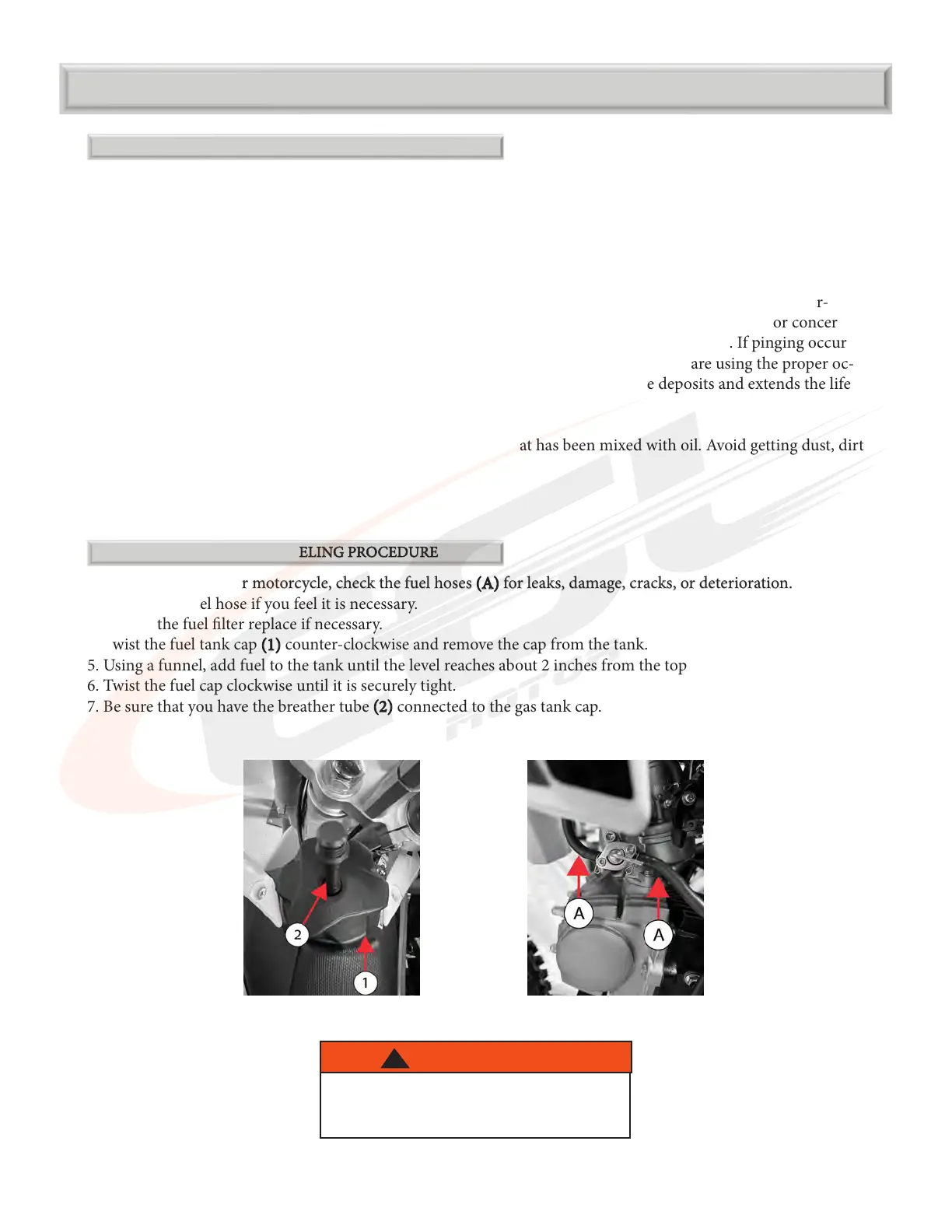
1. Before refueling your motorcycle, check the fuel hoses 1. Before refueling your motorcycle, check the fuel hoses (A)(A) for leaks, damage, cracks, or deterioration. for leaks, damage, cracks, or deterioration.
2. Replace the fuel hose if you feel it is necessary.
3. Inspect the fuel lter replace if necessary.
4. Twist the fuel tank cap (1)(1) counter-clockwise and remove the cap from the tank.
5. Using a funnel, add fuel to the tank until the level reaches about 2 inches from the top of the tank.
6. Twist the fuel cap clockwise until it is securely tight.
7. Be sure that you have the breather tube (2)(2) connected to the gas tank cap.
Gasoline is highly ammable and explosive. You can be
burned or seriously injured when handling gasoline. Always
stop the engine. Only handle gasoline outdoors. Clean all
spills immediately.
WARNING
!



 To Next Page