This document is the user manual for the Electrolux ENN2853COV Fridge Freezer. It provides detailed instructions on installation, operation, daily use, maintenance, troubleshooting, and technical specifications.
Function Description
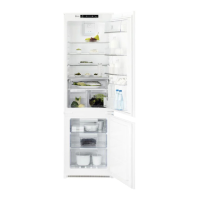
The Electrolux ENN2853COV is a fridge freezer designed for household and similar applications. It features separate compartments for refrigeration and freezing, allowing for optimal storage of fresh and frozen foods. The appliance is equipped with a control panel and display for easy temperature regulation and activation of various functions.
Important Technical Specifications
- Dimensions of the recess:
- Height: 1780 mm
- Width: 560 mm
- Depth: 550 mm
- Rising time: 21 Hours (in case of accidental defrosting due to power failure)
- Voltage: 230 - 240 Volts
- Frequency: 50 Hz
- Climate class:
- SN: +10°C to +32°C
- N: +16°C to +32°C
- ST: +16°C to +38°C
- T: +16°C to +43°C
- Refrigerant: Isobutane (R600a), a natural gas with high environmental compatibility.
- Electrical connection: The appliance must be earthed and requires a 13 amp ASTA approved (BS 1362) fuse.
Usage Features
The fridge freezer offers several features to enhance food preservation and user convenience:
- Control Panel and Display: The appliance features a control panel with a display that shows temperature indicators, mode icons (Holiday, Eco, Shopping, FastFreeze, DrinksChill), and alarm indicators. Buttons are provided for temperature adjustment (colder/warmer), fridge compartment, freezer compartment, and mode selection.
- Temperature Regulation: Users can set the temperature for both the fridge and freezer compartments. Default settings are +4°C for the fridge and -18°C for the freezer. The set temperature is reached within 24 hours and remains stored after a power failure.
- DrinksChill Mode: This function allows for rapid cooling of drinks in the freezer compartment for a set period (1 to 90 minutes). An audible alarm sounds when the countdown ends.
- FastFreeze Mode: Designed for freezing large amounts of fresh food rapidly. It automatically switches off after 52 hours. It is recommended to activate this function at least 24 hours before placing food to be frozen.
- Holiday Mode: Keeps the refrigerator closed and empty during long holiday periods without bad smells. The fridge compartment must be empty when this mode is on.
- Shopping Mode: Chills large amounts of warm food more rapidly to prevent warming other food already in the refrigerator. It automatically shuts off after approximately 6 hours.
- Eco Mode: Provides optimal food storage with default temperatures of +4°C for the fridge and -18°C for the freezer.
- ChildLock Mode: Locks the control panel to prevent accidental changes to settings.
- FreeStore: A device in the refrigerator compartment that allows rapid cooling and maintains a more uniform temperature. It activates automatically when needed, such as after door opening or in high ambient temperatures.
- Low Temperature Compartment: (In equipped models) Located above the vegetable drawer, intended for optimal conservation of fresh foods like fish, meat, and seafood.
- Movable Shelves: The refrigerator walls are equipped with runners for flexible positioning of shelves.
- Door Shelves: Can be placed at different heights to accommodate various food package sizes.
- Ice-cube Production: Includes trays for making ice cubes in the freezer compartment.
- Cold Accumulators: The freezer contains at least one cold accumulator to increase storage time during power cuts or breakdowns.
- Door Open Alarm: An acoustic alarm sounds if the door is left open for a few minutes, accompanied by a flashing alarm light.
Maintenance Features
- Cleaning:
- The interior and internal accessories should be cleaned with lukewarm water and neutral soap.
- Door seals should be checked and wiped clean regularly.
- The condenser and compressor (if accessible) at the back of the appliance should be cleaned with a brush to improve performance and save electricity.
- Do not use detergents, abrasive powders, chlorine, or oil-based cleaners.
- Defrosting the Refrigerator: Frost is automatically eliminated from the evaporator. Defrost water drains into a special container at the back of the appliance and evaporates. The defrost water drain hole in the refrigerator compartment channel must be cleaned periodically to prevent water overflow.
- Defrosting the Freezer: The freezer compartment is frost-free, meaning no frost builds up during operation.
- Periods of Non-operation: For long periods of non-use, the appliance should be disconnected from the electricity supply, all food removed, cleaned, and doors left open to prevent unpleasant smells.
- Replacing the Lamp: The appliance is equipped with a long-life LED interior light. Only authorized service personnel should replace the lighting device.
- Closing the Door: Clean door gaskets, adjust the door if necessary, and replace defective gaskets through an Authorized Service Centre.
Safety Instructions
The manual emphasizes several safety instructions:
- General Safety: The appliance is intended for household use. Ventilation openings must be kept clear. Mechanical devices or other means should not be used to accelerate defrosting unless recommended by the manufacturer. The refrigerant circuit must not be damaged. Electrical appliances should not be used inside food storage compartments unless recommended. Water spray and steam should not be used for cleaning. Explosive substances should not be stored in the appliance.
- Children and Vulnerable People Safety: Children aged 8 and above, and persons with reduced capabilities, can use the appliance with supervision and instruction. Children between 3 and 8 years can use it if properly instructed. Children under 3 should be continuously supervised. Children should not play with the appliance or perform cleaning/maintenance without supervision. Packaging should be kept away from children.
- Installation Safety: Installation should only be performed by a qualified person. All packaging and transit bolts must be removed. A damaged appliance should not be installed or used. Safety gloves and enclosed footwear should be worn when moving the heavy appliance. Air circulation around the appliance must be ensured. After installation or door reversal, wait at least 4 hours before connecting to power. The appliance should not be installed near heat sources or in direct sunlight, or in excessively humid/cold areas.
- Electrical Connection Safety: The appliance must be earthed. Parameters on the rating plate must match mains power supply. A correctly installed shockproof socket must be used. Multi-plug adapters and extension cables are not recommended. Electrical components should not be damaged. The mains cable must stay below the level of the mains plug. The mains plug should be connected only at the end of installation, ensuring access to it.
- Use Safety: Do not modify the appliance's specifications. Do not use electrical appliances inside unless specified by the manufacturer. Be careful not to damage the refrigerant circuit (contains flammable isobutane). If the circuit is damaged, ensure no flames or ignition sources are present and ventilate the room. Hot items should not touch plastic parts. Soft drinks should not be put in the freezer. Flammable gas/liquid or wet flammable products should not be stored in/near the appliance. The compressor or condenser should not be touched when hot. Items from the freezer should not be touched with wet/damp hands. Thawed food should not be refrozen. Storage instructions for frozen food should be followed.
- Internal Lighting Safety: The lamp is for household appliances only, not for house lighting.
- Care and Cleaning Safety: Before maintenance, deactivate and disconnect the appliance. The cooling unit contains hydrocarbons, so maintenance and recharging must be done by authorized technicians. The drain should be regularly examined and cleaned.
- Disposal Safety: Disconnect the appliance, cut and discard the mains cable, and remove the door to prevent entrapment. The refrigerant circuit and insulation materials are ozone-friendly. Insulation foam contains flammable gas, so contact municipal authorities for correct disposal. Do not damage the cooling unit near the heat exchanger.
Troubleshooting
The manual provides a comprehensive troubleshooting guide for common issues:
- Appliance does not operate: Check if switched off, mains plug connection, or voltage in the mains socket.
- Appliance is noisy: Check if properly supported.
- Audible or visual alarm is on: Refer to "Door open alarm" or "High temperature alarm."
- Temperature in the appliance is too high: Refer to "High temperature alarm."
- "A o" or "o" symbol shown on display: Indicates a temperature sensor problem; contact Authorized Service Centre.
- Lamp does not work: Check if in stand-by or defective; contact Authorized Service Centre.
- Compressor operates continually: Check if temperature is set incorrectly, too many warm food products inserted, room temperature is too high, or food products were too warm before storing. Also check if the door is closed correctly or if "FastFreeze" or "Shopping" is on.
- Compressor does not start immediately: This is normal after activating "FastFreeze" or "Shopping" or changing temperature.
- Water flows inside the refrigerator: Ensure food products do not touch the rear plate and clean the water outlet.
- Water flows on the floor: Check if the melting water outlet is connected to the evaporative tray.
- Temperature cannot be set: Check if "FastFreeze mode" or "Shopping mode" is switched on.
- "DEMO" appears on the display: The appliance is in demonstration mode; press Mode for approximately 10 seconds until a long sound is heard.
- Temperature in the appliance is too low/too high: Adjust the temperature regulator.
- No cold air circulation: Ensure cold air circulation in the appliance.
Environmental Concerns
The manual encourages recycling materials with the symbol. Packaging should be put in relevant containers for recycling. Waste electrical and electronic appliances should be recycled through local facilities or municipal offices, not disposed of with household waste.

 Need help?
 General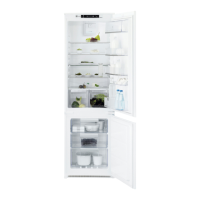


 To Next Page