Need help?
Do you have a question about the elero Combio-868 HE and is the answer not in the manual?
Key safety precautions for electrocution, regulations, and proper handling.
Advisories on operating radio systems in interference-prone areas.
Overview of the Combio-868 HE receiver's functions and limitations.
Guidelines for antenna placement and avoiding interference for best performance.
Explanation of device buttons, indicators, and initial operation steps.
Steps to connect to mains and prepare the device for programming.
Guide to programming, adding, and deleting transmitters.
How to operate the heating system, including intermediate stage control.
Describes warning, shutdown, and emergency shutdown states due to high temperatures.
Lists key technical data like voltage, power, IP codes, and temperature limits.
Identifies common faults, their causes, and recommended solutions.
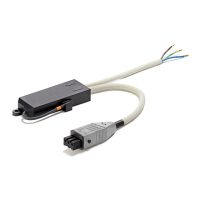
The Combio-868 HE is a radio receiver designed to control heating systems remotely. It allows users to switch heating systems with an output of up to 2 kW on and off, and also provides the functionality to reduce the heating system's output to 75% of its full capacity. This device is specifically intended for use with heating systems and should not be connected to other consumers.
The core function of the Combio-868 HE is to receive radio signals from a programmed transmitter to control a connected heating system. Upon receiving a signal, it can toggle the heating system between on and off states, or adjust its power output. The device is programmed to recognize up to 16 different transmitters, allowing for flexible control options.
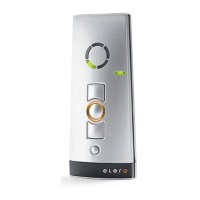
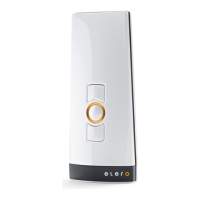
When initially powered on, the Combio-868 HE enters a programming mode for five minutes, indicated by the heating system briefly lighting up "randomly." During this period, individual channels or transmitters can be assigned to the receiver. The programming process involves pressing the programming button P on the receiver, followed by specific buttons on the transmitter (either the "on" or "off" button) when the desired heat output (100% or 50%) is indicated by the heating system's behavior. Once programmed, the transmitter can then be used to switch the heating system on or off, or to activate an intermediate stage of 75% capacity by pressing the "on" button twice in rapid succession.
The device incorporates several safety features related to temperature. At heat sink temperatures of approximately 90°C or above, the Combio-868 HE automatically reduces the heating power to 50%. If the "on" or "off" button is pressed during this reduced power state, the system will briefly switch to 100% power for two seconds before reverting to 50%. If the heat sink temperature reaches around 100°C, the radiant heater is switched off entirely. Pressing the "on" or "off" button in this state will briefly activate the heater at 100% power for two seconds before it switches off again. For more critical temperatures, specifically around 110°C, an emergency shutdown is triggered by a thermal switch within the Combio-868 HE. This thermal switch has a latching function, meaning the supply voltage must be disconnected and reconnected after cooling to reset the device.
Optimal performance of the radio signal is crucial for the Combio-868 HE. Users are advised not to bend, shorten, or extend the antenna. For best reception, the antenna should be installed as exposed as possible and kept away from metal surfaces. Poor reception may necessitate adjusting the antenna's position. It's important to note that using multiple receivers might cause interference, and radio systems operating on the same frequency can also lead to reception issues. The range of the radio signal is subject to government regulations and the surrounding built environment.
The Combio-868 HE is designed for ease of programming. A single transmitter can be programmed by following a sequence of button presses on both the receiver and the transmitter. To program additional transmitters (up to a maximum of 16), the process is similar, involving pressing the programming button P on the receiver, then pressing the "on" or "off" button on the new transmitter when the heating system indicates the desired output.
Deleting individual transmitters is also straightforward. This involves simultaneously pressing the programming button P and the "off" button on the programmed transmitter for approximately six seconds until the LED briefly goes out. To delete all programmed transmitters, users must simultaneously press the programming button P, the "on" button, the "off" button, and the "down" button on any programmed transmitter for about six seconds until the LED goes out three times.
The device also includes an automatic shutdown feature: the Combio-868 HE will automatically switch off the connected heating system after 12 hours of continuous operation.
Regular maintenance and safety checks are essential for the Combio-868 HE. Users are advised to check the system regularly for wear or damage. Connections to the 230V mains must be performed by authorized specialist personnel, adhering to local energy supply company regulations and VDE 0100 standards for wet and damp rooms. When performing any work on the system, it must be disconnected from the mains supply.
The control unit should be installed in a location where it is not exposed to rain. It's also important to keep children away from the control units.
Due to the device becoming hot during use, it is crucial to ensure that the Combio-868 HE is sufficiently well-ventilated. Highly inflammable or inflammable materials should not be used near the device to prevent fire hazards.
Troubleshooting guidance is provided for common issues. If there is no radio reception, the transmitter may not be programmed, or there might be no power supply to the receiver. The remedy involves programming the transmitter or switching on the power supply. For bad radio reception, changing the position of the receiver or aerial is recommended. If the heater does not heat or only heats with reduced power, potential causes include incorrect wiring, a defective heating element, or an active overtemperature warning, shutdown, or emergency shutdown. Solutions involve checking connections, replacing the heating element, or providing for cooling. In the case of an emergency shutdown, the supply voltage must be switched off and then back on after cooling.
 General
| Frequency | 868 MHz |
|---|---|
| Modulation | FSK |
| Power Supply | 230 V AC |
| Temperature Range | -20°C to +55°C |
| Weight | 100 g |
| Output | Relay |

 To Next Page