Installazione-Uso / Installation-User manual FL-FLR100 27
CONVENTIONAL DETECTION CIRCUIT SECTION
The optical beam smoke detector can be connected to a conventional detection circuit of a conventional
control panel by enabling a suited “conventional circuit” section. The dip-switch DS9 allows the user to
enable this section. By moving DS9 to the ON position, the detector handles the conventional detection
circuit as follows:
• Continuous check of the presence of the circuit voltage coming from the conventional control panel;
any interruption of this voltage leads to the cancellation of any ongoing alarm and/or fault condition
and to the reset of the detector to the normal working mode;
• The pre-alarm and alarm conditions are signalled to the control panel by drawing some current from
the conventional detection circuit by the “conventional circuit” section.
The physical connection with the control panel can be performed on the Rx or Tx/Rx unit and on this unit
the dip-switch DS9 must be moved to ON. On the Tx unit, DS9 must remain in the OFF position. By letting
DS9 in the OFF position, the conventional detection circuit section is disabled.
It is important to highlight that this connection does not involve any transmission of the fault condition from
the detector to the control panel. In order to transmit the information of a fault condition to the control panel
it is suggested to use the fault relay to open the detection circuit and break the electrical continuity of the
circuit with its end of line resistor
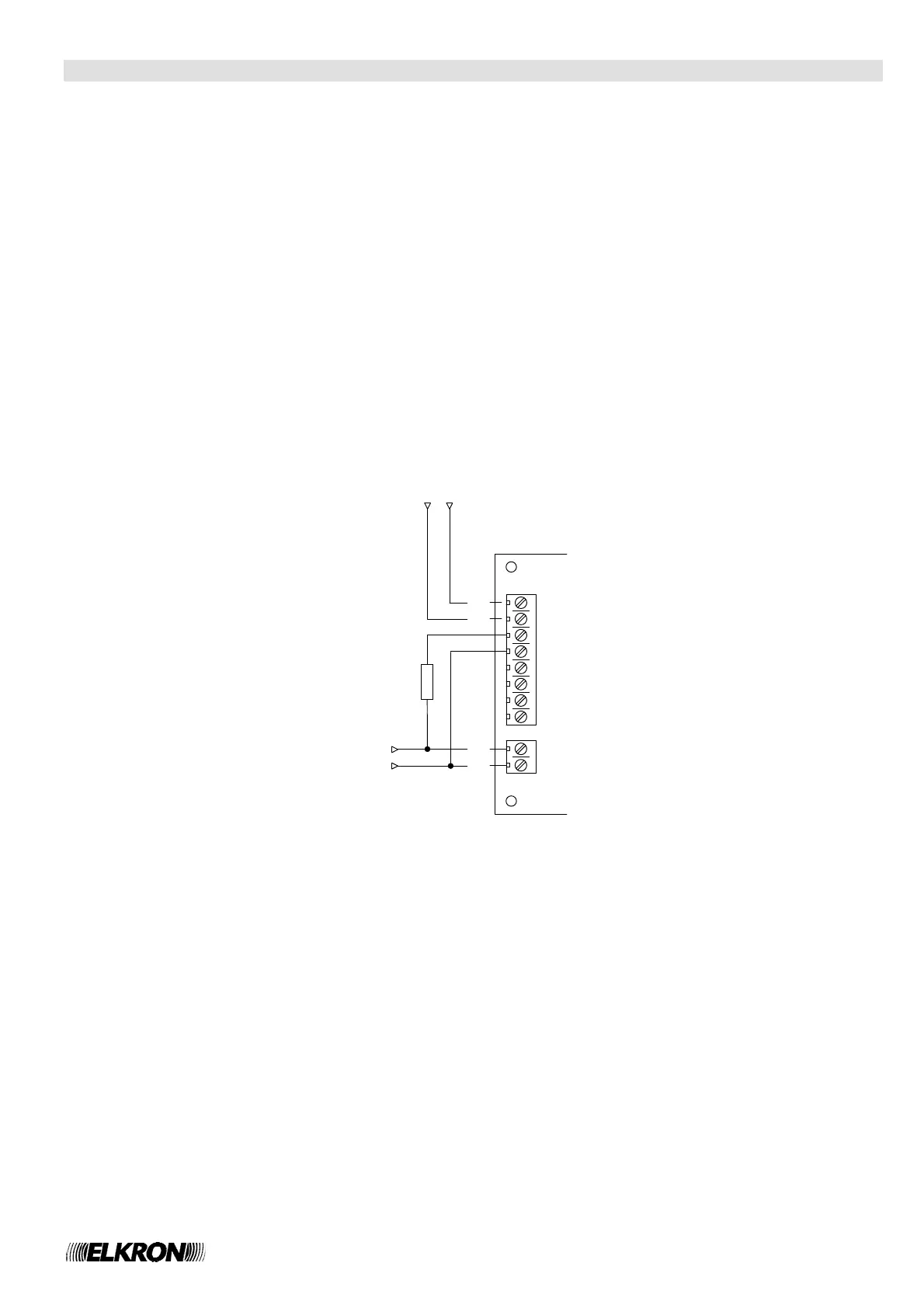
Figure 7 - Example of connection with the detection circuit of a conventional control panel with open
circuit fault generation caused by a fault on the detector
(*) The value of the end of line resistor depends on the control panel in use. This type of connection must
be performed only when the Tx or Tx/Rx unit is the last point of the detection circuit.
M2
M1
(+)
(-)
(+)(-)
Power Supply
24 Vdc
(+)
(-)
Conventional detection
circuit from a fire
detection control panel
(+)
(-)
EOL
(*)
Rx or Tx/Rx unit


 To Next Page