EasyManua.ls Logo

Endress+Hauser Liquipoint FTW 31 - User Manual

Endress+Hauser Liquipoint FTW 31
28 pages
Print Icon
To Next Page IconTo Next Page
Loading...
Technical Information
TI 375F/00/en
Level Limit Detection in Liquids
liquipoint T FTW 31, FTW 32
Level limit switch for multiple point detection
in conductive liquids
Applications
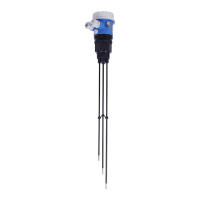
Liquipoint T sensors are used in
conductive liquids (as of 10 µS/cm) for
determining level limits.
Depending on the number of measuring
points (up to 5 rods or ropes), measuring
tasks such as overspill protection, dry
running protection, two-point control of
pumps or multiple point detection can be
implemented for an existing process
connection.
Your benefits
Detect up to five level limits with one
probe
Two-point control and additional
maximum and minimum detection
Option between rod or rope version for
optimum adaptation to the application
Flexible instrumentation:
with built-in electronic insert, either
transistor or relay output for 2 or
3 rod/rope probes
for connection to a separate
transmitter power supply unit
No calibration required;
standard setting for the most common
conductive liquids
No moving parts in the tank:
long service life
reliable operation with no wear or
blockages
WHG approval
Four measuring ranges can be set
100 , 1 k, 10 k, 100 k
Cost-effective probe for conductive
liquids
Electronic inserts for:
NAMUR output
Relais output
Transistor output
Question and Answer IconNeed help?

Do you have a question about the Endress+Hauser Liquipoint FTW 31 and is the answer not in the manual?

Summary

Level Limit Detection in Liquids

Function and System Design

Measuring Principle

Explanation of how the alternating voltage between probes detects liquid levels.

Measuring System Configurations

Overview of system setups with integrated and separate electronic inserts.

Output and Electronic Inserts

Electronic Insert FEW 52 (DC-PNP)

Details on the FEW 52 insert, its output signal, and fail-safe modes.

Electronic Insert FEW 54 (Relay)

Information on the FEW 54 insert, relay output, and associated settings.

Electronic Insert FEW 58 (NAMUR)

Specifications for the FEW 58 insert, NAMUR output, and fail-safe operation.

Compact Instrumentation Details

FEW 54 Relay Output Implementation

Detailed description of the FEW 54 relay output circuit and load handling.

FEW 58 NAMUR Output Implementation

Detailed description of the FEW 58 NAMUR output circuit and signal transmission.

Mechanical Construction

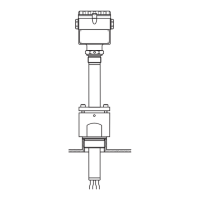
Design and Dimensions

Detailed drawings showing dimensions for rod and rope probe versions.

Human Interface

Ordering Information

FTW 31 Product Selection Codes

Guide to selecting the correct product code for FTW 31 based on features.

FTW 32 Product Selection Codes

Guide to selecting the correct product code for FTW 32 based on features.

Summary

Level Limit Detection in Liquids

Function and System Design

Measuring Principle

Explanation of how the alternating voltage between probes detects liquid levels.

Measuring System Configurations

Overview of system setups with integrated and separate electronic inserts.

Output and Electronic Inserts

Electronic Insert FEW 52 (DC-PNP)

Details on the FEW 52 insert, its output signal, and fail-safe modes.

Electronic Insert FEW 54 (Relay)

Information on the FEW 54 insert, relay output, and associated settings.

Electronic Insert FEW 58 (NAMUR)

Specifications for the FEW 58 insert, NAMUR output, and fail-safe operation.

Compact Instrumentation Details

FEW 54 Relay Output Implementation

Detailed description of the FEW 54 relay output circuit and load handling.

FEW 58 NAMUR Output Implementation

Detailed description of the FEW 58 NAMUR output circuit and signal transmission.

Mechanical Construction

Design and Dimensions

Detailed drawings showing dimensions for rod and rope probe versions.

Human Interface

Ordering Information

FTW 31 Product Selection Codes

Guide to selecting the correct product code for FTW 31 based on features.

FTW 32 Product Selection Codes

Guide to selecting the correct product code for FTW 32 based on features.

Overview

The Liquipoint T FTW 31 and FTW 32 are level limit switches designed for multiple point detection in conductive liquids, with conductivity starting from 10 µS/cm. These devices are suitable for various applications such as overspill protection, dry running protection, two-point control of pumps, and general multiple point detection within an existing process connection.

Function Description:

The measuring principle relies on an alternating voltage applied between the rod probes in an empty tank. When a conductive liquid connects the ground probe rod with a maximum probe rod, a measurable current flows, causing the Liquipoint T to switch. For level limit detection, the device switches back once the liquid clears the maximum probe. In two-point control, the Liquipoint T only switches back after both the MAX and MIN probes are cleared. The use of alternating voltage prevents corrosion of the probe rods and electrolytic destruction of the product. The system is designed as a closed, potential-free circuit between the probe rods and the electronics, making the tank wall material irrelevant for measurement. The probe rods are safe to touch during operation.

The measuring system can consist of FTW 31 or FTW 32 with two or three rods/ropes and an integrated electronic insert, or it can be a separate-instrument version without an integrated electronic insert, requiring connection to external control units like Nivotester FTW 325 or FTW 470 Z. The compact-instrument version with three probes or rods always operates in "As" mode. For multiple point detection, the separate-instrument version can accommodate up to five rods or ropes, requiring two Nivotester FTW 325 or FTW 470 Z units.

Important Technical Specifications:

Input:

  • Measured variable: Resistance change between two conductors due to the presence or absence of a conductive product.
  • Measuring range (application): Dependent on mounting location. Rod probes can be up to 4000 mm long, and rope probes up to 15000 mm.
  • Input signal: A measurable current flows when probes are covered; no measurable current flows when probes are uncovered.

Output (Electronic Inserts):

  • FEW 52 (DC-PNP):

    • Output signal: Three-wire direct current version, preferred for programmable logic controllers (PLC). Positive signal at the switch output (PNP). Output blocked after level limit is reached.
    • Fail-safe mode: Output voltage is 0 V if switch point is exceeded (max. fail-safe) or undershot (min. fail-safe), a fault occurs, or power supply fails.
    • Switching delay: 2.0 s (activatable/deactivatable via DIL switch) or approx. 0.3 s (when set to 0 s).
    • Power supply: U= 10.8 V...45 V. Load connection: open collector; PNP. Switching voltage: max. 45 V. Connected load: continuous max. 200 mA. Protected against reverse polarity.
    • Power consumption: P < 1.1 W. Current consumption: I < 25 mA (without load).
  • FEW 54 (Relay):

    • Output signal: AC/DC connection with relay output. Two potential-free change-over contacts switch simultaneously. Spark barrier recommended for high inductance loads. Fine-wire fuse protects against short-circuits.
    • Fail-safe mode: Relay de-energizes if switch point is exceeded (max. fail-safe) or undershot (min. fail-safe), a fault occurs, or power supply fails.
    • Switching delay: 2.0 s (activatable/deactivatable via DIL switch) or approx. 0.3 s (when set to 0 s).
    • Signal on alarm: Relay de-energized in case of power failure or damaged probe.
    • Load: I~ max. 4 A, U~ max. 253 V; P~ max. 1000 VA (cos φ = 1), P~ max. 700 VA (cos φ > 0.7); I- max. 4 A to 30 V, I- max. 0.2 A to 150 V. Max sum of relay output and power supply voltages: 300 V (for functional extra-low voltage circuit).
    • Galvanic isolation: All input/output channels and relay contacts are galvanically isolated.
    • Power supply: U= 20 V...55 V DC or U~ 20 V...253 V AC, 50/60 Hz. Peak inrush current: max. 2 A, 400 µs.
    • Power consumption: P < 2.0 W. Current consumption: 60 mA.
  • FEW 58 (NAMUR):

    • Output signal: For connecting to isolating amplifiers (IEC 60947-5-6). Output signal jumps from high to low current on limit (H-L-edge). Signal transmission on a two-wire line: H-L-edge 2.2...6.5 mA / 0.4...1.0 mA. Cycle time must be at least 2 s when using a multiplex.
    • Fail-safe mode: Output signal is < 1.0 mA if switch point is exceeded (max. fail-safe) or undershot (min. fail-safe), a fault occurs, or power supply fails.
    • Switching delay: 2.0 s (activatable/deactivatable via DIL switch) or approx. 0.3 s (when set to 0 s).
    • Signal on alarm: Output signal < 1.0 mA with damaged sensor.
    • Power supply: Refer to "Technical Data" datasheet of the connected isolating amplifier.

Accuracy with built-in electronic insert:

  • Reference operating conditions: Ambient/medium temperature 23 °C, medium must release probe, pressure 0 bar, vertical installation from above.
  • Measuring error: +/- 10% at 100 Ω - 100 KΩ; +/- 5% at 1 KΩ - 10 KΩ.
  • Repeatability: +/- 5% at 100 Ω - 100 KΩ; +/- 1% at 1 KΩ - 10 KΩ.
  • Hysteresis: 10% for MAX probe, relative to switch point.
  • Switch-on delay: < 3 s.
  • Influence of ambient temperature: < 0.05 %/K.

Environment:

  • Ambient temperature range: -40...70 °C (-40...60 °C for FEW 58 NAMUR).
  • Storage temperature: -40...80 °C.
  • Climate class: Tropicalised as per DIN EEC 68, part 2-38.
  • Degree of protection: IP66.
  • Shock resistance: Practical test.
  • Vibration resistance: DIN 60068-2-64 / IEC 68-2-64: 20...2000 Hz, 1 (m/s²)²/Hz.
  • Electromagnetic compatibility: Interference Emission to EN 61326, Electrical Equipment Class B; Interference Immunity to EN 61326, Annex A (Industrial). Screened cable recommended for separate-instrumented probes.

Process Conditions:

  • Medium temperature limits: Permissible ambient temperature T₁ at housing as a function of measuring material temperature T₂ in vessel. No restrictions for separately instrumented devices (without FEW 5?).
  • Conductivity: ≥ 10 µS.
  • Limiting medium pressure range: -1...10 bar.

Mechanical Construction:

  • Housing: F24 (separate-instrument version) - PPS housing, PBT cover. F16 (compact-instrument version) - PBT housing, PBT cover, PBT adapter.
  • Process connections: G 1 1/2", NPT 1 1/2".
  • Rod probes: Rod: 1.4404 (316L), PP insulation. Diameter without insulation: 4 mm. Max rod length: 4000 mm. Min rod length: 100 mm. Insulation thickness: 0.5 mm. Non-insulated area at tip: 20 mm. Extraction forces: 1000 N.
  • Rope probes: Rope: 1.4571 (316Ti), FEP insulation. Weight: 1.4435. Diameter without insulation: 1 mm. Max rope length: 15000 mm. Min rope length: 250 mm. Insulation thickness: 0.75 mm. Weight length: 100 mm (not insulated). Weight diameter: 10 mm. Extraction forces: 500 N.
  • Cable entry: M 20x1.5 or NPT 1/2". Degree of protection: IP66. Quantity in F24 housing: 1 (separate-instrument), 1 (compact-instrument). Quantity in F16 housing: 2 (compact-instrument). Conductor cross-section: 2.5 mm.

Usage Features:

  • Flexibility: Detects up to five level limits with one probe. Supports two-point control and additional max/min detection. Available in rod or rope versions for optimal adaptation.
  • Instrumentation: Options for built-in electronic inserts (transistor or relay output for 2/3 probes) or connection to separate transmitter power supply units.
  • Ease of use: No calibration required, with standard settings for common conductive liquids.
  • Reliability: No moving parts in the tank ensures long service life, reliable operation, and prevents wear or blockages.
  • Measuring ranges: Four selectable ranges (100 Ω, 1 KΩ, 10 KΩ, 100 KΩ) via DIL switches.
  • Cable monitoring: For probes without an electronic insert, an additional PCB can be installed to enable cable monitoring (switched/connected between rod/rope 1 and 2).

Maintenance Features:

  • Self-monitoring: The red LED flashing continuously indicates that a more sensitive measuring range needs to be set to ensure a safe switch point, even with slight variations in medium conductivity.
  • Approvals: WHG approval and leakage test ensure compliance and safety. Meets CE mark, Low Voltage Equipment Directive (73/23/EEC), DIN EN 61010 part 1, and EN 61326 EMC requirements. Available in Ex versions (ATEX EEx ia and ATEX EEx nA/C(L)).

Endress+Hauser Liquipoint FTW 31 Specifications

General IconGeneral
ManufacturerEndress+Hauser
ApplicationLevel detection in liquids
MaterialStainless steel, PTFE
Process ConnectionThreaded, Flanged
Protection RatingIP68
OutputPNP

Related product manuals