Need help?
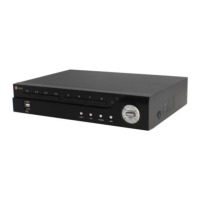
Do you have a question about the Eneo INR-18N040005A and is the answer not in the manual?
Ensures proper and safe installation of the device, including weatherproof considerations and ventilation.
Guidelines for safe power supply connection, cable routing, and protection against damage and hazards.
Recommendations for using strong passwords, keeping firmware updated, and securing remote access.
Covers operating temperature ranges, ventilation, sight line considerations, and camera orientation for privacy.
Instructions for cleaning lenses and housings, keeping ventilation slots clear, and checking for product damage.
Notices regarding recording, rules of conduct, privacy compliance, and adherence to local laws.
Details the physical ports and terminals on the rear panel of the NVR, including power, audio, video, and network interfaces.
Explains the function of each button on the remote controller for navigating menus and controlling playback.
Step-by-step guide for installing an HDD into the NVR, including power-off precautions.
Illustrates the typical network and device connections for the NVR system.
Details how to connect the NVR to a power source using the provided adapter and power switch.
Explains the functions of the left button, right button, and scroll wheel of the mouse for NVR interaction.
Describes how to use the on-screen virtual keyboard for data input, including character deletion and submission.
Covers password generation, security questions, unlock patterns, and password reset methods.
Guides through the initial system setup including network, date/time, and IP camera configuration.
Explains IP address, subnet mask, gateway, DNS, and IPv6 settings for network connection.
Details various ports like HTTP/HTTPS, RTSP, Client, Internal, External, and UPnP settings.
Covers setting the system date, time, date/time format, time zone, NTP, and DST.
Describes connecting IP cameras via PoE ports, LAN, or Internet, including status indicators.
Covers HDD formatting options, overwrite settings, NAS HDD addition, and e-SATA recording.
Allows adjusting the NVR's output resolution for connected monitors, with specific recommendations for HDMI and VGA.
Explains how to use the P2P ID and QR code for remote viewing via a mobile app.
Reviews settings configured in the startup wizard and options to finish or skip the wizard.
Identifies and describes all key elements on the live view screen, including channel numbers, icons, and panels.
Explains the meaning of various icons and messages that appear on the screen, including status and HDD errors.
Details the functions of the toolbar buttons that appear when a camera is selected in live view.
Explains the purpose and icons of the taskbar for system navigation and the status bar for system information.
Describes accessing the start menu for user switching, search, setup, locking, and shutdown.
Covers how to access and configure fisheye camera modes and viewing options.
Explains how to view, hide, and customize the alarm notification panel, including AI statistics.
Manages camera connections, live view display, image settings, PTZ setup, and video cover.
Details adding and deleting IP cameras, checking PoE power, and connecting via PoE NVR or LAN/Internet.
Explains editing switch mode, PoE mode, network parameters, and user credentials for IP cameras.
Covers setting default passwords for protocols and displaying connected IP camera passwords.
Provides steps for connecting external cameras from LAN or Internet, including manual addition.
Details adding multiple cameras from LAN and cameras from other NVRs on the same network.
Guides on connecting IP cameras to the NVR from the internet using WAN IP address.
Covers connecting cameras to non-PoE NVRs and monitoring PoE port power consumption.
Configures camera parameters like name, date/time format, refresh rate, and OSD settings for live view.
Adjusts camera image settings including hue, brightness, contrast, saturation, and sharpness.
Controls image settings like IR-CUT mode, delay, IR-LED, lens flip, corridor mode, and angle rotation.
Fine-tunes image parameters like backlight, noise reduction, white balance, shutter, AGC, and defog.
Configures settings specific to full color cameras, including white light modes and schedules.
Sets up PTZ settings such as signal type, protocol, baudrate, databit, stopbit, parity, and address.
Adjusts optical lens for zoom and focus on Motorized Focus & Zoom (MFZ) cameras.
Details controlling PTZ cameras via mode selection, directional buttons, speed, and lens controls.
Explains PTZ control modes, 3D PTZ control, auto focus, and manual tracking functions.
Guides on setting, saving, and managing preset positions for PTZ cameras.
Configures camera actions for watch mode and automatic cruising between points in line scan.
Sets up automated camera tours by preset positions and records custom movement paths for pattern scan.
Allows obscuring parts of the image for privacy by creating up to 4 privacy masks per camera.
Covers enabling motion detection, adjusting sensitivity, and selecting detection targets like human or vehicle.
Configures alarm notifications for motion detection, including buzzer, email, FTP, and cloud uploads.
Covers enabling PIR detection, adjusting sensitivity, deterrence settings, and detection area setup.
Configures alarm notifications for PIR detection, including buzzer, email, FTP, and cloud uploads.
Sets up alarm inputs, types, buzzer, alarm out, latch time, record actions, and message display.
Allows setting combinations of two alarm types to minimize false alarms.
Configures PTZ camera actions based on motion, I/O, or PIR alarms, linking them to preset positions.
Defines system exceptions like disk space, disk error, or video loss, and configures notifications.
Sets schedules for alarm outputs, push notifications, FTP uploads, and buzzers.
Covers creating, auditioning, and deleting voice files for alarm prompts.
Configures continuous loops of voices for specific time periods, with playlist management.
Configures built-in white lights and speakers for deterrence cameras during alarm events.
Sets schedules for activating deterrence features like white lights based on time of day.
Sets up siren volume, duration, type, and schedules for devices with built-in speakers.
Enables canceling alarm responses, configuring disarming parameters, and schedules.
Activates AI functions and configures Face Detection (FD) settings for alarm events.
Sets snap modes, apply modes, face ranges, quality, and attribute detection for faces.
Configures detection rules, areas, and dynamic marking for Human & Vehicle detection.
Detects objects entering or loitering in virtual regions, with configurable sensitivity and rules.
Detects objects crossing a virtual line, with configurable sensitivity, rules, and dynamic marking.
Counts objects crossing a line, with configurable sensitivity, rules, and dynamic marking.
Provides a visual overlay of motion frequency, useful for analyzing traffic and behavior.
Detects crowd gathering and sends alerts when density exceeds preset limits.
Monitors queue status, including length and waiting time, sending alerts for long queues.
Detects and records license plates, with options for European or American formats and detection modes.
Adjusts LPD enhancement, day/night levels, and exposure settings for better license plate recognition.
Detects abnormal sounds like baby crying or gunshots, triggering alerts and actions.
Detects objects left over or lost in predefined regions, with configurable rules and sensitivity.
Sets up rules for stationary object detection, specifying area, rule type (legacy/lost).
Detects sound events, adjusting sensitivity, intensity, and scheduling sound alerts.
Detects camera image occlusion, with configurable sensitivity for tamper detection.
Configures schedules for AI detection functions, specifying active times for different detection types.
Selects the AI algorithm model for face recognition, including detection and recognition capabilities.
Provides guidelines on selecting AI models, versions, and multiplex models for optimal performance.
Manages face profiles, including default groups (Allow, Block, Stranger) and database backup/import.
Guides on creating face profiles from images stored locally on the NVR.
Details creating face profiles from images stored on a USB flash drive.
Covers editing, moving, deleting, and exporting individual face profiles.
Guides on creating multiple face profiles at once using a CSV template and face image files.
Details the process of importing bulk face profiles from a CSV file on a USB flash drive.
Manages vehicle license profiles, including default groups and database backup/import.
Guides on searching and importing license plate images and their associated data.
Details the process of manually creating individual vehicle license profiles.
Guides on creating multiple license profiles at once using a CSV template.
Details importing bulk license profiles from a CSV file on a USB flash drive.
Covers editing, moving, deleting, and exporting individual license plate profiles.
Provides options for deleting, moving to other groups, or exporting license profiles.
Configures alarm actions for face recognition events based on groups and similarity thresholds.
Sets alarm actions for face recognition, including capture, email, FTP, cloud, and voice prompts.
Configures alarm actions based on detected facial attributes like mask usage, with various notification options.
Continues configuring alarm actions for attribution detection, including email, FTP, and cloud uploads.
Configures alarm actions for license plate recognition events, including fault tolerance and notifications.
Sets alarm actions for LPR events, including capture, email, FTP, cloud, and voice prompts.
Configures alarm actions for human and vehicle detection events, including buzzer, email, and record.
Configures combined alarm actions for multiple detection types, setting schedules and notifications.
Retrieves and presents statistical data on face detection, including counts, frequency, and group shares.
Filters FR statistics by group, channel, time period, and allows exporting data.
Filters H&V statistics by AI type, channel, time period, and allows exporting data.
Guides on searching H&V statistics by channel, date, cross type, and detection type.
Filters Heat Map statistics by channel, report type, date, and time range.
Covers general network settings including DHCP, IP address, subnet mask, gateway, and DNS.
Configures PPPoE settings for direct connection to the network via DSL modem.
Sets up Simple Network Management Protocol (SNMP) for collecting device information.
Guides on connecting the NVR to Wi-Fi using a compatible USB dongle.
Explains port forwarding for remote access via UPnP or manual configuration.
Sets up Dynamic Domain Name System (DDNS) for simplifying remote connection to the NVR.
Configures email settings for receiving system notifications and alerts.
Sets schedules for sending email alerts based on event types and time periods.
Limits network access by defining allowed (Allow List) or forbidden (Block List) IP addresses.
Guides on connecting the NVR to Amazon Fire TV Stick for voice-controlled surveillance viewing.
Details steps for setting up Amazon Alexa, including linking accounts and searching skills.
Continues Alexa integration by discovering devices and linking cameras to Google Home.
Guides on setting up devices in groups and using voice commands to view cameras via Fire TV Stick.
Guides on connecting NVR to Google Chromecast for voice-controlled surveillance viewing.
Details steps for integrating with Google Assistant, including home setup and device discovery.
Finalizes Chromecast setup, adding cameras to Google Home and completing tutorials.
Guides on linking cameras to Google Assistant for streaming via voice commands.
Explains connecting to 3rd party platforms like ECMS/NVMS using ONVIF protocol.
Covers pushing NVR audio/video streams to YouTube via RTMP for live broadcasting.
Covers HDD formatting options, overwrite settings, and drive status.
Manages HDD modes (Read Write, Read Only, Redundant) and adding NAS storage.
Organizes disks into groups for recording and displays HDD technical information and tests.
Covers cloud storage options like Dropbox or Google Drive, including overwrite and folder settings.
Guides on setting up Dropbox cloud storage, including account linking and authorization.
Guides on setting up Google Drive cloud storage, including account linking and authorization.
Configures FTP settings for uploading snapshots or videos to an FTP server.
Sets schedules for uploading alarm images or videos via FTP based on time and event type.
Configures general system info like device name, ID, language, date, time, and display settings.
Sets system date, time, format, time zone, and enables Network Time Protocol (NTP) synchronization.
Configures Daylight Saving Time offsets and modes based on the selected time zone.
Sets video output parameters like SEQ mode, dwell time, resolution, scale, offset, and cursor settings.
Configures display output parameters for the secondary HDMI screen, including view setup and SEQ mode.
Manages user accounts, including password changes, enabling/disabling users, and remote access limitations.
Details operations for Admin (password, pattern, remote access limits) and normal users.
Sets system menu and capability access permissions for each user account.
Provides access to system logs for searching, viewing, and backing up events and actions.
Guides on searching system logs by date, time, and type, and backing them up to USB.
Resets specific system settings or all settings to their default values.
Explains how to perform a factory reset using the physical reset button or software options.
Covers upgrading NVR firmware via USB flash drive or online using a server.
Allows exporting and importing system configuration settings to/from a USB flash drive.
Configures the NVR to automatically reboot at scheduled times (day, week, or month).
Provides access to Telnet, Debug Log export/deletion for advanced troubleshooting.
Guides on upgrading IP camera firmware via USB or online, including automatic detection.
Covers loading default settings, rebooting, managing parameters, and formatting IP cameras.
Shows NVR hardware/software version, IP address, network ports, MAC address, and P2P information.
Displays channel, record, and network status information for the NVR system.
Utilizes cross counting for attendance tracking in public places like restaurants and parks.
Provides controls for viewing real-time counting data by individual camera or group.
Displays all-day counting statistics in charts and allows full-screen viewing.
Configures settings for viewing channels individually, including AI function status and capacity limits.
Configures group view settings, allowing camera grouping, capacity limits, and alarm actions.
Allows displaying advertising pictures with cross counting functions, configuring images and dwell times.
Guides on searching counting data by channels or groups, date range, and display options.
Provides an overview of the face attendance interface, including statistics, notifications, and search.
Configures face attendance settings like channels, groups, GUI theme, duty times, and email reports.
Classifies and counts detected faces, humans, and vehicles, with search and display options.
Details general search options like date, type, stream, and channel selection for playback.
Step-by-step guide for cutting and saving video segments to a USB flash drive.
Guides on searching, playing, and backing up event recordings by type, date, and channel.
Explains the playback controls for events, including list navigation, saving, and playback functions.
Guides on playing multiple video segments simultaneously from a single channel.
Guides on quickly searching and playing motion events by defining specific video areas.
Explains how to define specific areas within video footage to narrow down smart search results.
Guides on searching, playing, and managing video content using user-added tags.
Guides on searching, viewing, and copying snapshots to a USB flash drive.
Explains controls for playing selected snapshots in a slideshow format.
Guides on slicing recordings into one-minute segments for quick search and playback.
Searches for face detection events captured by cameras, with options for time, channel, and display.
Covers backing up selected face images and associated video files.
Explains how to play selected events and use video playback controls.
Details using the playback timeline and controls for event review.
Searches and compares face images against a database to find matches.
Sets parameters like similarity and channels for face search, displaying matching results.
Enables tracking faces on a map, showing appearance/disappearance times and movement.
Guides on loading maps, editing camera positions, and tracking faces with search criteria.
Enters the license plate search section to find license plate detection events.
Sets parameters for license plate search, including fault tolerance, and covers backup options.
Searches for human and vehicle detection events, with options for time, type, channel, and backup.
Searches for PID and LCD detection events, with options for time, type, channel, and backup.
Searches for frequency of person occurrences and backs up captured face images.
Narrows repeat visitor search by interval time, similarity, and face attributes.
Searches face attendance data by channel, group, or person, and exports data.
Describes downloading video files, optionally encrypting them, and setting passwords.
Lists minimum and recommended hardware and OS requirements for running the web client.
Guides on downloading, installing, and using the necessary browser plugin for web client access.
Describes accessing the live view page, enabling/disabling streams, manual recording, and snapshots.
Explains main menu navigation for live view, playback, remote settings, and system information.
Details controlling PTZ cameras through the web client, including arrow keys, zoom, focus, and modes.
Explains PTZ scan modes like Line Scan, Tour, and Pattern Scan for automated camera movements.
Describes various live view control buttons for display mode, recording, zoom, volume, and intercom.
Guides on searching and playing back recorded videos stored on the NVR via the web client.
Explains playback control icons for single/synchronous play, speed, zoom, and proportions.
Covers searching and playing back captured images through the web client.
Enables searching smart playback videos triggered by motion detection alarms.
Searches and plays back events tagged or related to AI functions like face/license plate detection.
Allows remote configuration of device parameters including channel, video, alarm, AI, network, and system.
Sets download paths for videos/snapshots and selects file types for downloaded content.
Lists minimum CPU, OS, memory, and video memory requirements for the video player.
Explains controls for playlist management, playback, volume, snapshot, and advanced settings.
Covers selecting language and configuring player functions like 'stick on top' and capture settings.
Guides on installing the RXCamView app and adding devices via QR code, online search, or manual input.
Describes app display modes (1-16 channels), capture, video recording, audio, intercom, and PTZ control.
Provides answers to common questions regarding hard disk detection, password reset, and video output.
Addresses common problems like login failures, missing recordings, PTZ control issues, and alarm malfunctions.
Covers proper procedures for powering off the device, maintaining ventilation, and handling cables.
 General
| Model | INR-18N040005A |
|---|---|
| Recording Resolution | Up to 1080p |
| Compression Format | H.264 |
| Operating Temperature | -10°C to +55°C |
| Type | Digital Video Recorder |
| Network Interface | RJ45 |
| Power Supply | DC 12V |
| USB | 2.0 |

 To Next Page