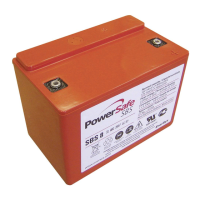
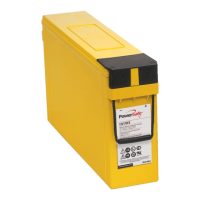
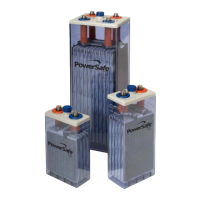
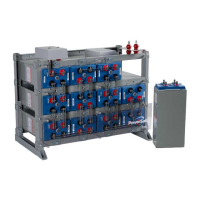
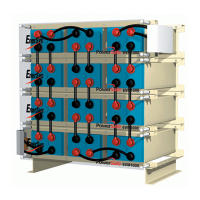
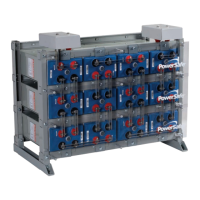
The PowerSafe® SBS series of batteries are advanced lead-acid batteries designed for a wide range of applications, including telecommunications, uninterruptible power supplies (UPS), and utility systems. These batteries are known for their high energy density, long service life, and robust performance, particularly in demanding environments. The manual emphasizes safe handling, installation, operation, and maintenance practices to ensure optimal performance and longevity.
Function Description:
PowerSafe® SBS batteries are designed to provide reliable DC power for critical applications. They are sealed lead-acid (SLA) batteries, meaning they are maintenance-free in terms of electrolyte replenishment. The SBS series utilizes advanced Thin Plate Pure Lead (TPPL) technology, which contributes to their high power density, extended cycle life, and excellent performance over a wide temperature range. These batteries are capable of extremely high short-circuit currents, making them suitable for applications requiring rapid discharge and high power output. They are supplied in a charged state, ready for immediate installation and use, provided proper storage conditions have been maintained. The primary function is to store electrical energy and deliver it on demand, acting as a backup power source or a primary power supply in off-grid applications.
Important Technical Specifications:
The manual provides several key technical specifications and operational parameters:
- Hydrogen Evolution: The manual details hydrogen evolution rates per bloc at a float charge of 2.27 Vpc for various SBS models. For example, an SBS 8 battery (6 cells per bloc) has a hydrogen evolution of 0.27 ml/hr, while an SBS 190F (6 cells per bloc) has 7.23 ml/hr. This information is crucial for designing adequate ventilation systems to limit hydrogen accumulation to a maximum of 1% by volume, preventing potential explosion hazards.
- Fastener Size and Torque: Specific fastener sizes and torque values are provided for different SBS battery models to ensure secure electrical connections. For instance, SBS 8 uses M4 fasteners with a torque of 9 lb/Nm, while SBS 110-390 uses M8 fasteners with 44 lb/Nm. Correct torque application is vital for minimizing resistance and preventing overheating at the terminals.
- Float Voltage Range: The acceptable float voltage range is specified as 2.27-2.29 Vpc at 68°F (20°C) and 2.25-2.27 Vpc at 77°F (25°C). The temperature-compensated voltage should not drop below 2.21 Vpc. A detailed table provides recommended and minimum float voltage values across a temperature range from 50°F (10°C) to 104°F (40°C), highlighting the importance of temperature compensation for optimal battery life and performance.
- Discharge Cut-off Limits: The manual specifies voltage cut-off limits for different discharge rates to prevent irreversible capacity loss and premature end of life. Examples include 1.80 Vpc at 10 hr rate, 1.75 Vpc at 8 hr rate, 1.75 Vpc at 5 hr rate, 1.70 Vpc at 3 hr rate, 1.60 Vpc at 1 hr rate, and 1.60 Vpc at 15 min rate. Adhering to these limits is critical for battery health.
- Storage Conditions: A table outlines recommended storage times and Open-Circuit Voltage (OCV) audit intervals based on temperature. For instance, at 50°F (10°C) or less, batteries can be stored for 48 months with OCV audits every 6 months. At 104°F (40°C), storage time reduces to 6 months with OCV audits every 2 months. This emphasizes the impact of temperature on self-discharge and storage life.
- Open-Circuit Voltage (OCV) and State of Charge: A graph illustrates the relationship between OCV per cell and approximate state of charge over time at various temperatures, ranging from +10°C to +40°C. This visual aid helps in understanding battery health during storage.
Usage Features:
The PowerSafe® SBS batteries offer several usage features that contribute to their versatility and reliability:
- Maintenance-Free Design: As sealed lead-acid batteries, they do not require electrolyte replenishment, reducing maintenance efforts and costs.
- High Short-Circuit Current Capability: Their design allows for extremely high short-circuit currents, making them suitable for applications requiring high power delivery in short bursts.
- Wide Operating Temperature Range: While specific ranges are not explicitly stated for operation, the storage guidelines and float voltage compensation indicate robust performance across varying temperatures.
- Compact Design: The TPPL technology allows for a compact design, maximizing energy density and minimizing footprint, which is beneficial in space-constrained installations.
- Recyclability: The batteries are designed to be recyclable, aligning with environmental responsibility. Spent batteries must be disposed of in accordance with local and national laws by a licensed or certified lead-acid battery recycler.
- Shipping Compliance: PowerSafe® SBS batteries are approved as non-hazardous cargo for ground, sea, and air transportation, complying with US DOT Regulation 49 and ICAO & IATA Packing Instruction 806.
Maintenance Features:
The manual outlines a comprehensive maintenance schedule and guidelines to ensure the longevity and optimal performance of the batteries:
- Regular Audits (Every Six Months): Users are advised to measure the battery string voltage, temperature, float current, inter-module resistances, and internal ohmic values every six months. Individual module voltages should be within ±0.30V of the nominal float voltage.
- Visual Inspection: Regular inspection for contamination (dust), loose or corroded connections is recommended. Corrosion can be caused by environmental factors or battery electrolyte.
- Corrosion Management: The manual distinguishes between electrolyte corrosion (wet appearance, localized to the terminal base) and environmental corrosion (dry, uniform across connections). Electrolyte corrosion necessitates battery and interconnect strap replacement. Light environmental corrosion can be cleaned with a water-dampened cloth and protected with NO-OX. Solvents or scouring powders should not be used.
- Freshening Charge: If batteries are stored for extended periods, a freshening charge is required when bloc voltages approach 2.10 Vpc or when the maximum storage time is reached. The charging process involves a constant voltage of 2.27 Vpc with current limited to 10A per 100Ah nominal capacity for 24-48 hours, until the current stabilizes. This resets the storage OCV audit interval and maximum storage time.
- Capacity Replacement Guideline: The recommended practice is to replace the battery if its capacity falls below 80% of the manufacturer's rating, indicating the end of its useful life.
- Proper Installation Procedures: The manual provides detailed instructions for installation, including referring to layout drawings, positioning batteries without handling terminals, ensuring clean terminals, applying NO-OX in corrosive environments, and torquing connectors to specified values. Rechecking torque on installed connectors is crucial for secure connections.
Overall, the PowerSafe® SBS batteries are designed for high performance and reliability in critical power applications, supported by clear guidelines for safe handling, efficient operation, and proactive maintenance.

 Need help?
 General

 To Next Page