
 Need help?
Do you have a question about the EnerSys PowerSafe and is the answer not in the manual?
Explains the danger symbol indicating imminent hazards.
Explains the warning symbol indicating potential hazards.
Explains the caution symbol indicating potential minor injury or damage.
Covers electrical and explosion warning symbols for specific risks.
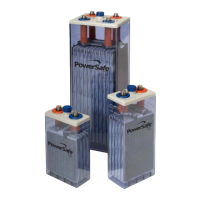
Introduces EnerSys PowerSafe RE batteries and their applications.
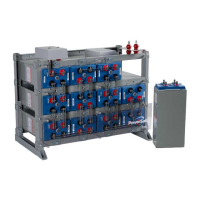
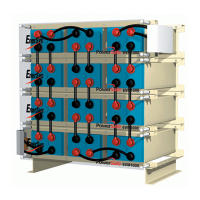
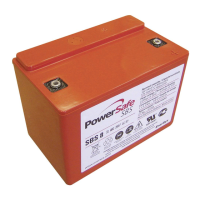
Details available single cell and 6-cell unit configurations and features.
Emphasizes reading and understanding manual instructions before system handling.
Discusses general safety for flooded lead-acid batteries, including required training.
Lists necessary safety gear and personal protective equipment for battery handling.
Provides immediate first-aid for sulfuric acid contact with skin, eyes, or clothing.
Details hazards of hydrogen gas and fire safety in battery environments.
Outlines precautions for high voltage and current in battery systems.
Advises on immediate inspection for transit damage upon delivery.
Details how to check for and document visible external damage on received batteries.
Explains procedures for checking and reporting concealed damage within 15 days of receipt.
Provides guidelines for storing batteries, including temperature and humidity limits.
Specifies maximum storage times and the need for periodic freshening charges.
Lists key factors for system space requirements like ventilation, environment, and floor loading.
Details ventilation needs to prevent hydrogen gas accumulation per IEEE standards.
Covers considerations for load cable sizing and voltage drop for system connection.
Discusses important factors for connecting battery strings in parallel for capacity.
Lists necessary tools and safety equipment for battery installation.
Provides specific procedures for safely handling single cells and multi-cell units.
Guides on planning and marking the battery system's physical location and setup.
Lists essential precautions for installing batteries in a safe and suitable environment.
Details how to arrange and space cells for thermal management and connections.
Step-by-step instructions for physically installing battery cells into the system.
Covers cleaning and greasing terminal posts for optimal electrical contact.
Describes connecting cells using supplied connectors and proper torque values.
Explains how to install terminal plates for system connection points.
Details initial charge procedures using constant voltage chargers or MPPT controllers.
Outlines charging steps when no external source or MPPT controller is available.
Provides recommended inverter settings for MPPT charge regulators.
Specifies charge disconnect and restart voltages for ON/OFF solar regulators.
Explains voltage thresholds to protect against deep discharge.
Details how to take specific gravity readings using a hydrometer.
Defines the expected specific gravity for a fully charged battery.
Explains the procedure for performing an equalizing charge on batteries.
Discusses how temperature and discharge depth affect battery lifetime and capacity.
Advises against using battery taps due to warranty and system imbalance risks.
Explains the role of a pilot cell for monitoring battery condition and temperature compensation.
Details procedures for standard cleaning, mild/heavy corrosion removal, and flame arrestor cleaning.
Emphasizes record-keeping and outlines recommended monthly, quarterly, and annual checks.
Defines the quality requirements for water used in lead-acid batteries.
Provides a formula and explanation for calculating hydrogen gas evolution from cells.
Summarizes key safety precautions for battery handling and maintenance.
Warns against using incorrect lubricants for battery rails.
 General
| Brand | EnerSys |
|---|---|
| Model | PowerSafe |
| Category | Camera Accessories |
| Language | English |





 To Next Page